What Should a Custom Pet Products Manufacturer Actually Provide?
A custom pet products manufacturer should do more than apply a logo to an existing product.
For pet brands, wholesalers, distributors, retailers, and e-commerce businesses, customization usually affects several connected areas: product structure, materials, sizing, colors, hardware, printing, packaging, quality standards, and future repeat orders.
The real question is therefore not:
“Can this supplier customize pet products?”
A better question is:
“Can this manufacturer translate our product requirements into a controlled specification and reproduce it consistently in bulk production?”
That distinction matters.
A supplier may have hundreds of products in a catalog but still lack the process control required for a stable private-label program. On the other hand, a manufacturer with a focused product range may be more valuable if it can manage samples, components, approved specifications, production changes, and repeat orders effectively.
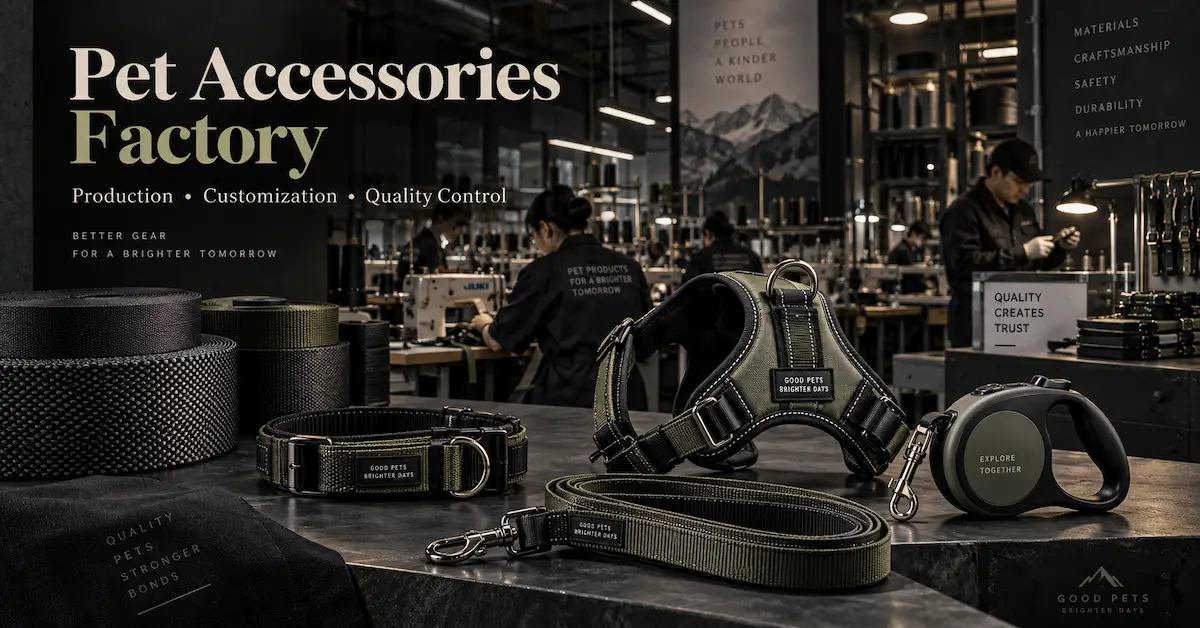
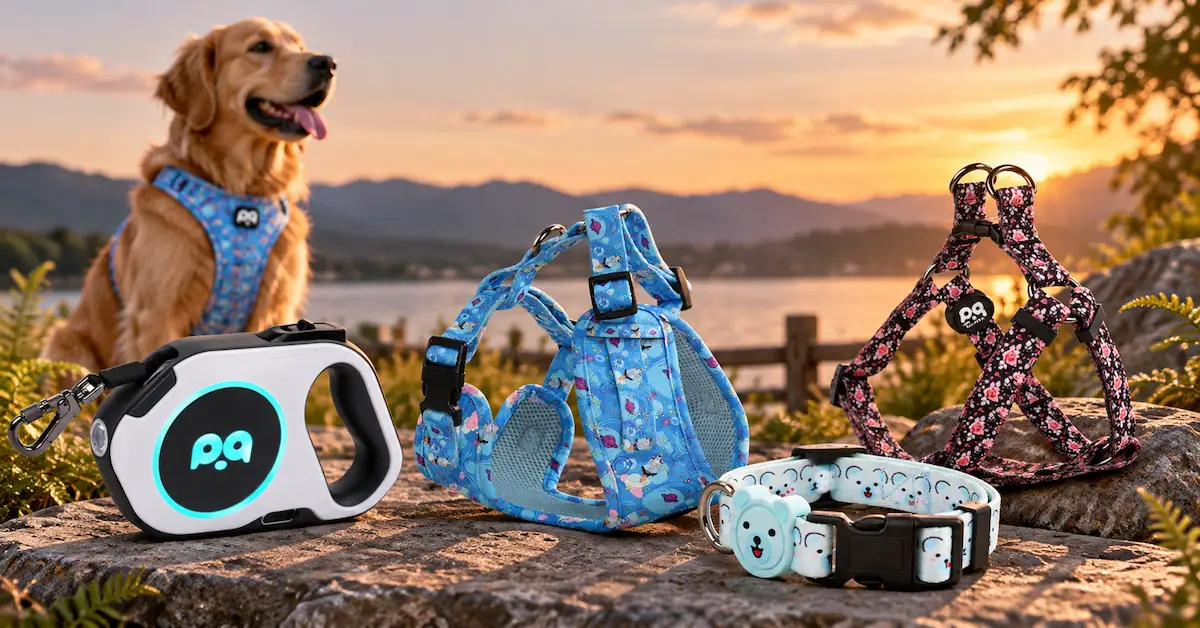
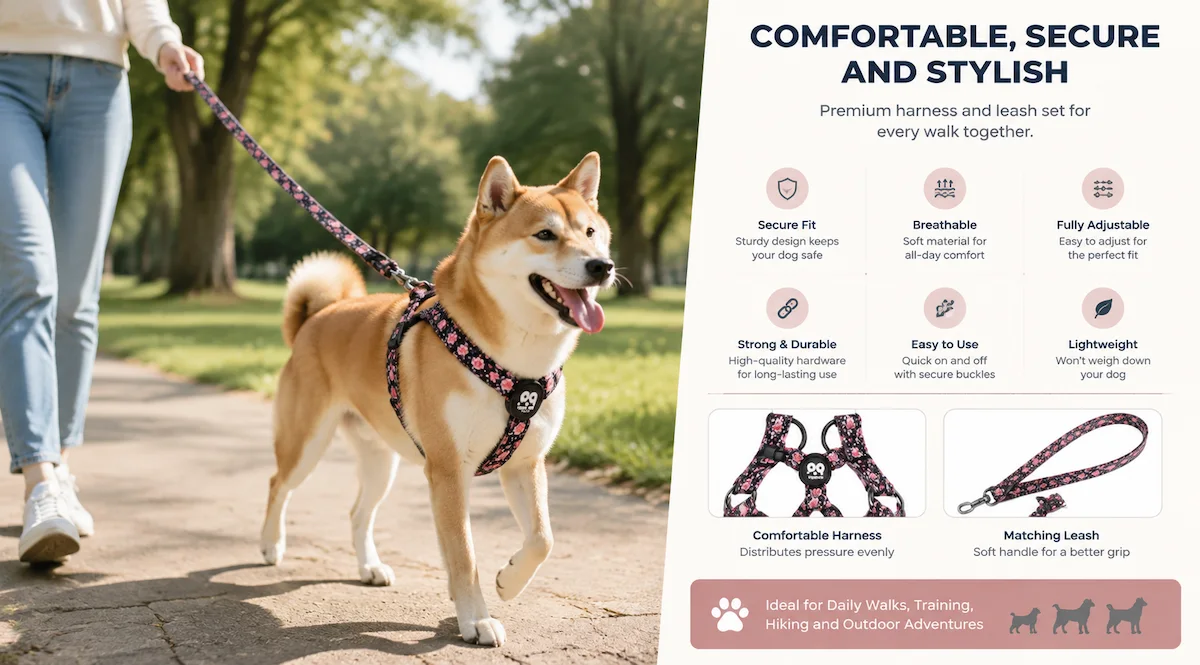
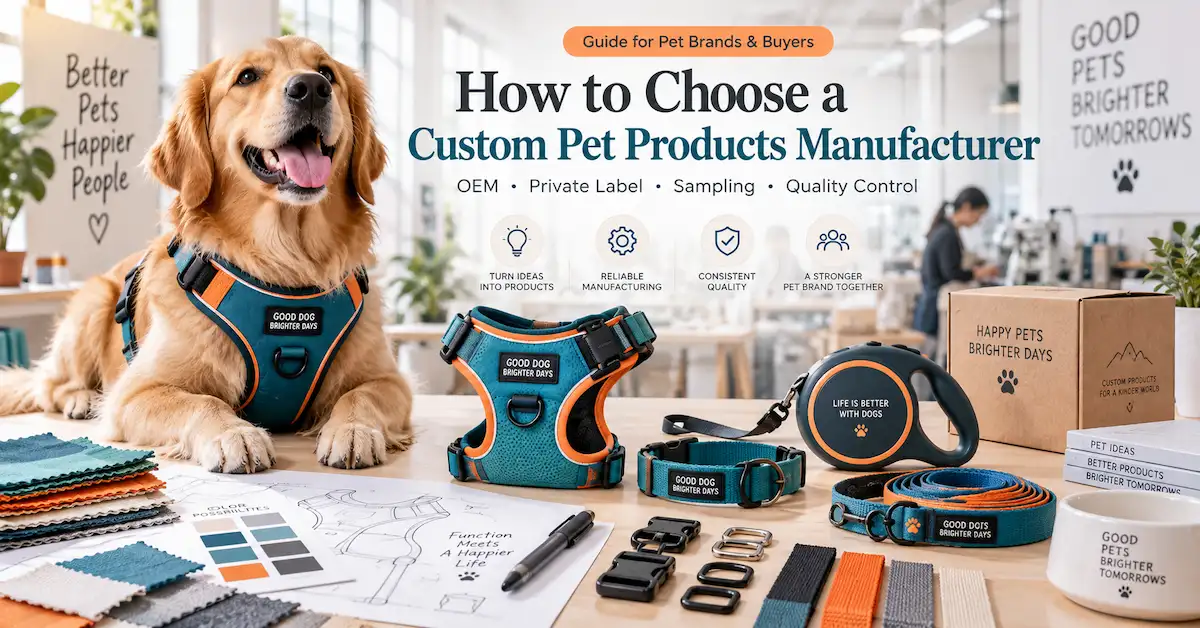
For buyers developing dog walking accessories, the evaluation normally includes products such as dog harnesses, collars, leashes, retractable leashes, reflective products, and visibility-focused accessories. Buyers can review SIXPET's current pet product range to see the types of walking products that may form part of a coordinated collection.
Buyer takeaway: Choose a manufacturer based on its ability to control specifications and repeat the approved product—not simply on how many catalog items it displays.
Who Needs Custom Pet Product Manufacturing?
Not every buyer needs a complex OEM or ODM project.
Custom manufacturing makes the most sense when a business needs meaningful control over the product or brand presentation.
Pet Brands
Established pet brands often need products that fit an existing brand identity.
Typical requirements may include:
-
custom colors
-
specific webbing patterns
-
branded labels
-
logo placement
-
custom packaging
-
coordinated product families
-
defined size systems
-
selected hardware
-
repeat-order consistency
For these buyers, the challenge is usually not finding a generic harness or leash. It is maintaining the same approved product across different sizes, colors, production batches, and future orders.
E-Commerce and DTC Brands
Amazon, Shopify, marketplace, and direct-to-consumer sellers often need stronger differentiation.
They may want to avoid selling exactly the same item as dozens of competitors.
Private labeling can help by creating a more recognizable combination of:
-
color
-
pattern
-
product structure
-
packaging
-
accessory bundles
-
brand presentation
However, adding more variations also increases SKU complexity. More colors, sizes, components, and packaging combinations can affect purchasing quantities, production planning, inspection, and inventory.
Wholesalers and Distributors
Wholesalers usually focus more heavily on:
-
product breadth
-
repeat supply
-
price consistency
-
practical packaging
-
replenishment
-
regional product preferences
For them, an effective custom pet products manufacturer should be able to support a commercially manageable range rather than encouraging unnecessary customization.
Retail Chains and Private-Label Programs
Retail buyers often need stronger specification control because products may need to fit predefined packaging, labeling, assortment, and quality requirements.
The development process can therefore involve more documentation and approval stages than a standard wholesale order.
When Is Standard Wholesale Better Than Full Customization?
Customization is not automatically the best option.
A standard product may be more suitable when:
-
the business is testing a new category
-
expected order volume is still uncertain
-
branding requirements are minimal
-
the product already fits the target market
-
speed is more important than differentiation
-
the buyer has not finalized sizing or material requirements
Custom development becomes more valuable when a buyer has a clearer sales strategy and needs to control what customers will actually receive.
This distinction prevents unnecessary sampling cycles and reduces the risk of developing too many SKUs before demand has been validated.
Start With the Application, Not the Product Photo
A sourcing project should begin with how the product will be used and sold.
Consider four different product concepts:
-
A lightweight harness collection for small urban dogs.
-
A printed fashion collection for e-commerce.
-
A reflective walking range for low-light environments.
-
A more durable leash and harness range for outdoor use.
All four may involve similar-looking pet accessories, but their manufacturing priorities can be very different.
The buyer may need to make different decisions about:
-
webbing
-
mesh
-
padding
-
strap width
-
adjustment range
-
buckle construction
-
leash attachment points
-
reflective elements
-
hardware
-
handle design
-
packaging
A clear application brief gives the manufacturer a better starting point than a screenshot with the instruction, “Make something similar.”
Private Label, OEM, and ODM Are Not the Same Project
These terms are sometimes used interchangeably, but buyers should focus on the actual scope of work.
Private Label
Private label projects usually begin with an existing product platform.
Common changes include:
-
logo
-
brand label
-
color
-
graphic pattern
-
packaging
-
hangtags
-
instruction cards
This is generally appropriate when the underlying structure already fits the buyer's market.
OEM
OEM manufacturing normally works from a buyer-approved specification.
The buyer may define:
-
dimensions
-
materials
-
hardware
-
colors
-
artwork
-
components
-
packaging
-
performance requirements
The manufacturer's job is to manufacture according to that agreed specification.
ODM
ODM may involve more manufacturer participation in product development.
The project might include discussions about structure, material combinations, sizing, components, or how an existing concept can be converted into a manufacturable product.
What matters most is not the label “OEM” or “ODM.” The important issue is defining who is responsible for each decision.
Build a Technical Specification Before Discussing Bulk Production
A serious custom project needs more than an approved product photo.
The technical specification should make the important characteristics measurable or identifiable.
A useful specification framework can include:
| Specification Area | Questions Buyers Should Confirm |
|---|---|
| Product type | Harness, collar, leash, retractable leash, or matching set? |
| Target use | Daily walking, fashion, outdoor, low-light, training, or retail collection? |
| Size system | Which sizes and adjustment ranges are required? |
| Main material | Nylon, polyester, mesh, rope, or another approved material? |
| Webbing | Width, thickness, color, texture, and printing requirements? |
| Hardware | Buckle, D-ring, hook, slider, and finish requirements? |
| Branding | Logo position, woven label, printing, heat transfer, or packaging branding? |
| Color | Standard color or defined color reference? |
| Packaging | Polybag, box, hangtag, retail card, barcode, or custom packaging? |
| Inspection | Which dimensions, functions, appearance points, and components must be checked? |
This document becomes particularly important after sample approval.
Without a controlled specification, both the buyer and factory may rely too heavily on visual memory.
Material Selection Should Match the Product Positioning
Material choice affects more than unit cost.
It can influence:
-
appearance
-
hand feel
-
flexibility
-
abrasion behavior
-
printing
-
cleaning
-
weight
-
perceived product value
Webbing for Harnesses, Collars, and Leashes
Webbing is a major component in many dog walking products.
Buyers should not evaluate it only by color.
Useful questions include:
-
What fiber is used?
-
What width is required?
-
How thick should the webbing be?
-
How does it feel at folded or stitched areas?
-
Will it be printed?
-
How should color consistency be controlled?
-
Will different sizes use different widths?
The correct answer depends on product structure and target market.
There is no universal “best webbing” for every pet accessory.
Mesh and Padding for Harnesses
Harness comfort depends on more than whether padding is present.
A buyer should consider:
-
contact area
-
flexibility
-
breathability
-
edge construction
-
padding thickness
-
shape
-
adjustment position
A soft material cannot compensate for poor geometry or incorrect sizing.
Hardware and Connection Points
Buckles, D-rings, snap hooks, sliders, and other components should be selected as part of the complete product system.
For example, increasing webbing strength without evaluating the stitching or attachment point may simply move the weakest point elsewhere.
A strong custom pet products manufacturer should therefore evaluate materials and components together rather than treating each component as an isolated choice.
Product Structure Matters as Much as Materials
For pet walking products, many quality problems are structural.
Dog Harnesses
Important development areas may include:
-
Y-shaped or H-shaped geometry
-
chest panel dimensions
-
neck and chest adjustment
-
shoulder clearance
-
strap routing
-
buckle position
-
D-ring placement
-
reinforced stitching zones
The goal is to create an appropriate fit for the intended size range and usage scenario.
Dog Collars
Important variables include:
-
webbing width
-
adjustment range
-
buckle design
-
D-ring position
-
stitching
-
label placement
-
printed pattern alignment
A collar that looks simple can still require tight control over several components.
Dog Leashes
Leash development may involve:
-
leash length
-
webbing or rope construction
-
snap hook
-
swivel action
-
handle configuration
-
padding
-
stitching
-
reflective elements
The correct combination depends on dog size, application, target retail price, and brand positioning.
Retractable and Visibility Products
Products with mechanical, reflective, or lighting functions require an additional layer of review.
Buyers should separate:
Appearance requirements from functional requirements.
A color or logo can be approved visually. A locking mechanism, charging function, light mode, or reflective claim requires functional confirmation.
Why Manufacturing Process Control Matters
Customization passes through multiple manufacturing stages.
According to SIXPET's company and manufacturing background, its production functions include heat-transfer printing, silk-screen printing, weaving, cutting, sewing, and packaging.
For a buyer, the important issue is how those processes affect the approved product.
Printing
Printing control may influence:
-
graphic position
-
color
-
pattern repeat
-
edge alignment
-
logo visibility
Cutting
Cutting influences dimensional consistency.
Small dimensional variations can become more noticeable when several pieces are assembled into one harness or collar.
Sewing
Sewing is especially important around:
-
hardware attachment points
-
strap intersections
-
folded webbing
-
handles
-
D-ring areas
Assembly
Components must match the approved specification.
Using the correct webbing but changing a buckle or hook can alter the final product.
Packaging
Packaging should also be treated as part of the production specification.
For retail and e-commerce buyers, packaging errors can create delays even when the physical product itself is acceptable.
Sample Approval Is the Most Important Decision Before Bulk Production
A sample should not be approved simply because it “looks good.”
The approval process should answer four questions.
1. Is the Product Structurally Correct?
Check:
-
dimensions
-
strap routing
-
adjustment
-
hardware position
-
stitching
-
product symmetry
2. Are the Materials Correct?
Confirm:
-
webbing
-
mesh
-
padding
-
hardware
-
printing
-
color
-
labels
3. Does the Product Function as Expected?
For applicable products, evaluate:
-
adjustment
-
buckle operation
-
leash connection
-
retractable mechanism
-
lighting
-
charging
-
reflective components
4. Can This Exact Product Become the Production Reference?
The approved sample should be connected to a written specification.
If a change is made after approval, record it.
Otherwise, the factory may manufacture according to one version while the buyer evaluates the shipment against another.
Practical rule: Never approve only the appearance when the product also has fit, mechanical, or functional requirements.
Quality Control Should Focus on Repeatability
Many buyers ask whether a factory has “quality control.”
A more useful question is:
What exactly will be checked against the approved product specification?
Depending on the product, bulk inspection may include:
-
dimensions
-
adjustment range
-
stitching appearance
-
hardware
-
printing
-
color
-
logo
-
quantity
-
packaging
-
function
For dog harnesses and leashes, buyers may also identify specific stress areas that deserve additional attention.
For retractable or lighted products, functional inspection becomes more important.
The objective is not to create the longest possible inspection checklist.
It is to identify the characteristics that would cause a customer complaint, return, safety concern, or brand inconsistency if they changed.
Repeat Orders Are a Better Test Than the First Order
Many factories can produce an attractive initial sample.
Long-term supplier performance becomes clearer when the buyer asks:
Will the next production batch match the approved standard?
Common repeat-order risks include:
-
substituted webbing
-
different color tone
-
changed hardware
-
different stitching
-
packaging variation
-
size variation
-
unavailable components
A reliable custom pet products manufacturer should maintain a clear production reference and communicate material or component changes before manufacturing.
This is particularly important for brands selling the same SKU for several years.
Customers expect the product they reorder to remain recognizable and consistent.
How to Compare Custom Pet Product Manufacturers
Do not compare suppliers only on quotation price.
Use a broader sourcing matrix.
| Evaluation Factor | What to Check | Why It Matters |
|---|---|---|
| Product relevance | Experience with your target product type | Reduces development mistakes |
| Customization scope | What can actually be changed? | Prevents unrealistic expectations |
| Material control | Can materials and components be identified and approved? | Supports repeat consistency |
| Sampling | Is a physical sample available before bulk production? | Reduces production risk |
| Specification control | Are dimensions, colors, components, and packaging documented? | Creates a clear production reference |
| QC | Which characteristics are checked? | Helps prevent repeat defects |
| Packaging support | Can brand and retail requirements be handled? | Important for market launch |
| Communication | Are changes documented clearly? | Prevents misunderstanding |
| Repeat supply | How are previous specifications maintained? | Protects long-term SKUs |
| Product range | Can related products be coordinated? | Helps build complete collections |
The cheapest quotation may not produce the lowest total sourcing cost.
Rework, inconsistent products, returns, packaging errors, delayed launches, and repeated redevelopment can cost much more than a small difference in initial unit price.
What Affects Custom Pet Product Cost?
Buyers often want an immediate unit price, but customization cost depends on the specification.
Major variables may include:
-
material
-
hardware
-
product complexity
-
number of sizes
-
number of colors
-
printing method
-
custom components
-
packaging
-
quantity
-
testing requirements
-
order split
SKU Complexity Matters
Suppose a buyer wants:
-
four sizes
-
five colors
-
two hardware finishes
That can already create many combinations.
Adding separate packaging versions increases complexity further.
For a new brand, it may be more commercially sensible to begin with fewer high-priority variants and expand after sales data becomes available.
Building a Matching Harness, Collar, and Leash Collection
One benefit of working with a manufacturer focused on pet walking products is the possibility of developing coordinated collections.
A brand might create:
-
harness + leash
-
collar + leash
-
harness + collar + leash
-
reflective walking set
-
seasonal printed collection
Coordinated products can share:
-
colors
-
graphic language
-
logo treatment
-
packaging style
-
collection naming
However, matching appearance does not mean identical specifications.
Each item should still be approved independently.
A dog collar, harness, and leash have different dimensions, hardware, structural requirements, and use conditions.
What Information Should You Send for a Faster Quotation?
A clear inquiry helps the manufacturer evaluate the project more accurately.
Before contacting a supplier, prepare as much of the following as possible:
-
Product type
-
Reference photos or drawings
-
Target market
-
Target dog size range
-
Required dimensions
-
Preferred materials
-
Color or artwork
-
Logo requirements
-
Estimated quantity
-
Packaging requirements
-
Target launch date
-
Any required testing or documentation
If some details are still undecided, mark them as open questions rather than guessing.
Buyers researching sourcing issues can also review the existing SIXPET blog for related articles on pet accessories manufacturing, OEM development, walking products, materials, and supplier evaluation.
A Practical Custom Pet Product Development Workflow
A well-managed project can follow this sequence:
Step 1 — Define the Market
Identify:
-
buyer type
-
price positioning
-
sales channel
-
intended use
Step 2 — Define the Product
Confirm:
-
structure
-
sizes
-
materials
-
components
-
branding
Step 3 — Prepare the Initial Specification
Document measurable and visible requirements.
Step 4 — Develop the Sample
Produce a physical sample based on the agreed direction.
Step 5 — Review and Revise
Check dimensions, materials, function, appearance, branding, and packaging.
Step 6 — Approve the Production Reference
Confirm the final sample and written specification.
Step 7 — Plan Bulk Production
Finalize quantities, SKU split, packaging, production schedule, and inspection requirements.
Step 8 — Inspect Before Shipment
Verify the agreed critical characteristics.
Step 9 — Record Changes for Reorders
Maintain the latest approved specification for future production.
This process reduces dependence on informal conversations and helps both buyer and manufacturer work from the same reference.
Why a Complete Pet Walking Product Range Can Simplify Sourcing
Managing multiple factories can create coordination problems.
A harness supplier, leash supplier, collar supplier, printing supplier, and packaging supplier may each interpret colors and branding differently.
Working with a manufacturer that covers several related pet walking categories can potentially simplify:
-
color coordination
-
material selection
-
graphic consistency
-
packaging
-
purchasing
-
sample management
-
repeat orders
However, buyers should still evaluate each product category individually.
A supplier's experience with one product does not automatically prove capability for every other category.
Questions to Ask Before Choosing a Custom Pet Products Manufacturer
Before making a sourcing decision, ask:
-
Which parts of this product can be customized?
-
Which changes require a new sample?
-
How are materials identified before production?
-
How are colors and artwork approved?
-
How are size specifications controlled?
-
Which hardware options are available?
-
What will be inspected during production?
-
How are packaging requirements confirmed?
-
How are production changes communicated?
-
How are previous specifications maintained for repeat orders?
The quality of the supplier's answers can reveal as much as the quotation itself.
FAQ
1. What is a custom pet products manufacturer?
A custom pet products manufacturer produces pet accessories according to agreed branding, material, structural, size, component, packaging, or other product requirements. The level of customization can range from private labeling an existing design to developing a more extensively modified OEM or ODM product.
2. What pet products can usually be customized?
Common customized walking products include dog harnesses, dog collars, dog leashes, retractable leashes, reflective accessories, matching walking sets, and related packaging. Actual customization options depend on the selected product and manufacturing feasibility.
3. What is the difference between private label and OEM pet products?
Private label usually modifies an existing product platform through branding, colors, patterns, labels, or packaging. OEM normally involves manufacturing to a more defined buyer specification. The exact responsibilities should always be confirmed before sampling.
4. Do I need a sample before placing a bulk order?
For customized products, physical sample approval is strongly recommended. It allows buyers to verify dimensions, materials, hardware, appearance, function, branding, and packaging before committing to bulk production.
5. How should I choose materials for custom dog accessories?
Start with product use, target dog size, product positioning, required appearance, and expected retail price. Webbing, mesh, padding, hardware, printing, and other components should be evaluated as part of the complete product rather than selected independently.
6. Can one manufacturer produce matching harnesses, collars, and leashes?
Some manufacturers can support coordinated walking collections. Buyers should still approve each product individually because harnesses, collars, and leashes have different dimensions, components, and structural requirements.
7. What quality checks are important for custom pet products?
The inspection plan should reflect the product. Common checks may cover dimensions, stitching, hardware, adjustment, color, printing, logo, packaging, quantity, and applicable product functions.
8. What affects MOQ for custom pet accessories?
MOQ can depend on the product structure, material, custom color, printing process, hardware, packaging, size split, and production setup. Buyers should confirm MOQ for the exact project rather than assuming one quantity applies to every product.
9. How can brands reduce repeat-order inconsistency?
Maintain an approved sample and written specification covering materials, dimensions, components, colors, artwork, and packaging. Any proposed production change should be reviewed before the next order is manufactured.
10. What should I send to a manufacturer to start an OEM project?
Provide the product type, target market, reference design, size requirements, preferred materials, colors, artwork, logo, expected quantity, packaging requirements, and launch schedule. Buyers with an active project can use the SIXPET contact page to submit requirements and supporting files.
Conclusion
Choosing a custom pet products manufacturer should be based on more than price, catalog size, or the ability to add a logo. For long-term private-label and OEM programs, buyers should evaluate product specifications, materials, sample approval, manufacturing control, QC, packaging, and repeat-order consistency.
If you are developing custom dog harnesses, collars, leashes, retractable products, or a coordinated pet walking collection, review the available pet product range and contact SIXPET with your product concept, target quantity, customization requirements, and packaging needs to discuss the next step.