What Should a Night Safety Pet Accessories Supplier Deliver?
A night safety pet accessories supplier should help buyers distinguish product functions, verify the exact configuration, and reproduce the approved specification in bulk. For a private-label brand, distributor, or pet retailer, that means looking beyond a glowing product photograph. Assess visibility, leash control, and everyday usability separately: a product must demonstrate the function claimed for it, fit the intended dog, and come with clear operating and care instructions. This guide focuses on dog-walking collections rather than tracking devices or specialist restraint equipment. Use it to decide which products belong in the range, what the supplier must confirm, and when a sample is ready for approval. When the intended use, sizing, or performance claims remain unresolved, keep the project at the sampling stage rather than committing to a large launch order.

Choose Products for the Actual Walking Environment
Start the sourcing brief with a use case, not a list of lighting colors. For an after-work city-walking collection, ask how the product presents from the front, side, and rear, and how the owner operates it while managing a leash. For darker park or campground routes, evaluate wearable visibility separately from any light intended to illuminate the path. For a wet-weather collection, specify the expected exposure and cleaning method before selecting materials or electronics. Private-label brands should connect these requirements to their retail claims; distributors should request consistent information across sizes and replenishment orders; online sellers should prepare measurement diagrams and operating instructions before publishing listings. The outdoor pet safety gear guide provides a broader starting point for matching walking accessories to their intended environment.
Compare Reflective Harnesses, LED Wearables, and Lighted Leashes
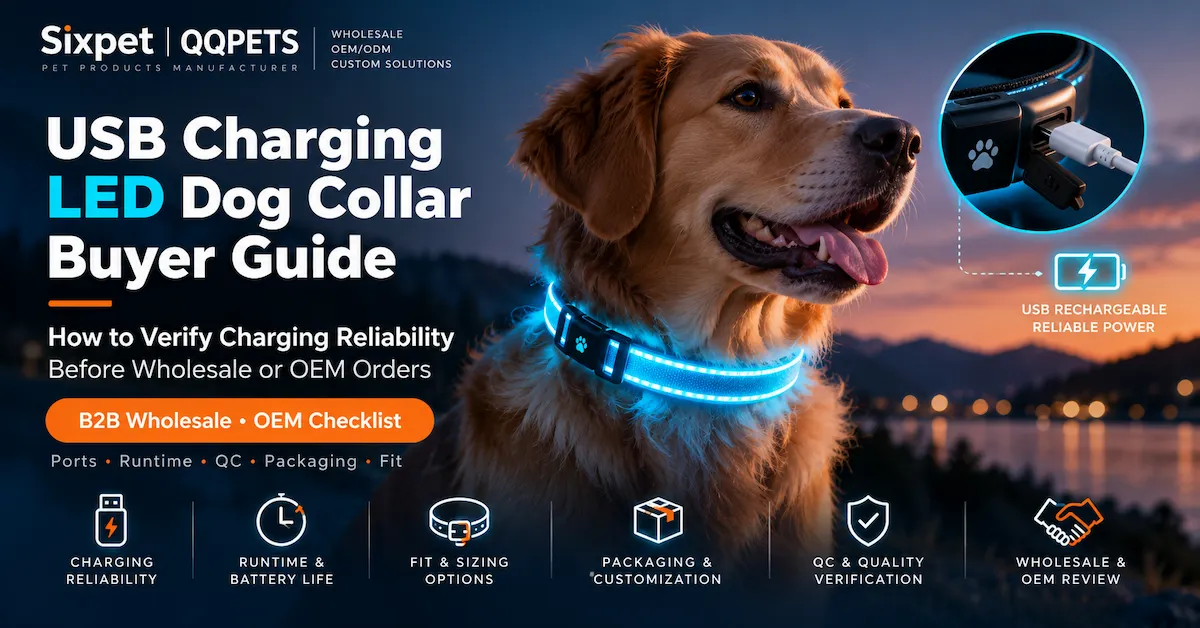
Reflective materials return light from an external source, while LED products generate light using electrical power. A leash-mounted spotlight serves another purpose: illuminating an area in the direction it is aimed. These functions should not be treated as interchangeable. The Holo Paws reflective harness is described as using reflective material without batteries or charging; it should therefore be evaluated as a reflective product, not assumed to contain powered LEDs. QQPETS also presents a retractable dog leash with light featuring a front spotlight, side lights, and USB charging. Exact LED harness and collar configurations require separate specification and sample confirmation.
| Product or configuration | Primary function | Potential role in a collection | Confirm before ordering |
|---|---|---|---|
| Holo Paws Reflective Dog Harness | Passive reflection | Patterned walking harness without a charging requirement | Reflective coverage, dimensions, fit, and care instructions |
| LED dog harness project | Active light on the harness | A wearable night-visibility option | Lighting layout, runtime by mode, wiring protection, and size-specific fit |
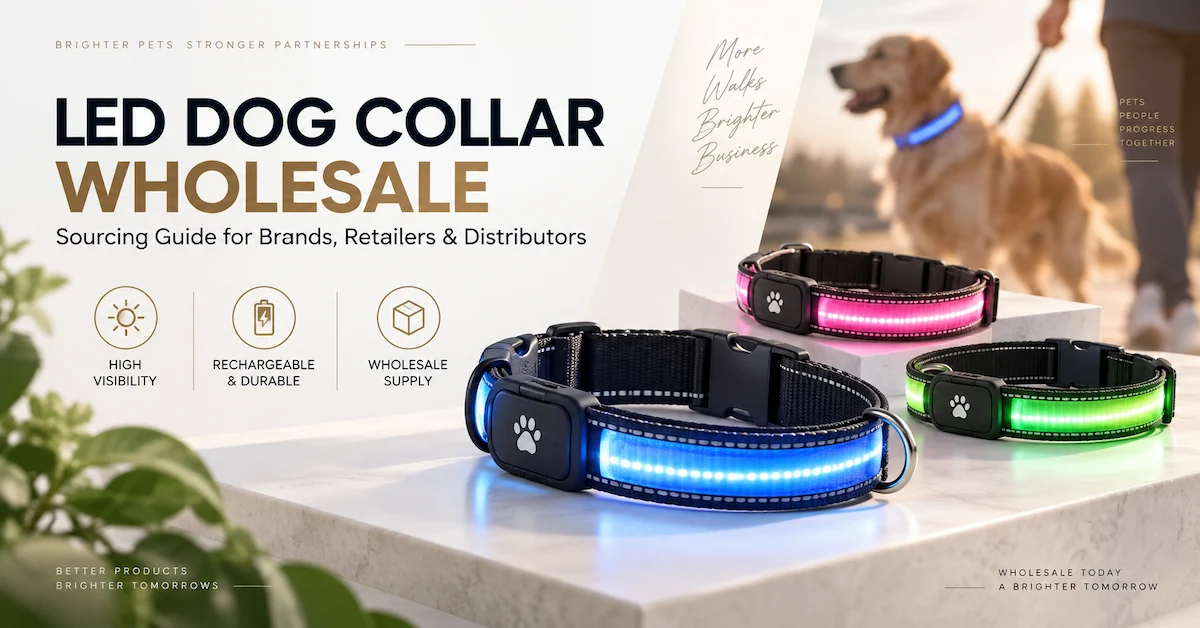
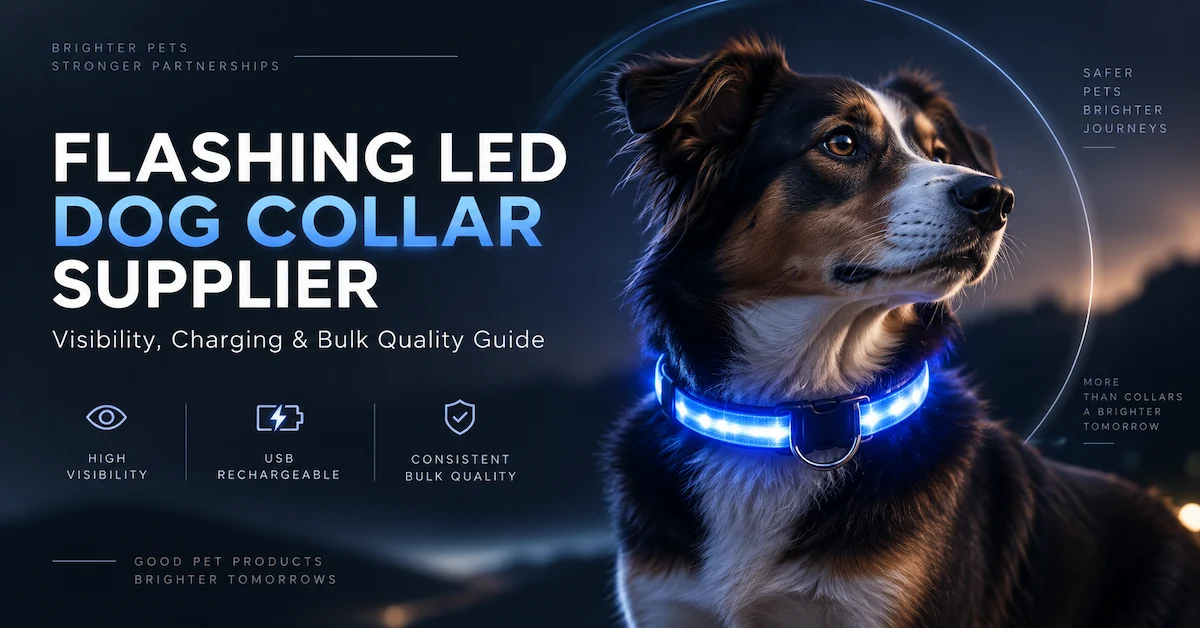
| LED dog collar project | Active light around the neck area | A collar-format visibility option | Adjustment range, module weight, charging method, and whether it is designed for leash attachment |
| Retractable dog leash with light | Leash control plus front and side lighting | A handheld lighting and walking accessory | Braking, retraction, hook operation, electrical specification, and intended use |
Put Measurable Specifications in the Purchase Brief
Use a written specification before comparing quotations. For night-visibility products, define both the physical construction and the conditions under which a performance claim will be assessed. Replace “long battery life” with a requested operating duration for each mode and an agreed test method. Replace “high visibility” with a defined viewing setup and acceptance criterion. The table below is a procurement checklist, not a claim that every QQPETS product shares the same specification. Record missing information as “to be confirmed” rather than filling the gap from another model.
| Specification area | Information to request | Approval reference |
|---|---|---|
| Product identity | Model, size, color, configuration, and revision | Quotation and approved specification |
| Fit and dimensions | Neck or chest range, adjustment limits, width, and measurement method | Size chart and physical sample |
| Textile construction | Material composition, webbing dimensions, lining, and reflective material | Material list and samples |
| Connection hardware | Buckle, hook, adjuster, attachment ring, and relevant test requirements | Component identification and test record |
| Lighting | Light source, placement, colors, operating modes, and viewing conditions | Functional sample and agreed demonstration |
| Battery and charging | Battery specification, charging input, charge time, and runtime by mode | Model-specific technical data |
| Exposure and care | Intended weather exposure, cleaning method, and module-removal instructions | Applicable test evidence and user instructions |
| Packaging | Included accessories, labels, barcode, warnings, and carton details | Approved packing sample |
Check Materials, Fit, and Load-Bearing Construction
Ask the supplier to identify the material rather than accepting “premium webbing” as a complete description. Record fiber composition, width, thickness, lining, reflective application, and the exact connection hardware. Review the assembled sample at the smallest and largest adjustment settings, checking whether buckles remain accessible and whether lighting or reflective areas become covered. Where a battery module is included, assess its position as part of the finished product rather than as an isolated component. The leash attachment, surrounding stitching, and connected straps should have their own agreed mechanical assessment; a lighting demonstration does not verify them. Likewise, do not translate a quoted pull-force result directly into a recommended dog weight without the relevant product guidance. Use the supplier’s material, sewing, and assembly information to establish what will actually be inspected.
Review Workmanship Where Textiles and Electronics Meet
For LED accessories, ask to see how wiring, light modules, and the power unit are integrated into the wearable structure. Review bending points, adjustment areas, switch access, and protection around electrical connections. A logo change and a change to harness geometry should not be approved through the same visual-only check: the latter calls for another review of the assembled product. QQPETS discusses this relationship in its LED dog harness OEM service guide. As a practical sample-review method, mark the relevant construction details on photographs and attach them to the approval record. Ask the supplier which textile operations are performed in its own production system, which components are sourced externally, and who checks the completed assembly. This gives the buyer a more useful manufacturing picture than an equipment count alone.
Evaluate Function Beyond the First Switch-On
Propose a repeatable sample comparison rather than relying on a dramatic demonstration video. Use the same viewing positions and ambient lighting for each sample, record the operating mode and charge condition, and include front, side, and rear views. For reflective products, document the external light source; for powered products, document the selected lighting mode. Review the agreed mechanical and electrical tests, then compare appearance and operation before and after the relevant test sequence. Request separate confirmation of rain exposure, immersion, wiping, and washing claims rather than treating them as equivalent. QQPETS’ LED dog harness wholesale guide identifies wiring protection, charging, lighting consistency, and harness fit as procurement concerns. A useful result is not merely “passed,” but a record identifying the sample, method, conditions, and acceptance requirement.
Make Quality Records and Product Claims Match
Agree on incoming-material, in-process, finished-product, and packing checks before production, following the staged inspection approach described in QQPETS’ pet accessories supplier guide. For a night-walking collection, connect each advertised function to the appropriate evidence: dimensional checks for fit information, functional checks for lighting modes, and relevant test records for specific performance claims. Request complete documents that identify the tested product or material, the issuing organization, the date, and the scope. A document belonging to another model should not be used to fill a gap in the current product file. Similarly, avoid publishing a visibility distance, water-resistance rating, runtime, or safety guarantee simply because it appears in a general comparison chart. Ask what documentation is available for the exact order and destination, and keep unresolved claims out of retail packaging.
Develop Private-Label Products Through Sample Approval
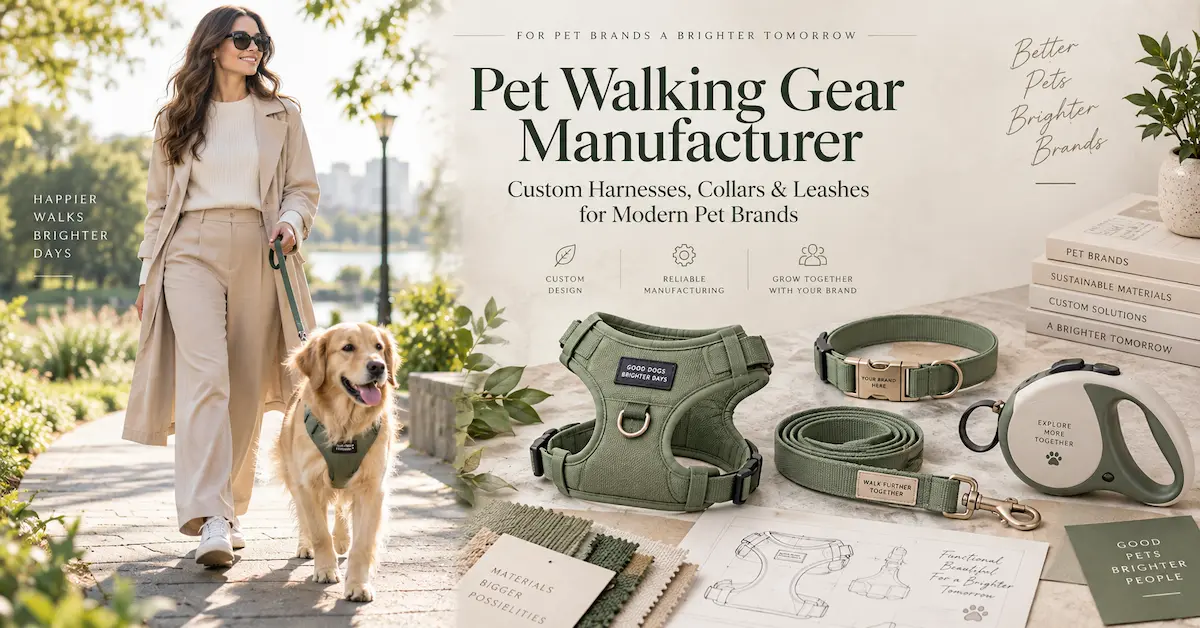
Separate appearance customization from functional development. Artwork, colors, logo placement, labels, and packaging can be discussed as brand requirements; changes involving lighting, power, dimensions, or structural components need their own feasibility and sample review. QQPETS describes branding, packaging, lighting configuration, and related options in its private-label LED harness guide, with the final scope to be confirmed for the selected product. A practical project sequence is requirement review, configuration confirmation, artwork approval, sample development, sample evaluation, and written production approval. Keep the approved physical sample alongside the specification and packaging reference. For matching harness, collar, and leash collections, confirm each item’s dimensions and function separately even when the graphic theme is shared. Agree how original artwork and any exclusive design arrangement may be used before releasing production files.
Confirm MOQ, Capacity, and the Production Schedule
Ask a night safety pet accessories supplier for an order-specific minimum quantity, not just the lowest number shown on a general product page. Clarify minimums by style, color, size, lighting configuration, and packaging. For planning purposes, a proposed range with two designs, three colors, and four sizes already contains 24 variants; this is an illustration, not a recommended order structure. Ask which variants share components and which require separate preparation. Then request a schedule distinguishing sample development, buyer approval, material preparation, assembly, inspection, and dispatch. Confirm whether the quoted lead time begins at deposit, artwork approval, or final sample sign-off. The bulk pet accessories ordering guide also emphasizes project-specific MOQ and timing. Capacity discussions should address the actual product mix and required delivery window, not only an overall monthly output figure.
Compare Total Order Cost and Control Repeat-Order Changes
Compare equivalent configurations before negotiating unit price. Put development charges, product cost, printed packaging, included charging accessories, requested inspections, and delivery arrangements on the same quotation basis. Treat an unusually low offer as a reason to clarify what is included, not as proof of poor quality or exceptional value. For repeat orders, keep a dated reference covering materials, lighting components, dimensions, approved artwork, packaging, and test requirements. Ask for written approval before any substitution and decide whether the change requires a new sample. For example, an outer fabric that looks similar should not automatically replace the approved material without review of the agreed requirements. This approach gives purchasing, quality, and merchandising teams a shared reference when placing replenishment orders or investigating a discrepancy.
Discuss a Night-Walking Collection with QQPETS
QQPETS specializes in custom dog harnesses, collars, and leashes. Its company and manufacturing information describes heat-transfer printing, screen printing, weaving, cutting, sewing, and packaging operations. Those capabilities provide a relevant starting point for discussing branded walking collections, while any lighting configuration, test requirement, order quantity, or delivery commitment should be confirmed for the individual project. Review the QQPETS product range to identify a reference style, then prepare a brief describing the intended environment, target dog sizes, required visibility function, quantity breakdown, artwork, and packaging. Request the current specification and a sample plan rather than assuming that one product’s features apply across the catalog.
Frequently Asked Questions
What should I check first when choosing a night safety pet accessories supplier?
Start with the product’s intended function and the evidence supporting it. Ask the supplier to identify the exact model, explain whether it uses reflection or powered lighting, provide dimensions, and confirm a sample and inspection process.
Are reflective dog harnesses and LED harnesses interchangeable?
No. Reflective material depends on external light, while LEDs produce light when powered. Select the configuration around the intended use, and write product descriptions that explain how the specific item works rather than calling every bright-looking harness an LED product.
Does a lighted leash make a separate visibility wearable unnecessary?
Do not assume so. A light mounted on the handle and a light worn by the dog occupy different positions. Evaluate the handheld light and the wearable as separate products, then decide what combination suits the planned collection.
What battery runtime should buyers request?
Define the desired use period and request results for each available mode. Confirm the charge condition, test environment, and end-of-runtime criterion. Do not turn a best-case figure from one configuration into a promise for every size or lighting setting.
Does water resistance mean an LED accessory can be washed?
Do not make that assumption. Request the exact care instructions, any module-removal procedure, and the evidence supporting the intended exposure. Packaging should describe the approved cleaning method rather than using “waterproof” as a substitute for care guidance.
Can night-walking products carry a private-label design?
QQPETS describes options for branding, patterns, materials, and packaging. Discuss the chosen product before finalizing artwork, and confirm separately whether proposed electrical or structural changes are available and require further development.
What documents should accompany sample approval?
Keep the product specification, material and component references, dimensions, approved artwork, packing details, and agreed inspection requirements. Identify the sample version so that purchasing and production refer to the same configuration.
Can harnesses, collars, and leashes form a matching collection?
They can be proposed as a coordinated collection. Confirm the availability, quantity conditions, and specifications of each item separately. Matching colors or graphics should not imply identical sizing, strength, lighting, or care instructions.
Is there one MOQ or lead time for all night-safety accessories?
No universal figure should be assumed. Ask for a quotation tied to the actual product, quantity by variant, customization, packaging, sample status, and required delivery date.
What information makes a quotation easier to compare?
Provide the same brief to each supplier: reference style, intended environment, dimensions, materials, lighting requirements, quantity breakdown, artwork, packaging, requested checks, and delivery terms. Ask suppliers to identify exclusions and unresolved specifications.
Conclusion
Choosing a night safety pet accessories supplier is a product-definition decision before it is a price comparison. Separate reflection, wearable lighting, and path illumination; confirm fit and mechanical construction independently; and approve the exact sample, instructions, and production requirements before scaling. A focused collection with clear functions and documented specifications is a more useful starting point than a large assortment built around unsupported claims. To discuss a QQPETS project, send your product brief and sample requirements, including the intended walking environment, product categories, size range, quantities, lighting preferences, artwork, and packaging expectations.