What Should Buyers Verify in a Pet Accessories Factory?
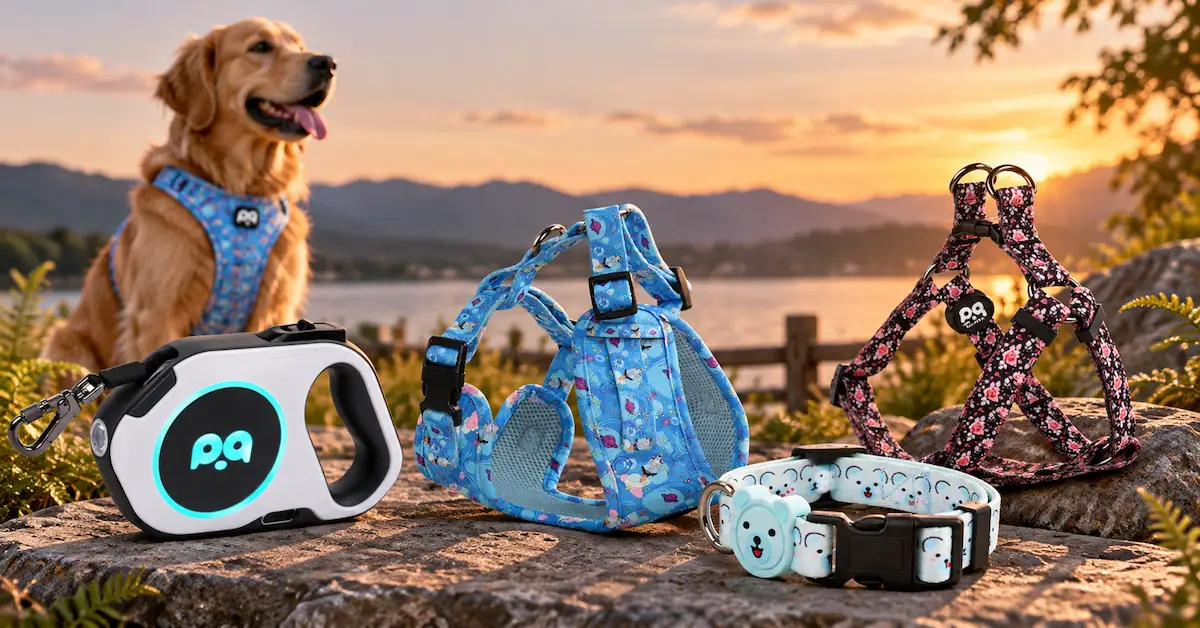
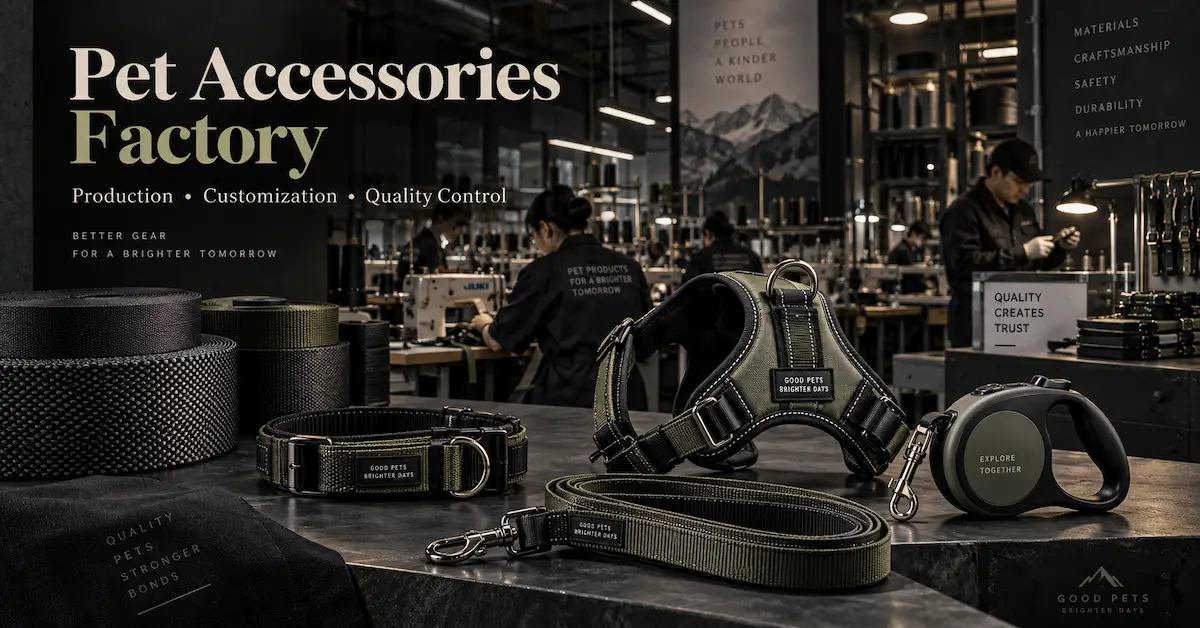
A pet accessories factory should be evaluated by its ability to turn an approved product specification into repeatable bulk production, not simply by the number of products displayed in a showroom. For pet brands, importers, wholesalers, retailers, and e-commerce sellers, a useful factory evaluation covers four connected areas: whether the factory understands the product requirement, whether the required processes are controlled, whether the approved sample can be reproduced in production, and whether future orders can remain consistent with the original specification. This is particularly important for dog harnesses, collars, leashes, retractable leashes, and visibility-oriented walking products because dimensions, webbing, hardware, printing, sewing, assembly, and packaging can all affect the finished SKU. QQPETS describes weaving, printing, cutting, sewing, and packaging operations on its About Us page, while its product range gives buyers a starting point for identifying which walking-accessory categories are relevant to a sourcing project.
Who Should Source Directly From a Pet Accessories Factory?
Factory-direct sourcing is most useful when the buyer needs control over specifications, private-label branding, repeat production, or a coordinated product line. An established pet brand may need consistent materials and artwork across several seasons; an importer or distributor may want a stable source for multiple harness, collar, and leash SKUs; a retail chain may need controlled packaging, barcode placement, size information, and replenishment; an e-commerce seller may prioritize distinctive graphics, lower SKU complexity, and a product version that can be reordered without unexpected changes. A direct factory relationship is less useful when the buyer only needs a very small one-time quantity of existing stock, has not defined the target product, or expects the factory to determine market positioning, dimensions, materials, packaging, and retail claims without a clear brief. Before starting a new project, review the current QQPETS pet accessories range and decide whether the requirement is an existing product, a private-label variation, or a deeper OEM/ODM development project.
Start a Factory Audit With the Product, Not the Building
A large facility can indicate manufacturing capacity, but floor area alone does not prove that the factory is suitable for your specific order. Start by selecting one target SKU and follow how it would move through the factory. For a printed dog harness, for example, the relevant questions may include who confirms the artwork, where the webbing or fabric comes from, which printing process is used, how pieces are cut, how size-dependent components are identified, how sewing instructions are transferred to operators, where buckles and rings enter the process, and how the finished item is inspected and packed. For a retractable leash, the process may involve a different set of components and functional checks. The goal is to connect factory capability to the real product rather than collecting unrelated equipment photographs. QQPETS states that its production system includes heat-transfer printing, silk-screen printing, weaving, cutting, sewing, and packaging; during a sourcing discussion, buyers should ask which of these processes apply to the selected product and which components are purchased from external suppliers. More information about the company-level manufacturing setup is available on the QQPETS factory and company page.
Which Processes Should Be In-House and Which Can Be Outsourced?
A capable pet accessories factory does not necessarily need to manufacture every buckle, ring, hook, electronic component, fabric, and packaging material internally. What matters is whether the factory can identify critical purchased components, define their specifications, inspect incoming materials, approve suppliers, and prevent unauthorized substitutions. In-house printing, cutting, or sewing may provide greater process control for certain custom projects, while specialized hardware or electrical components may reasonably come from qualified outside suppliers. Buyers should therefore ask for a process map rather than a simple answer to “Is everything made in your factory?” A useful process map identifies the step, responsible department, input material, inspection point, and output. This approach also helps distinguish a genuine manufacturing operation from a company that mainly coordinates finished goods from several unrelated sources. The current QQPETS supplier guide provides additional context on evaluating sourcing and production responsibilities across a pet-accessory project.
Build a Factory Evaluation Sheet Before the Visit or Video Audit
A structured audit prevents the buyer from focusing only on clean floors, attractive samples, or machinery. The table below can be used before an on-site visit, remote video audit, or detailed supplier interview. It is a buyer checklist rather than a statement that every item applies identically to every QQPETS product.
| Factory Area | What to Verify | Why It Matters |
|---|---|---|
| Product definition | Approved model, dimensions, materials, components and revision | Ensures buyer and factory refer to the same SKU |
| Incoming materials | Webbing, fabric, hardware, electronic parts and packaging identification | Reduces uncontrolled substitutions |
| Printing | Artwork files, color reference, placement and process control | Important for private-label appearance |
| Cutting | Size identification, cutting dimensions and material handling | Influences dimensional consistency |
| Sewing | Stitching instructions, critical joints and operator reference | Important to assembled construction |
| Assembly | Correct hardware, orientation and functional operation | Prevents component and configuration errors |
| In-process inspection | What is checked before final assembly | Finds problems before they become finished goods |
| Final inspection | Dimensions, appearance, function and packing | Confirms the product against the approved version |
| Packaging | Labels, barcode, accessories and carton requirements | Protects retail and logistics accuracy |
| Change control | How material or process changes are approved | Critical for repeat-order consistency |
How Should Buyers Evaluate Dog Harness Production?
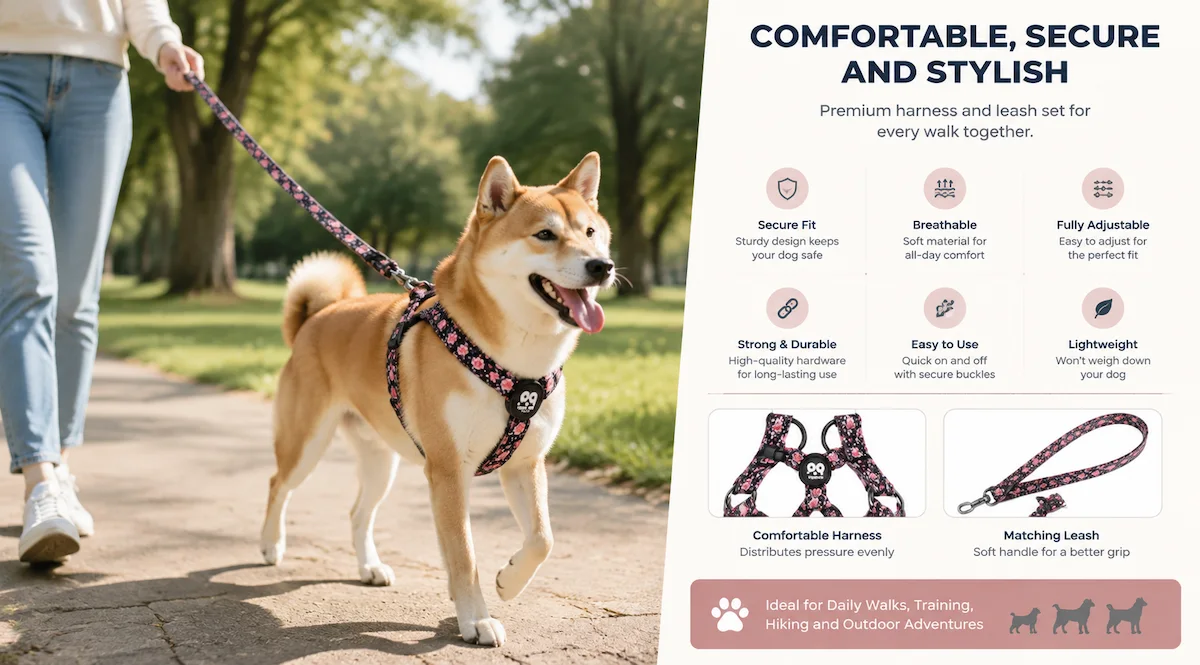
Dog harness manufacturing should be audited as a complete assembly process rather than as a collection of attractive fabric pieces. Begin with the approved size chart and adjustment ranges, then check how straps, lining or mesh, buckles, adjusters, D-rings, printed materials, labels, and stitching are defined. If several sizes share similar-looking components, verify how operators distinguish them during cutting, sewing, and packing. If artwork runs across multiple sections, confirm which orientation and placement are acceptable and how a repeat order will match the original version. At sample stage, buyers should inspect the product at both ends of its adjustment range and document the approved result. QQPETS currently lists multiple harness styles through its dog harness and pet accessories products, so buyers should use the exact selected model rather than assuming that material, construction, size, or hardware information from one harness applies to another.
How Should Buyers Audit Collar and Leash Manufacturing?
For collars, confirm webbing width, adjustment range, buckle, slider, D-ring, printing, labels, and sewing positions. For leashes, document length, width, handle configuration, hook, webbing or rope construction, connection areas, and any accessories. A factory may demonstrate a component strength result, but buyers should avoid converting a single component or pull-test figure into a general pet-weight recommendation unless the complete product and intended use have been evaluated accordingly. Functional components should be checked within the finished assembly. QQPETS' existing dog collar manufacturer guide and dog leash factory guide provide category-specific internal resources that buyers can use when preparing a more detailed audit checklist.
Sample Approval Is the Bridge Between Development and Production
A sample becomes commercially useful when it is connected to a controlled specification. Record the sample version, dimensions, material references, hardware, colors, printing, labels, packaging, functional requirements, and any deviations that the buyer has accepted. Avoid approving an item only through photographs because color, hand feel, adjustment, fit, component operation, and assembly details may not be fully represented. Once approved, the sample and its related documents should become the production reference. If the buyer requests a change afterward, the revision should be clearly identified instead of continuing to call both configurations “the approved sample.” This is especially important for multi-size and multi-color programs because changes can easily be implemented in one SKU while another SKU remains on the previous version. A reliable pet accessories factory should be able to explain how approved sample information reaches purchasing, production, inspection, and packing teams.
Quality Control Must Be Defined as Specific Checks
“100% quality” and “strict QC” are not useful procurement specifications. Buyers need to know what is checked, when it is checked, how it is recorded, and what happens when the result does not meet the agreed requirement. Incoming checks may verify materials, dimensions, color references, hardware, or packaging components. In-process checks can focus on printing position, cutting dimensions, sewing, assembly, and functionality. Final inspection can cover finished dimensions, appearance, adjustment, component operation, labeling, quantities, packaging, and agreed model-specific tests. The right checklist differs between a basic printed collar and an electronic or retractable product, so a generic inspection sheet should not replace product-specific requirements. QQPETS' pet accessories sourcing guide discusses quality control across materials, production, finished goods, and packaging, which can serve as a starting framework when buyers define their own acceptance requirements.
Certification Claims Need to Match the Exact Product Scope
Factory certificates, material documents, and product test reports serve different purposes. Before relying on any document, verify the organization named on it, issue or validity date, applicable material or product, test method or certification scope, and whether the document actually applies to the product being ordered. A certificate shown on an About page should not automatically be treated as evidence for every custom SKU. Likewise, a report for one type of collar, harness, or leash should not automatically cover another design with different materials or components. When documentation matters for a destination market or retailer, place that requirement in the sourcing brief before sampling rather than requesting it after production. Buyers can review QQPETS' published company information through the About Us page, then request project-specific confirmation for the selected model.
Capacity Should Be Measured Against Your Order Structure
A factory's overall output figure is only a starting point. The more useful question is whether the production system can handle your mix of styles, sizes, colors, artwork, components, and packaging within the required delivery window. One order of 5,000 identical collars is operationally different from an order of 5,000 pieces divided among multiple harness structures, colors, graphics, sizes, labels, and packaging formats. SKU fragmentation increases material planning, production changeovers, identification, inspection, and packing complexity. During factory evaluation, provide a realistic quantity breakdown and ask how the proposed production schedule handles each variant. The current bulk pet accessories ordering guide emphasizes defining style, material, quantity, branding, packaging, quality requirements, and timing before bulk production. Factory capacity should therefore be confirmed against the actual purchase order rather than inferred from a general company-level capacity statement.
MOQ Should Be Evaluated by Style, Color, Size, and Custom Process
When comparing a pet accessories factory, do not ask only “What is your MOQ?” Minimum quantity may be affected by the base model, webbing or fabric, custom print, buckle or hardware selection, electronic configuration, packaging, and the number of SKUs. A low headline MOQ can become less meaningful if each color, pattern, or packaging format has its own minimum. Ask the factory to show how quantities are divided across the program. For example, a total of 1,200 units split among three designs, four sizes, and multiple colors creates a very different production plan from one 1,200-unit SKU. Buyers developing a new brand may benefit from reducing the number of initial variants rather than forcing a complex range into the smallest possible quantity. MOQ should support a workable manufacturing plan and manageable inventory risk, not function only as a marketing number.
Lead Time Should Be Broken Into Production Stages
A quoted lead time is difficult to evaluate unless the start and end points are defined. Separate requirement review, quotation, artwork preparation, sample production, buyer feedback, revised sampling if needed, final approval, material preparation, bulk manufacturing, inspection, packaging, and shipment preparation. Ask which stage can run in parallel and which must wait for buyer approval. Also confirm whether production lead time starts after payment, after final artwork, after sample approval, or after all materials are ready. New custom hardware or packaging can require a different schedule from a repeat order using approved components. Buyers should therefore treat lead time as a project schedule rather than a single number printed in a quotation.
Compare a Factory With a Trading or General Sourcing Supplier
Neither business model is automatically better for every buyer. A direct factory relationship can provide greater visibility into production and change control, while a sourcing company may be useful when a buyer needs many unrelated product categories from different factories. The selection should depend on the project.
| Sourcing Route | Main Strength | Main Limitation to Evaluate | Best Fit |
|---|---|---|---|
| Direct pet accessories factory | Closer access to manufacturing and product revisions | May focus on a narrower category range | Brands with repeat walking-accessory programs |
| General supplier | Broader access to multiple product categories | Manufacturing responsibility may be distributed | Buyers needing mixed categories |
| Existing catalog purchase | Faster product selection with less development | Less differentiation | Buyers testing a standard product |
| OEM/private label project | Greater brand and specification control | Requires sampling and approval work | Brands building differentiated SKUs |
| ODM development | Greater product-development involvement | More technical and commercial coordination | Buyers needing meaningful product changes |
The right decision depends on whether the buyer prioritizes assortment breadth, product differentiation, manufacturing transparency, development support, or repeat production.
How Should Buyers Evaluate OEM, ODM, and Private Label Capability?
Private-label work usually begins with an existing product and changes elements such as artwork, logo, label, color, or packaging. OEM projects can involve a more detailed buyer-defined specification, while ODM generally requires greater manufacturer involvement in product development. These terms are often used differently by different suppliers, so do not select a factory because it simply displays “OEM/ODM” on its website. Ask what can actually be changed, which changes require a new sample, whether new components or tooling are involved, who approves materials, how design revisions are recorded, and which party is responsible for testing and documentation. QQPETS describes customization across dog walking accessories and provides additional sourcing guidance in its pet accessories supplier content. A serious development project should end with an agreed specification and sample rather than an undefined promise of “full customization.”
Control Cost by Controlling the Specification
Unit price is only one element of factory sourcing cost. Buyers should also consider sample development, printing preparation, special materials, hardware, labels, packaging, inspection, testing where required, logistics, inventory complexity, and the cost of correcting inconsistent production. One of the largest commercial risks is an undefined specification: purchasing believes it ordered one configuration while production interprets the requirement differently. A detailed specification and controlled approval process reduce this risk before it turns into rework or a shipment dispute. When comparing factories, put quotations on the same specification basis. If one supplier includes custom packaging and another quotes only bulk-packed goods, the numbers should not be compared as if they represent identical offers.
Repeat Orders Are the Real Test of Factory Control
A successful first order does not guarantee consistent replenishment. Before the second order, confirm whether materials, hardware, printing, dimensions, labels, packaging, and inspection requirements remain the same. Keep the final artwork, approved sample, specification version, size chart, packaging reference, and agreed inspection criteria under the same SKU record. If the factory proposes substituting a webbing, buckle, hook, printing process, electronic component, or packaging material, require review before implementation. Some changes may be commercially harmless, while others can affect fit, appearance, function, documentation, or customer expectations. A strong pet accessories factory should have a process for managing these changes instead of relying on informal communication between individual sales and production staff.
What Should You Send a Pet Accessories Factory Before Requesting a Quote?
A useful inquiry should include the product category, reference model or photos, target market, intended application, pet size range, required dimensions, material direction, colors, hardware preferences, logo or artwork files, quantity by style/color/size, packaging, destination, expected documentation, inspection requirements, and desired delivery schedule. If you already have an existing product, send photos, measurements, drawings, or a physical sample and identify what must change. If the project involves a problem with an existing supplier, explain the issue—such as size inconsistency, artwork variation, component changes, or packaging errors—so the new factory can evaluate how the requirement should be controlled. Buyers can submit project information through the QQPETS contact page after reviewing the current product range.
Frequently Asked Questions
1. How can I tell whether a pet accessories supplier is a real factory?
Ask which processes are performed at the facility, request a production process explanation for the product you intend to buy, review manufacturing and inspection records where appropriate, and connect factory capabilities to a real sample or order. Equipment photographs alone do not prove responsibility for your specific product.
2. What should I check during a pet accessories factory visit?
Follow one SKU through material receipt, printing or preparation, cutting, sewing or assembly, in-process inspection, final inspection, and packaging. Review how materials and product revisions are identified and how the approved sample is used by production and QC teams.
3. Does a bigger factory always mean better product quality?
No. Factory size may indicate available resources, but quality depends on product definition, material control, process control, inspection, employee execution, and change management. A smaller specialized operation can be more suitable than a larger factory that does not control your required product well.
4. Can QQPETS manufacture private-label pet accessories?
QQPETS publishes customization and manufacturing information for dog harnesses, collars, leashes, and related walking accessories. The exact available customization, MOQ, materials, packaging, timing, and product configuration should be confirmed for the selected SKU through QQPETS.
5. What products should I evaluate first when sourcing from QQPETS?
Start with the categories closest to your planned collection. The current QQPETS product range includes dog harness, collar, leash, retractable leash, and visibility-oriented categories. Confirm the specific model and current availability before building the final purchase specification.
6. How should I approve a custom sample before mass production?
Record the sample revision, dimensions, materials, components, artwork, colors, labels, packaging, and agreed functional requirements. Correct unresolved issues before approval and ensure the production specification matches the approved physical sample.
7. How can I compare two pet accessories factory quotations fairly?
Use the same product specification, materials, dimensions, hardware, customization, quantity breakdown, packaging, inspection requirements, and commercial terms. Clarify what each quotation excludes before deciding which supplier is actually less expensive.
8. What affects MOQ for custom pet accessories?
MOQ can be influenced by the selected product, materials, artwork, color, size assortment, custom components, printing, packaging, and supplier purchasing requirements. Request an SKU-level breakdown instead of relying only on a total-order MOQ.
9. How can I reduce repeat-order inconsistency?
Keep a controlled product file containing the approved sample, dimensions, materials, component references, artwork version, packaging, and inspection requirements. Require confirmation before substitutions or specification changes are introduced.
10. What information should I provide before asking for a factory quotation?
Provide the product type, reference design, application, target sizes, materials, dimensions, quantities, artwork, branding, packaging, destination market, inspection requirements, and required schedule. Use the QQPETS contact page to discuss the exact project rather than asking for a generic lowest price.
Conclusion
Choosing a pet accessories factory is fundamentally a manufacturing-control and supply-chain decision. Buyers should look beyond showroom samples and factory-size claims and determine whether the supplier can define the product clearly, control materials and components, transfer the approved sample into production, manage printing and sewing processes, inspect the finished goods, package each SKU correctly, and reproduce the same approved configuration in future orders. QQPETS states that its manufacturing operations include heat-transfer printing, silk-screen printing, weaving, cutting, sewing, and packaging, while its product focus covers dog harnesses, collars, leashes, retractable products, and related walking accessories through its company and product pages. For a project-specific factory assessment, contact QQPETS with your reference product, size requirements, materials, SKU quantities, artwork, packaging, quality expectations, and required schedule so the actual manufacturing and customization scope can be confirmed.