What Should a Pet Accessories Manufacturer Actually Provide?
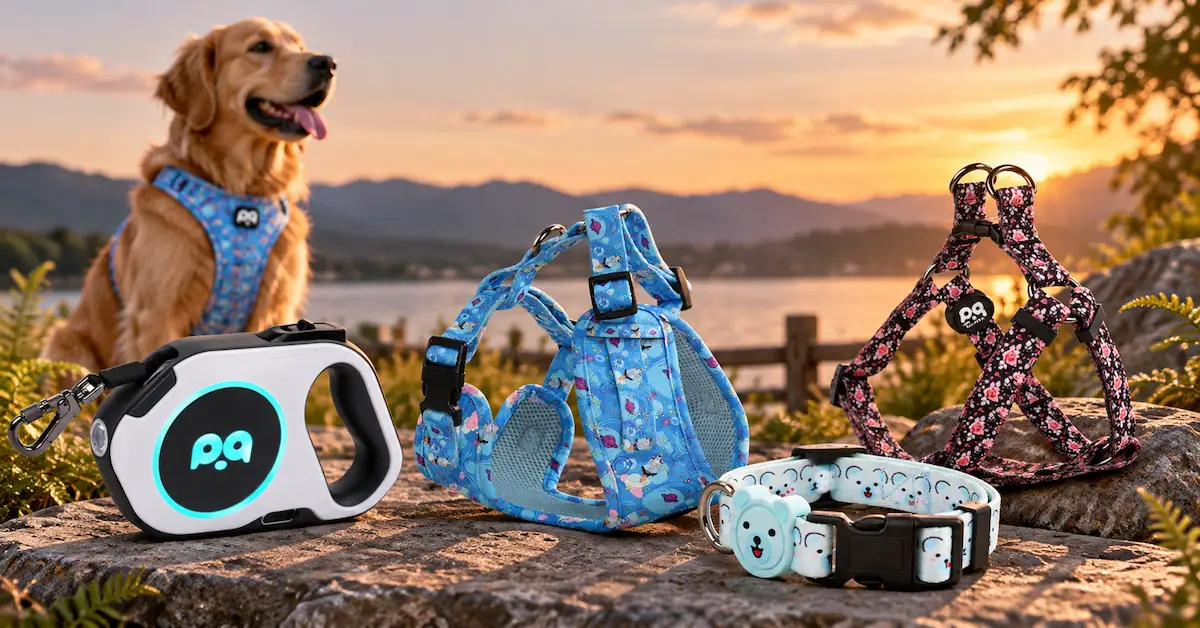
A pet accessories manufacturer should do more than turn an existing sample into a finished item. For pet brands, wholesalers, distributors, retailers, and private-label sellers, the real manufacturing task begins with product definition: what the product is for, which pet sizes it targets, how it should fit, which materials and components are required, how the brand identity will appear, how quality will be checked, and how the same approved specification will be reproduced when the buyer places a repeat order. A manufacturer may offer a large catalog, but catalog size alone says little about whether it can control dimensions, webbing, buckles, hardware, printing, sewing, packaging, and product revisions consistently. QQPETS currently positions its product line around dog harnesses, dog collars, dog leashes, retractable dog leashes, LED dog harnesses, and LED dog collars, giving buyers several categories from which to build walking-accessory collections. Buyers can first review the QQPETS product range before deciding which categories need standard supply and which require customization.
Who Needs an OEM Pet Accessories Manufacturer—and Who May Not?
A private-label pet brand usually needs more than finished stock because colors, printed patterns, sizing, logo placement, labels, packaging, and collection consistency contribute directly to brand identity. Wholesalers and distributors may care more about assortment planning, stable replenishment, price structure, and reducing the number of factories they manage. Retail chains need clear sizing, reliable packaging, barcodes, display consistency, and products that can be reordered under the same SKU. E-commerce sellers often place additional emphasis on visual differentiation, packaging, size information, and controlling product variation across repeat production. An OEM or custom pet accessories manufacturer is therefore most useful when the buyer has a defined sales channel and wants control over product specifications or branding. It may be unnecessary to start a deep OEM or ODM project when a standard product already satisfies the target market, or when the buyer has not yet defined product category, target pet size, quantity, material direction, branding requirements, or retail positioning. QQPETS' existing pet accessories supplier guide similarly separates the needs of brands, wholesalers, retailers, and online sellers rather than treating every inquiry as the same sourcing project.
Start With the Product Application, Not Just a Catalog Photo
A useful sourcing brief begins with how the product will be sold and used. A lightweight urban-walking collection, a fashion-oriented printed collection, a low-light visibility range, and an outdoor-focused line may all include harnesses, collars, or leashes, but they create different questions about structure, material, hardware, reflective elements, lighting, sizing, cleaning, and packaging. If a buyer starts only with “I need a dog harness,” the manufacturer still has to determine the target dog sizes, harness structure, adjustment points, lining, webbing width, leash attachment position, branding method, quantity split, and intended retail level. The same principle applies to dog collars and leashes. QQPETS currently discusses coordinated collars, harnesses, leashes, retractable products, and outdoor visibility gear within its walking-accessory content; the dog walking accessories sourcing guide can therefore be used as a related internal reference when planning a complete line rather than a single isolated SKU.
Build a Controlled Product Specification Before Comparing Prices
Two quotations are not truly comparable unless they describe substantially the same product. Before asking several factories for pricing, create a requirement sheet that separates buyer requirements, supplier proposals, confirmed specifications, and unresolved items. For textile walking accessories, dimensions and adjustment ranges matter just as much as a general size label such as S, M, or L. Material names should be specific enough for procurement and inspection rather than using terms such as “premium material.” Hardware should identify the required buckle, hook, adjuster, attachment ring, finish, or functional requirement. Artwork should state the file, position, scale, color expectation, and approval reference. Packaging should specify what is included and how the product is identified. The following table is a purchasing template rather than a claim that every QQPETS model uses the same construction.
| Specification Area | What the Buyer Should Define or Confirm | Why It Matters |
|---|---|---|
| Product category | Harness, collar, fixed leash, retractable leash, LED product | Establishes the product platform |
| Target pet range | Intended size group and measurement method | Prevents vague S/M/L comparisons |
| Dimensions | Length, width, adjustment range, relevant component sizes | Supports sample and bulk inspection |
| Textile materials | Webbing, fabric, lining, reflective material where applicable | Influences feel, appearance and production |
| Hardware | Buckles, hooks, D-rings, adjusters and finishes | Affects operation and construction |
| Branding | Logo, label, artwork, colors and placement | Controls private-label identity |
| Function | Adjustment, retraction, lighting or other model-specific features | Defines what must be tested |
| Packaging | Product card, tag, retail box, barcode and included accessories | Affects retail readiness and total cost |
| Inspection | Dimensions, appearance, function, packaging and agreed tests | Creates an approval standard |
| Revision | Sample number, artwork version and specification revision | Protects repeat-order consistency |
Materials and Components Need More Detail Than “Good Quality”
Materials should be discussed in relation to the product design instead of as isolated selling points. Webbing composition, width, thickness, printed surface, backing material, padding, mesh, buckle construction, hooks, D-rings, adjusters, reflective sections, and any electronic modules can influence how the finished product feels, functions, looks, and costs. A pet accessories manufacturer should therefore be able to explain which materials apply to the selected design and which items still require buyer approval. For example, a printed fashion collar may prioritize artwork reproduction and surface appearance, while another project may place greater emphasis on hardware configuration, dimensional control, or outdoor use. The same material name also should not be assumed to represent the same specification across every supplier. QQPETS' current collar manufacturing content discusses webbing, hardware, printing, sewing, sizing, branding, and sample evaluation as separate purchasing considerations; buyers developing collars can review the dog collar manufacturer guide for a more category-specific discussion.
Manufacturing Capability Should Be Connected to the Actual Order
Factory size and equipment lists provide background, but buyers gain more value by understanding which processes are used for their product. QQPETS states on its About Us page that its 5,000 m² facility includes heat-transfer printing, silk-screen printing, weaving, cutting, sewing, and packaging workshops, and the page reports more than 200 skilled professionals. For a custom harness, collar, or leash, the buyer should go one step further and ask which of those processes apply to the selected design, which materials or components are sourced, how samples are transferred into production instructions, and which production details are checked before packing. A factory visit, video audit, production photographs, or process records are most valuable when they can be tied to the order under discussion rather than used only as general promotional evidence.
Workmanship Control Starts With an Approved Sample
A physical sample is not simply a sales demonstration; it should represent a defined configuration that can later be compared with bulk production. Buyers should record the sample version, dimensions, materials, hardware, colors, printed artwork, stitching appearance, functional characteristics, labels, and packaging. During evaluation, inspect how webbing enters adjusters, whether hardware moves as intended, whether the product maintains the required adjustment range, whether printed graphics align with the agreed artwork, and whether sewing and edge finishing remain consistent at important connection areas. For leashes, the handle, connection hardware, webbing or rope construction, and stitching need to be considered together rather than treating only one component as proof of finished-product performance. QQPETS' dog leash factory guide discusses issues such as stitching, hardware, color, sizing, and private-label development that buyers can use when building a category-specific sample checklist.
Quality Control Should Follow the Product From Material to Packaging
“Strict quality control” becomes useful to a buyer only when the inspection stages and acceptance requirements are clear. Before production, verify the approved materials, artwork, components, dimensions, labels, and packing instructions. During manufacturing, inspections can focus on relevant cutting, printing, sewing, assembly, and functional details. Final inspection should compare the finished goods with the approved product definition and packaging requirements. The manufacturer and buyer should also agree on how nonconforming items, substitutions, or production changes are handled. QQPETS' supplier content describes material, production, finished-product, and packaging checks as distinct stages, which is a stronger basis for an OEM discussion than a generic promise of “high quality.” When documentation or certifications are required for a destination market, request the current document, issuing body, validity information, applicable product or material, and scope instead of assuming that a company-level certificate automatically covers every customized SKU. The company's current About page lists several certification-related names, but order-specific applicability should still be verified before those claims are placed on packaging or marketing materials.
Capacity and Lead Time Must Be Evaluated at SKU Level
A headline factory capacity does not tell a buyer how quickly a specific customized order can be delivered. Lead time can depend on material availability, new artwork, printing preparation, sample revisions, special hardware, number of sizes, number of colors, packaging, inspection requirements, and the factory's production schedule. A more useful project plan separates requirement confirmation, quotation, sample preparation, buyer feedback, final sample approval, material preparation, bulk manufacturing, final inspection, packing, and shipment. The buyer should also ask what event starts the quoted production lead time: deposit receipt, artwork approval, final sample approval, or completion of another prerequisite. For multi-SKU orders, quantity should be broken down by style, color, size, and packaging configuration rather than presented only as one total. The QQPETS bulk pet accessories ordering guide uses this SKU-level planning approach and emphasizes specifications, materials, quantities, branding, packaging, quality requirements, timing, and repeat-order expectations.
Compare Product Categories Before Building a Private-Label Collection
A manufacturer covering several walking-accessory categories can help a brand create a coordinated range, but the categories should not be treated as interchangeable. Each one has its own approval priorities. The current QQPETS product navigation covers dog harnesses, dog collars, dog leashes, retractable dog leashes, LED dog harnesses, and LED dog collars. The table below uses those published categories as a sourcing comparison; exact specifications, availability, materials, functionality, MOQ, and customization still need to be confirmed for the selected product.
| Product Category | Main Buyer Focus | Key Sample Checks | Potential Private-Label Direction |
|---|---|---|---|
| Dog Harness | Fit, adjustment, structure, connection points | Size range, strap adjustment, sewing, hardware, artwork | Coordinated color or printed collections |
| Dog Collar | Neck adjustment, webbing, buckle and ring | Width, adjustment, buckle operation, printing | Fashion, everyday or matching sets |
| Dog Leash | Length, handle, hook and webbing/rope construction | Dimensions, handle finish, hook operation, sewing | Matching collar and harness collections |
| Retractable Dog Leash | Retraction, locking, housing and line configuration | Locking, extension/retraction, housing, connection | Functional or premium walking line |
| LED Dog Harness | Wearable structure plus powered visibility | Fit, light configuration, charging and agreed protection | Night-walking or outdoor collection |
| LED Dog Collar | Adjustment plus powered visibility | Neck range, module configuration and charging | Low-light visibility collection |
Total Sourcing Cost Is More Than the Unit Price
The lowest unit quotation can become expensive if the configuration is incomplete, sample revisions continue, packaging changes late, products arrive with inconsistent sizing, or a repeat order no longer matches the original version. Buyers should compare the total commercial package: sample and development charges, material specification, custom artwork, hardware, packaging, required testing, quantity by SKU, unit price, inspection requirements, logistics arrangements, and the cost of correcting nonconforming goods. MOQ should also be interpreted carefully. A total order of 1,000 pieces can represent a very different production requirement depending on whether it contains one style and one color or numerous designs, colors, and sizes. For this reason, a pet accessories manufacturer should quote against a clearly defined SKU structure instead of relying on one headline MOQ. When a supplier cannot clearly identify what is included in its quotation, the apparent price advantage is difficult to evaluate.
OEM, ODM, and Private Label Require Different Levels of Development
Private label often starts with an existing product platform and changes branding, patterns, colors, labels, or packaging. OEM can involve producing an agreed product specification for the buyer, while ODM generally requires greater manufacturer participation in product definition or development. In practice, the labels are less important than defining responsibility. The buyer should know who provides the initial design, who selects or approves materials, who owns artwork, which structural changes require new samples, who is responsible for testing or documentation, and what becomes the final production reference. QQPETS describes customization around harnesses, collars, and leashes on its company and custom-service page and presents OEM/ODM and private-label support in its existing sourcing content. For matching collections, approve each product separately even when the same color palette, logo, or graphic theme is shared; a matching appearance does not mean that dimensions, hardware, construction, or functional requirements are identical.
How Should Brands Reduce Repeat-Order Risk?
Repeatability is one of the strongest tests of a manufacturing relationship. The first successful shipment is valuable, but a brand needs the next order to match the approved SKU without relying on informal memory. Keep a controlled record containing the final product specification, approved physical sample, material and component references, artwork version, colors, dimensions, size chart, labeling, packaging, inspection criteria, and revision date. Require review before material, hardware, construction, artwork, or packaging changes are introduced. If a proposed substitution could affect appearance, fit, function, or documented requirements, determine whether another sample or validation step is necessary. This is particularly important for brands selling the same SKU over several seasons because product reviews and customer expectations are tied to the version already on the market. A reliable pet accessories manufacturer should make repeat orders easier to control, not force the buyer to redefine the product every time.
What Should You Send a Pet Accessories Manufacturer for an Accurate Evaluation?
A serious inquiry should contain enough information for the manufacturer to understand both the product and the business context. Start with the product category and reference design, then provide target pet sizes, required dimensions or adjustment ranges, material direction, colors, artwork or logo files, hardware preferences, required function, quantity by style/color/size, packaging, destination market, desired launch schedule, and any inspection or documentation requirements. If you already have a physical sample, technical drawing, size chart, packaging dieline, or images showing a problem with an existing product, include them. QQPETS' Contact Us page supports file uploads alongside company and contact information, allowing buyers to submit reference documents for project discussion. Sending a complete brief does not guarantee that every requested feature is immediately feasible, but it gives the factory a better basis for identifying what can use an existing platform, what requires sampling, and what still needs technical or commercial confirmation.
Frequently Asked Questions
1. What is the difference between a pet accessories manufacturer and a pet accessories supplier?
A manufacturer is primarily responsible for producing products and controlling manufacturing processes, while a supplier may also source or coordinate products made elsewhere. In practice, some businesses perform both functions. Buyers should therefore evaluate which processes the company actually controls, which components are purchased, and who is responsible for sample approval, quality inspection, packaging, and repeat-order consistency rather than relying only on the company label.
2. What products can QQPETS currently support?
QQPETS' current website presents dog harnesses, dog collars, dog leashes, retractable dog leashes, LED dog harnesses, and LED dog collars as its main product categories. Buyers should verify the available model, specification, material, customization scope, and order conditions for the exact product they intend to source through the current product page.
3. Can a pet brand customize its own logo and packaging?
QQPETS' website describes custom products, branding-related options, and private-label support. The exact logo method, artwork requirements, labels, retail packaging, MOQ, cost, and production requirements should be confirmed for each project rather than assumed to be identical across all categories.
4. What should I check when approving a dog harness sample?
Confirm the approved dimensions, adjustment range, materials, lining or padding where applicable, buckles, attachment hardware, sewing, artwork, color, labels, and packaging. Evaluate the complete assembled sample rather than approving only a digital rendering or printed pattern because fit, feel, adjustment, component operation, and physical color still require physical confirmation.
5. How should I compare quotations from different pet accessory factories?
Give each factory the same requirement sheet and compare quotations against the same material, dimensions, hardware, branding, quantity breakdown, packaging, quality checks, delivery terms, and documentation requirements. If two suppliers are pricing different configurations, their unit prices do not provide a meaningful direct comparison.
6. Does a larger MOQ always mean a lower total sourcing cost?
Not necessarily. Larger quantities can change production economics, but total project cost also depends on SKU complexity, materials, customization, packaging, inventory risk, shipping, inspection, and how quickly the products can sell. MOQ should therefore be evaluated alongside demand and SKU planning rather than treated as an isolated purchasing target.
7. How should certifications be checked for custom pet accessories?
Ask for the current document and confirm the issuing organization, applicant or certificate holder, validity period, product or material scope, and whether it actually applies to the custom configuration being purchased. Do not assume that every certification or test report displayed at company level automatically applies to every model or future customized product.
8. What is the best way to protect a repeat order from specification changes?
Keep the approved sample, specification revision, material and component references, artwork, size chart, packaging, and inspection requirements under one controlled SKU record. Require written review before substitutions or significant changes are introduced, and use a new sample when a change could affect product performance, fit, appearance, or compliance requirements.
9. Can one manufacturer develop matching collars, harnesses, and leashes?
A coordinated collection is possible when the manufacturer supports the relevant categories and can align artwork, colors, branding, and packaging. QQPETS presents collars, harnesses, leashes, and related walking products within its current product range, but each product should still have its own specification and sample approval. The dog walking accessories guide provides additional internal information on building a multi-product walking range.
10. What information should I prepare before requesting a quote?
Prepare the product category, reference model or image, intended use, target pet size, dimensions, materials, colors, logo or artwork, required functions, quantity breakdown, packaging, destination market, inspection expectations, and desired project schedule. Send these requirements through the QQPETS inquiry page so the team can evaluate the appropriate product and customization route.
Conclusion
Choosing a pet accessories manufacturer is ultimately a product-definition, quality-control, and supply-chain decision rather than a simple comparison of factory prices. Pet brands should evaluate whether a manufacturer can translate their market requirements into a clear product specification, match materials and components to that specification, create a representative sample, control printing and sewing processes, verify finished products, prepare retail packaging, and maintain the approved configuration across repeat orders. QQPETS states that its manufacturing system includes heat-transfer printing, silk-screen printing, weaving, cutting, sewing, and packaging, while its current range focuses on dog harnesses, collars, leashes, retractable leashes, and LED walking products. For a project-specific evaluation, first review the QQPETS pet accessories range, then contact QQPETS with your target market, product category, dimensions, materials, quantity by SKU, artwork, packaging requirements, quality expectations, and desired schedule so the actual manufacturing and customization scope can be confirmed.