In wholesale dog harness programs, reflective features are often treated as simple add-ons. In reality, visibility performance depends on material reflectivity, placement geometry, and durability under repeated use. A properly engineered reflective dog harness system improves night-time safety while reducing visibility-related complaints and return costs at scale.
Problem Insight: Why Reflective Harnesses Still Fail in Real Use
Visibility Is Often Inconsistent, Not Absent
Most reflective dog harnesses technically include reflective materials, but visibility performance varies widely depending on angle, light source, and movement. In real walking conditions, inconsistent reflection is more problematic than no reflection at all.
At wholesale scale, this inconsistency leads to user dissatisfaction, especially in markets where night-time walking is common.
Reflective Degradation Over Time
Many low-cost reflective materials lose effectiveness after washing, abrasion, or prolonged exposure to outdoor conditions. This degradation is rarely visible at delivery but becomes evident after short-term use.
This creates delayed complaints and return requests that impact brand credibility.
Technical Breakdown: What Defines Effective Reflective Design at the Factory Level
Reflective Material Performance (cd/lx/m²)
Professional reflective dog harness wholesale programs define minimum reflectivity standards measured in candela per lux per square meter (cd/lx/m²). Higher values indicate stronger light return under low-light conditions.
Stable suppliers select materials that maintain reflectivity over repeated washing and abrasion cycles.
Placement Geometry for 360° Visibility
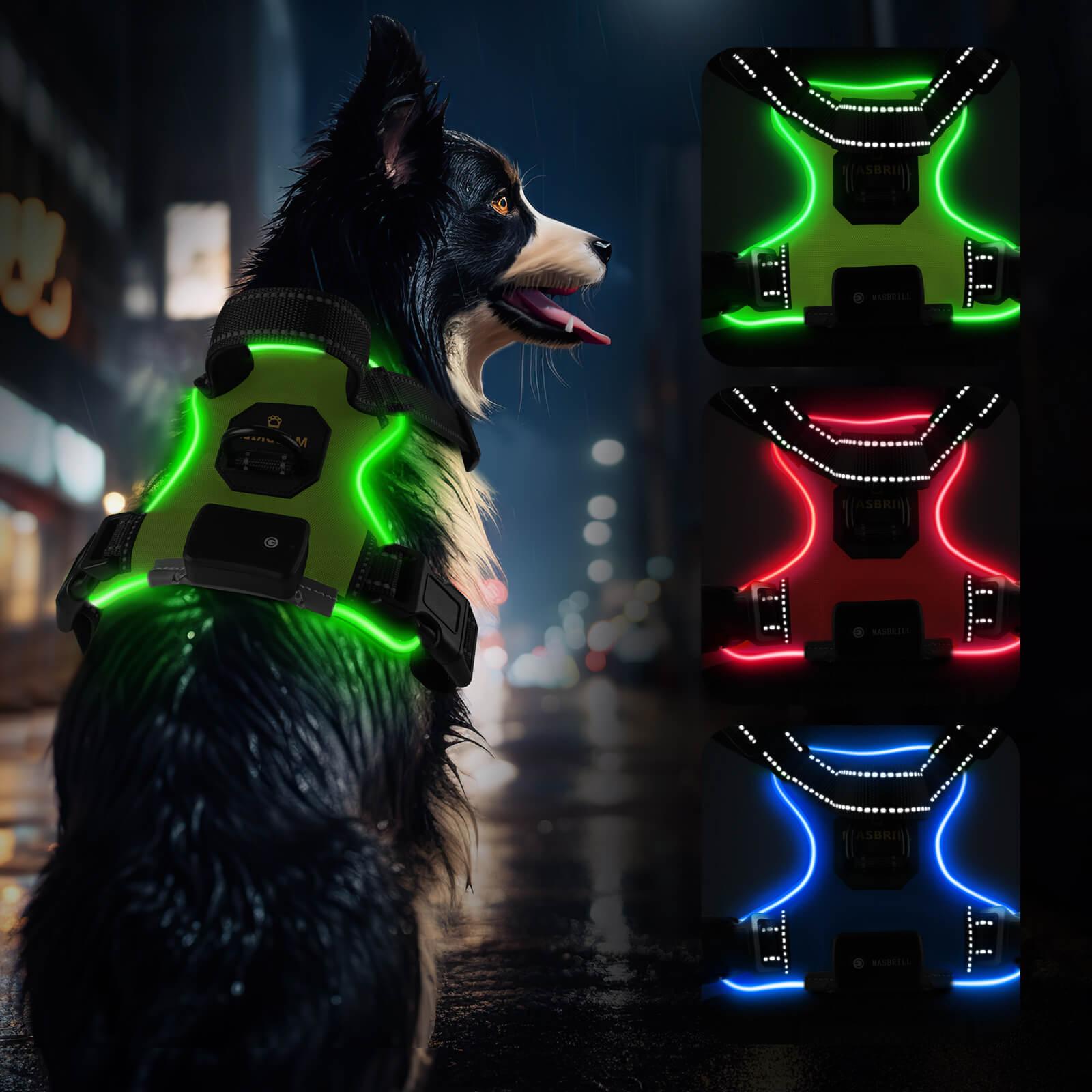
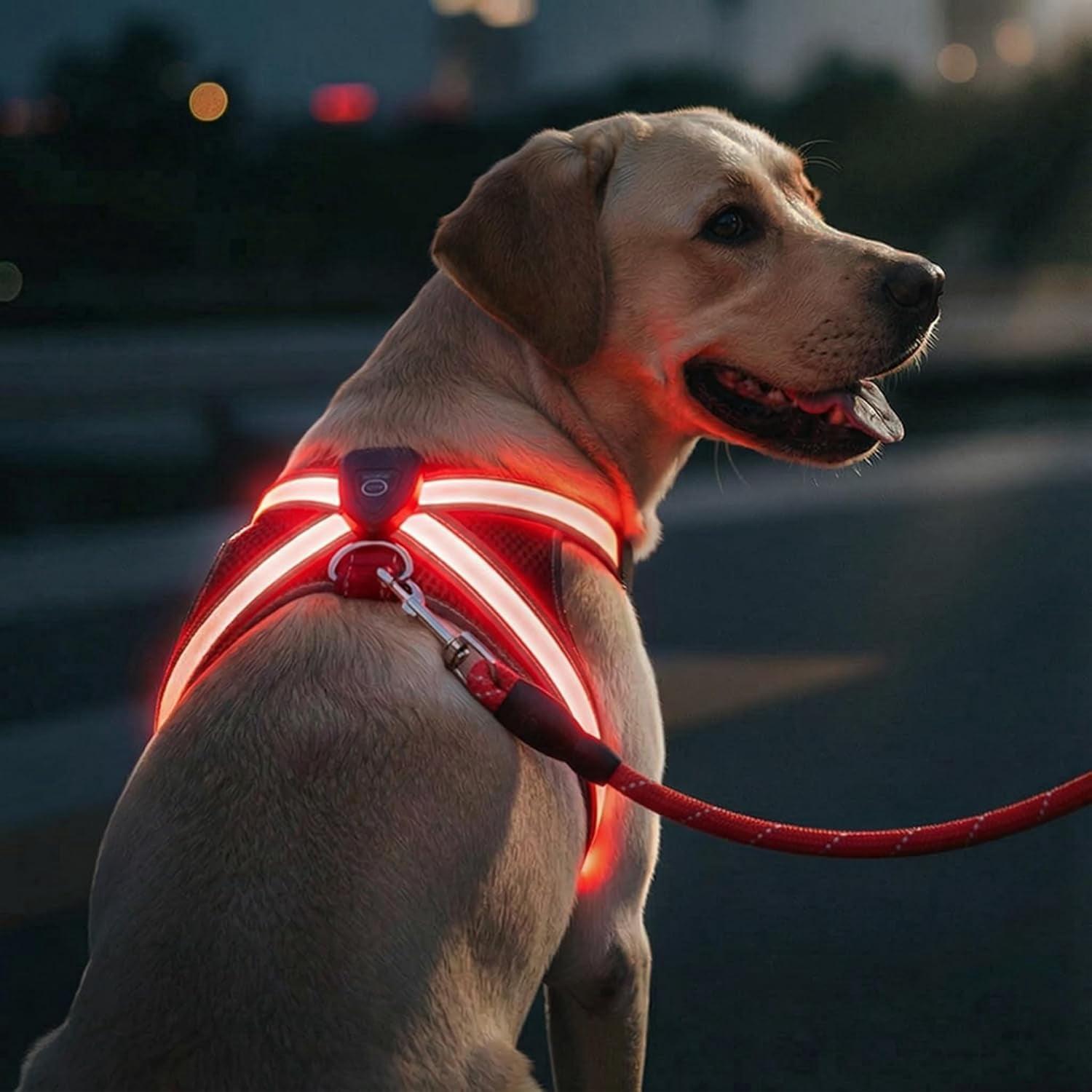
Reflective performance is not only about brightness but also about placement. Effective designs ensure visibility from multiple angles—front, side, and rear—rather than relying on a single reflective strip.
This 360° placement strategy significantly improves real-world detection by vehicles and pedestrians.
Integration with Harness Structure
Reflective elements must be integrated into load-bearing areas without affecting flexibility or durability. Poor integration often leads to peeling, cracking, or stiffness that affects user experience.
Factory-level engineering ensures reflective materials remain stable without compromising harness performance.
Market Comparison: Generic Reflective Harness vs Engineered Visibility System
| Visibility Metric | Generic Reflective Harness | Engineered Reflective System |
|---|---|---|
| Reflectivity level | 150–250 cd/lx/m² | 350–500 cd/lx/m² |
| Visibility coverage | Partial (1–2 sides) | 360° multi-angle coverage |
| Reflectivity retention after 20 washes | 40–60% retained | 75–90% retained |
| Abrasion resistance cycles | 3,000–5,000 cycles | 8,000–12,000 cycles |
| Night visibility complaint rate | 8–14% | Reduced to 3–6% |
| Batch consistency of reflective material | Variable | Controlled |
Differentiation by Dog Breed and Usage Environment
Reflective Design for Different Dog Sizes
Smaller dogs require reflective elements positioned higher relative to body height to remain visible in urban environments, while larger dogs benefit from extended reflective zones that maintain visibility across movement.
A professional reflective dog harness wholesale program adjusts placement based on size categories to ensure consistent visibility.
Urban vs Outdoor Visibility Requirements
Urban environments involve artificial lighting and multi-directional traffic, requiring balanced reflective placement. Outdoor environments with low ambient light require higher reflectivity intensity and larger reflective areas.
Wholesale programs that differentiate by environment maintain separate reflective specifications for urban and outdoor product lines.
Structural Design Strategies That Improve Reflective Performance
Preventing Reflective Material Failure
Reflective materials often fail at bending points or high-friction zones. Engineered harnesses position reflective elements away from excessive flex zones or reinforce these areas to prevent cracking.
Balancing Visibility and Durability
Increasing reflective area without structural consideration can weaken fabric integrity. Professional suppliers balance reflective coverage with reinforcement layers to maintain both safety and durability.
FAQ: Practical Questions from Buyers
Q: Do all reflective dog harnesses provide the same visibility?
A: No. Reflectivity depends on material quality, placement, and retention after use.
Q: How important is reflectivity for wholesale markets?
A: It is critical in regions with frequent night walking or safety regulations.
Q: Can reflective performance degrade over time?
A: Yes, especially in low-quality materials without durability control.
Conclusion: Visibility Performance Must Be Engineered, Not Added
Reflective performance in dog harness products is not defined by the presence of reflective material but by how it performs under real conditions. Wholesale programs that rely on surface-level solutions often face delayed complaints and increased return costs.
As a specialized reflective dog harness wholesale supplier, Sixpet designs visibility systems based on controlled reflectivity, optimized placement, and durable integration, ensuring consistent safety performance across batches and markets.
If you’d like to explore our reflective dog harness solutions and understand how visibility design is implemented at scale, you can visit our official website:
👉 https://www.sixpet.com/
If you are planning a wholesale or OEM program and want to discuss reflective materials, placement strategies, or production timelines, our team is ready to support you directly:
👉 https://www.sixpet.com/contact-us