How Should Buyers Choose a Pet Walking Gear Manufacturer?
A reliable pet walking gear manufacturer should help buyers transform product ideas into stable, repeatable walking-accessory collections. For pet brands, wholesalers, distributors, and retailers, choosing a manufacturer is not only about finding a factory that produces harnesses, collars, and leashes. It requires evaluating whether the supplier understands product applications, controls materials and components, supports customization, maintains production consistency, and provides clear communication throughout development and bulk production.
Pet walking products combine textile materials, hardware components, printing processes, sewing techniques, and sometimes electronic functions. Small differences in size, adjustment range, buckle selection, stitching, or packaging can influence the final customer experience. Therefore, buyers should evaluate the manufacturer's ability to manage the complete product process instead of focusing only on catalog quantity or unit price.
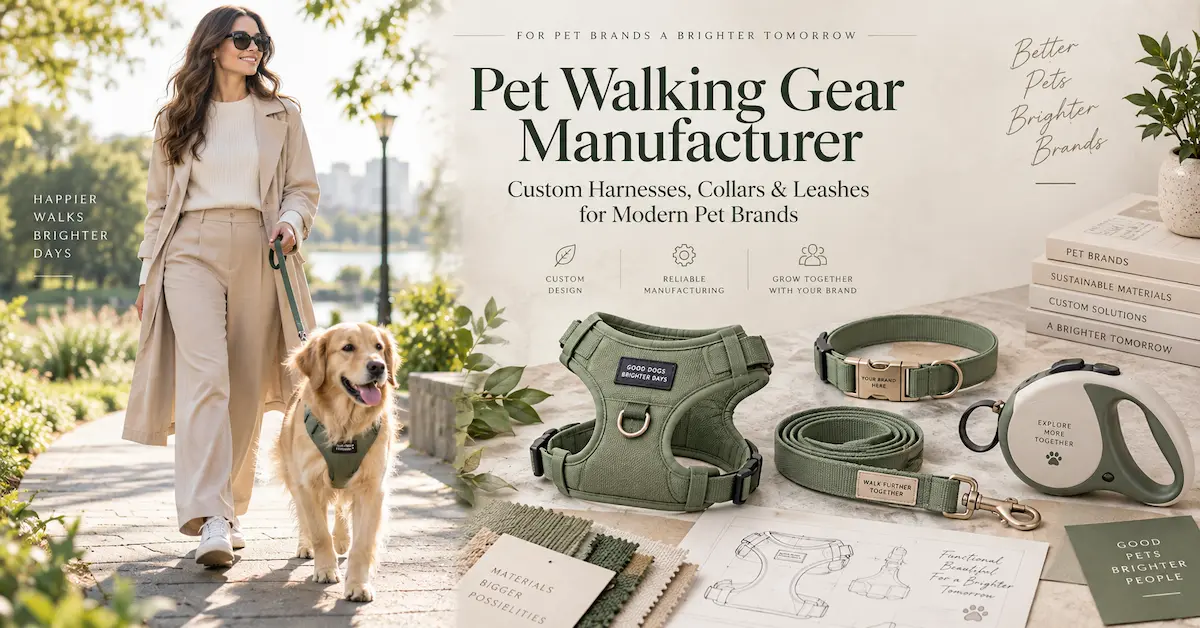
QQPETS focuses on dog walking accessories including harnesses, collars, leashes, retractable leashes, and related visibility products. Buyers can review the current QQPETS product range to understand available categories before preparing a sourcing requirement.
Who Needs a Pet Walking Gear Manufacturer?
A direct relationship with a pet walking gear manufacturer is valuable for businesses that need product consistency, brand differentiation, and long-term supply capability.
Pet Brands Building Their Own Product Lines
Pet brands often need more than standard products. They may require customized colors, patterns, logo placement, labels, packaging, and coordinated collections. A manufacturer with OEM capability can help transform a concept into a production-ready product.
For example, a brand may develop a complete walking collection including:
- Matching dog harnesses
- Coordinated collars
- Custom leashes
- Seasonal printed collections
- Private-label packaging
The key requirement is not simply customization availability, but whether the manufacturer can control each product version after approval.
Wholesale and Distribution Companies
Importers and distributors usually focus on:
- Stable product quality
- Reliable replenishment
- Clear specifications
- Packaging consistency
- Efficient SKU management
A supplier that understands bulk purchasing requirements can help reduce problems caused by inconsistent sizing, changing materials, or unclear product information.
E-commerce Sellers
Online sellers need products that are easy for customers to understand. Clear size charts, product images, material descriptions, packaging, and consistent product versions can reduce customer complaints and returns.
A suitable manufacturer should help buyers define these details before products reach the market.
Evaluate Walking Gear Based on Application Scenarios
A professional sourcing decision starts with the application, not only the product name.
Different customers may require different walking gear depending on:
| Application | Buyer Focus |
|---|---|
| Daily urban walking | Comfort, adjustment, appearance, easy operation |
| Outdoor walking | Materials, durability, connection points, cleaning |
| Night walking | Visibility, reflective elements, LED functions |
| Fashion collections | Patterns, colors, branding, packaging |
| Retail programs | Size clarity, labels, SKU consistency |
| Private-label launches | Customization, sampling, repeat production |
A manufacturer should understand why the product is being developed because the same category can have different specifications.
For example, a fashion-oriented harness may prioritize printed patterns and appearance, while an outdoor-focused product may require different material selection and construction considerations.
QQPETS provides information about outdoor pet safety products and walking accessories through its outdoor pet safety gear guide, which helps buyers understand different product applications.
What Products Should a Pet Walking Gear Manufacturer Provide?
A complete walking gear supplier typically supports several related categories.
Dog Harness Manufacturing
Dog harnesses are often the core product for walking collections. Buyers should evaluate:
- Harness structure
- Adjustment range
- Strap width
- Padding or lining
- Buckles and rings
- Stitching quality
- Size availability
- Custom pattern options
Different structures may target different customer preferences. A manufacturer should provide clear specifications rather than only product photos.
QQPETS offers multiple harness categories through its dog harness products, allowing buyers to evaluate different styles for potential collections.
Dog Collar Manufacturing
Collars require attention to:
- Neck adjustment
- Webbing material
- Buckle performance
- D-ring placement
- Printed appearance
- Label position
For private-label brands, collars are often part of a matching product family rather than a standalone item.
Dog Leash Manufacturing
A leash should be evaluated as a complete assembly:
- Handle construction
- Length
- Webbing or rope material
- Hook connection
- Stitching areas
- Matching compatibility with collars or harnesses
The supplier should define the product specification clearly before bulk production.
QQPETS discusses leash sourcing considerations in its dog leash factory guide.
Materials and Components Should Be Clearly Defined
One of the most important differences between professional manufacturers and simple suppliers is the ability to explain product construction.
A walking gear specification should include:
| Component | Information to Confirm |
|---|---|
| Webbing | Material, width, thickness, color |
| Fabric | Surface, lining, pattern, application |
| Buckle | Type, material, operation |
| Ring | Position, size, finish |
| Stitching | Important connection areas |
| Printing | Process, artwork position, color requirement |
| Packaging | Labels, instructions, retail requirements |
Avoid descriptions such as “high-quality material” without supporting details.
A manufacturer should help buyers understand which materials are used, why they are selected, and how they affect product appearance and production.
Customization Capability Is More Than Adding a Logo
Many buyers search for OEM pet products, but customization includes different levels.
Basic Private Label
Usually includes:
- Logo printing
- Labels
- Packaging
- Color selection
Product Customization
May include:
- New patterns
- Different materials
- Modified structures
- New hardware combinations
- Special packaging
Product Development
May involve:
- New samples
- Engineering evaluation
- Multiple revisions
- Production validation
Before starting a project, buyers should clarify which type of customization they need.
QQPETS provides customization-related information through its company information page. The exact customization scope should be confirmed according to the selected product.
Why Sample Approval Matters Before Bulk Production
A sample is the connection between design expectations and manufacturing reality.
Before mass production, buyers should confirm:
- Product dimensions
- Material selection
- Color accuracy
- Hardware details
- Logo placement
- Packaging
- Functional requirements
A digital image or product rendering cannot replace physical confirmation.
The approved sample should become the reference for:
- Production teams
- Quality inspectors
- Packaging teams
- Future repeat orders
A professional pet walking gear manufacturer should have a clear process for transferring sample information into production.
Quality Control for Pet Walking Gear Production
Quality control should cover the entire production process.
Incoming Material Inspection
Check:
- Fabrics
- Webbing
- Hardware
- Printing materials
- Packaging components
Production Inspection
Monitor:
- Cutting accuracy
- Printing placement
- Sewing quality
- Assembly process
Finished Product Inspection
Verify:
- Appearance
- Dimensions
- Function
- Labels
- Packaging
Quality control should be connected to the actual product requirements instead of using general statements such as “strict inspection.”
QQPETS describes manufacturing processes including printing, weaving, cutting, sewing, and packaging on its About Us page.
Compare Manufacturers Through Production Capability
When comparing suppliers, buyers should evaluate more than price.
| Evaluation Area | Questions to Ask |
|---|---|
| Product experience | Have they produced similar products? |
| Manufacturing process | Which steps are controlled internally? |
| Customization | What changes can they support? |
| Quality control | How are defects identified? |
| Communication | How are revisions managed? |
| Repeat orders | How are specifications maintained? |
A suitable manufacturer should make the sourcing process easier by reducing uncertainty.
MOQ and Lead Time Should Match the Project
MOQ and lead time depend on many factors:
- Product type
- Material selection
- Number of colors
- Size range
- Custom artwork
- Packaging requirements
- Production schedule
A simple repeat order usually requires fewer development steps than a completely new private-label product.
Buyers should ask suppliers to explain:
- MOQ by SKU
- Sample time
- Production time
- Approval stages
- Shipping preparation
The bulk pet accessories ordering guide provides additional information about preparing bulk purchase requirements.
OEM and Private Label Development Process
A practical OEM workflow usually includes:
Step 1: Requirement Discussion
Buyer provides:
- Product idea
- Target market
- Quantity
- Design requirements
Step 2: Specification Confirmation
Both sides confirm:
- Materials
- Dimensions
- Components
- Packaging
Step 3: Sample Development
Manufacturer creates samples for evaluation.
Step 4: Approval and Production
After confirmation:
- Production begins
- Quality checks are performed
- Products are packed and shipped
A clear development process helps reduce misunderstandings between brands and manufacturers.
How to Reduce Repeat Order Risks
The first order is only the beginning of a supplier relationship.
For repeat orders, maintain records of:
- Approved samples
- Product specifications
- Artwork files
- Material details
- Packaging requirements
- Quality standards
If materials or components change, the buyer should review the impact before production.
Consistent documentation helps maintain the same product experience across future shipments.
Frequently Asked Questions
1. What does a pet walking gear manufacturer produce?
A pet walking gear manufacturer typically produces products such as dog harnesses, collars, leashes, and related accessories. The exact product range depends on the manufacturer's capabilities.
2. How do I choose a reliable pet walking gear manufacturer?
Evaluate product experience, manufacturing processes, customization ability, quality control methods, communication efficiency, and repeat-order management.
3. Can a manufacturer create private-label dog walking products?
Many manufacturers support private-label services including branding, colors, patterns, labels, and packaging. The available options should be confirmed for each product.
4. What information should I provide before requesting a quotation?
Provide product type, reference images, materials, sizes, quantities, customization requirements, packaging needs, and delivery expectations.
5. Why is sample approval important?
Samples allow buyers to confirm actual product appearance, dimensions, materials, and functions before bulk manufacturing.
6. What affects the cost of pet walking gear?
Cost can be influenced by materials, hardware, customization, quantity, packaging, and production complexity.
7. How can I ensure consistent repeat orders?
Maintain approved samples, specifications, artwork files, and quality requirements as a reference for future production.
8. Can one supplier provide harnesses, collars, and leashes together?
Some manufacturers support multiple walking accessory categories, allowing brands to develop coordinated product collections.
9. What quality checks should walking gear receive?
Checks may include materials, dimensions, sewing, hardware, appearance, functionality, labels, and packaging depending on the product.
10. How early should I contact a manufacturer before launch?
Start communication early enough to allow requirement confirmation, sampling, revisions, production, inspection, and shipping preparation.
Conclusion
Choosing the right pet walking gear manufacturer requires evaluating more than product variety or pricing. Successful sourcing depends on whether the manufacturer can understand the intended application, define product specifications, control materials and production processes, support customization, maintain quality standards, and reproduce approved products consistently for future orders.
QQPETS provides dog walking accessories including harnesses, collars, leashes, retractable leashes, and related pet products. Buyers can explore the QQPETS product range, review manufacturing information through the About Us page, and contact QQPETS through the contact page with product requirements, target quantities, customization ideas, and packaging expectations for further evaluation.