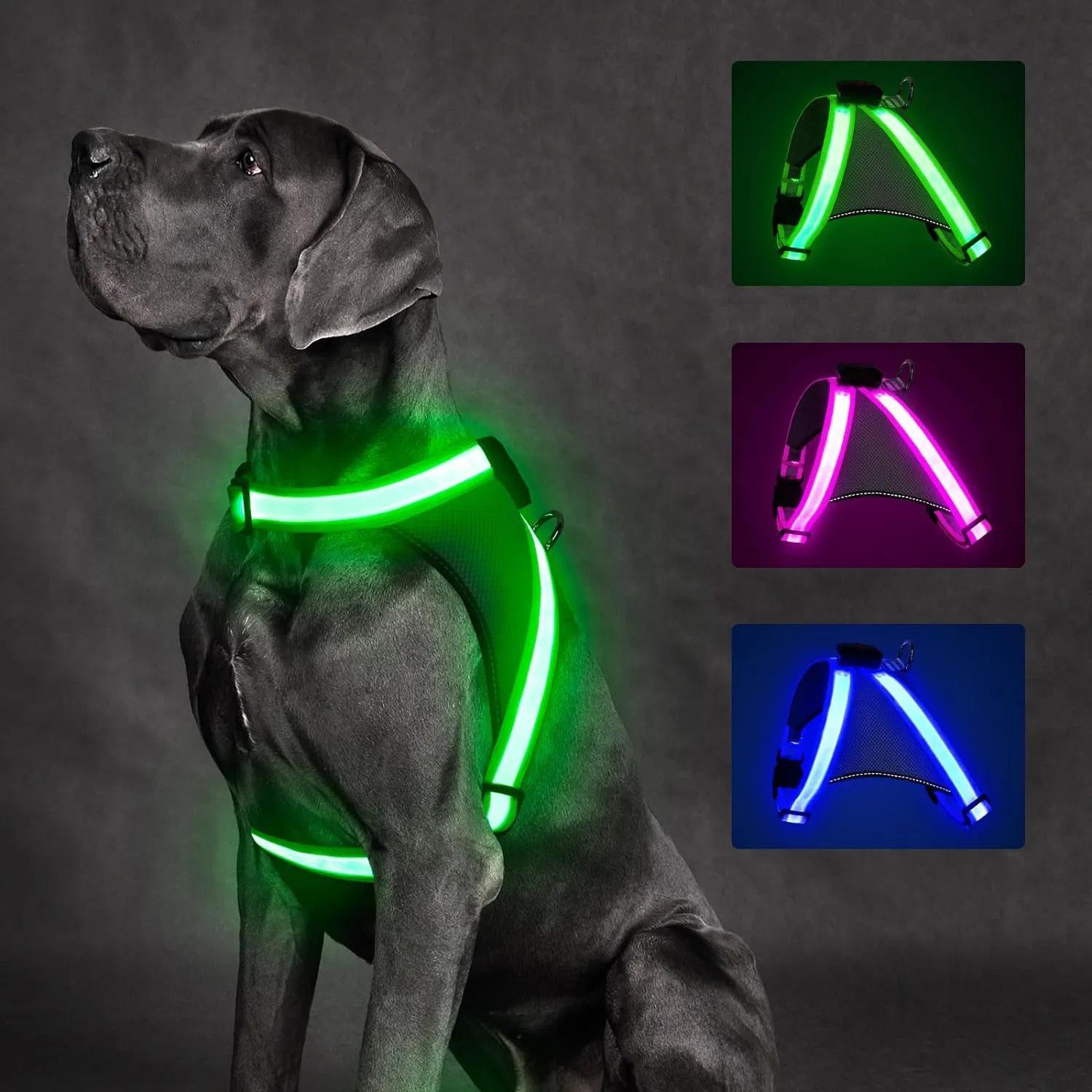
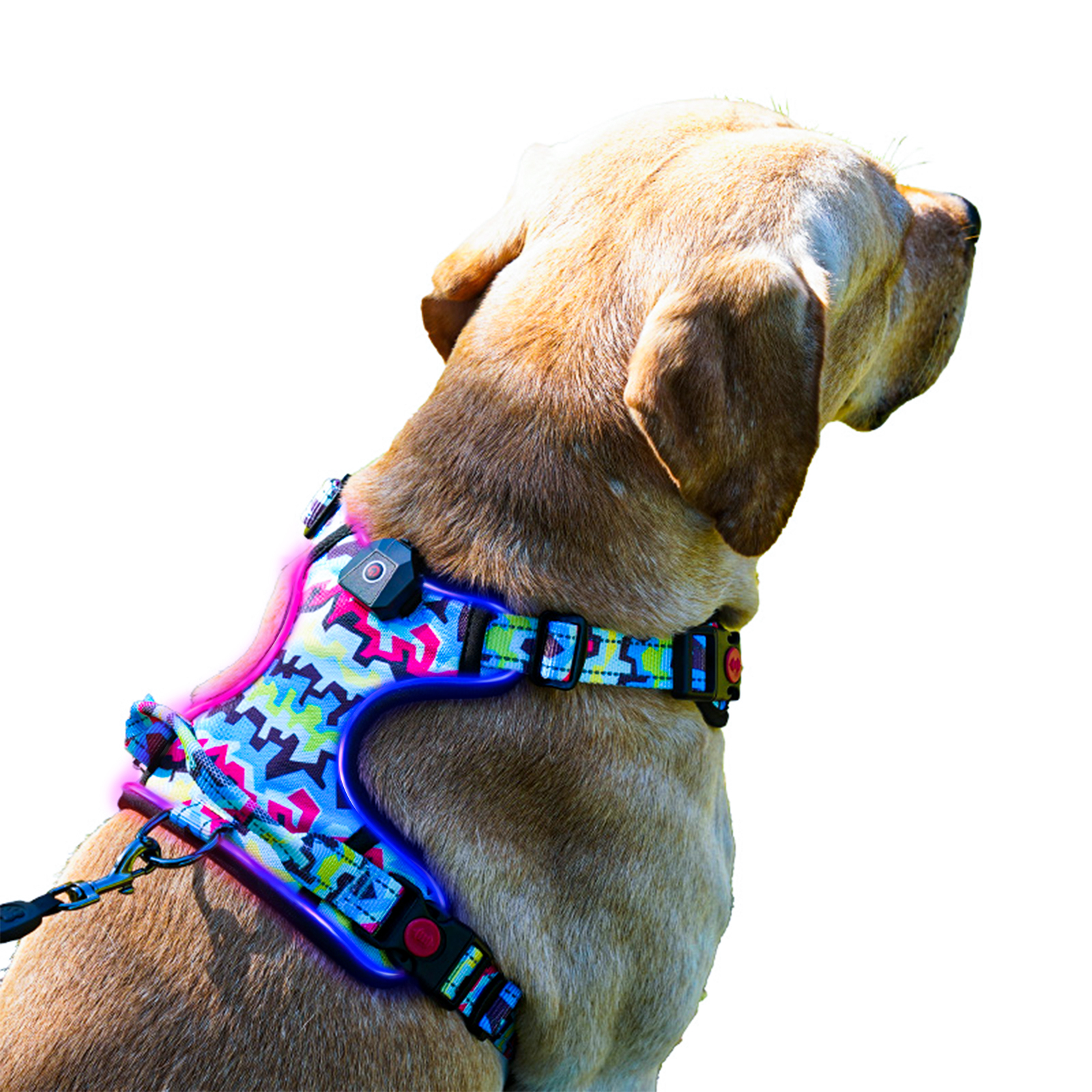
For pet brands and distributors, harness performance issues rarely originate from marketing or appearance. Most problems trace back to manufacturing decisions—sizing logic, load distribution, material selection, and structural reinforcement. This article follows a manufacturing-first framework to explain how professional dog harness manufacturers reduce return rates, improve safety outcomes, and help brands maintain long-term product stability.
Problem Insight: Where Harness Problems Really Come From
Breed-Specific Body Structures Create Fit Complexity
Dogs differ not just by size, but by chest depth ratio, shoulder rotation angle, rib cage width, and center-of-mass position. These differences fundamentally affect how a harness sits and how force is transferred during movement.
Typical examples seen in production feedback:
-
Bulldog-type breeds: deep chest, short back → front panel rides upward if chest angle is wrong
-
Shiba Inu / Spitz breeds: round rib cage → side straps migrate without angled anchoring
-
Corgis: long torso, front-heavy weight distribution → back straps rotate under pull
-
Husky / Shepherd types: high acceleration pull → stress concentrates at D-ring zone
Manufacturers that rely solely on flat S–M–L scaling often see fit-related return rates between 22–30%, especially in online retail channels.
A professional dog harness manufacturer mitigates this by grouping breeds into structural categories and adjusting strap geometry rather than simply enlarging dimensions.
Inconsistent Sizing Standards Between Suppliers
One of the most common buyer complaints is that “the same size fits differently across batches.”
Factory audits typically show:
-
Chest circumference tolerance variation: ±3–5 cm
-
Strap length deviation after repeated washing: 1.5–2.5% (low-grade nylon)
These deviations cause:
-
harness rotation during walking
-
armpit strap friction
-
instability under leash tension
From a brand perspective, inconsistent sizing directly increases customer complaints and return handling costs.
Material Fatigue and Structural Failure Under Load
During sudden leash tension, real-world pull force can reach:
-
25–35 kg for medium breeds
-
45–65 kg for large breeds
Without proper material grading and reinforcement, failures typically occur at:
-
buckle base
-
seam intersections
-
D-ring attachment points
These are manufacturing-level issues, not misuse by customers.
Technical Breakdown: What a Professional Dog Harness Manufacturer Actually Engineers
Load Distribution Design
High-quality harnesses are designed to redistribute force away from the neck and single strap points.
Key structural elements include:
-
Y-shaped or V-shaped chest panels to spread force across the sternum
-
dual-anchor strap routing to prevent lateral rotation
-
reinforced back plate to absorb sudden directional pulls
Harnesses lacking these elements concentrate force on one strap, increasing discomfort and breakage risk.
Stitching and Reinforcement Engineering
Professional manufacturers reinforce five primary stress zones:
-
chest intersection
-
shoulder transition
-
leash attachment point
-
buckle base
-
adjustment slider anchor
Typical reinforcement standards:
-
bar-tack stitching: 8–12 stitches/cm
-
double-row lock stitching
-
polyester thread ≥ 210D
Internal testing shows reinforced stitching improves seam strength by 28–42% compared to single-line sewing.
Material Selection and Performance Data
| Component | Entry-Level Specification | Professional Manufacturing Standard |
|---|---|---|
| Webbing | 600D nylon | 900–1200D nylon |
| Tensile strength | ~450 kg | 680–900 kg |
| Abrasion resistance | ~5,000 cycles | 12,000+ cycles |
| Wash shrinkage | 2–3% | <1% |
A professional dog harness manufacturer selects materials based on target breed force and usage duration, not just unit cost.
Market Comparison: Padded vs. Non-Padded Harnesses
Performance-Based Comparison
| Performance Indicator | Padded Harness | Non-Padded Harness |
|---|---|---|
| Peak chest pressure | 18–25% lower | Concentrated at strap edges |
| Skin irritation reports | ↓ 40–50% | Higher in short-hair breeds |
| Comfortable wear duration | 60–90 minutes | 30–45 minutes |
| EU/US average return rate | 8–12% | 18–25% |
| Production cost impact | +8–15% | Baseline |
These figures explain why padded harnesses dominate mid- to premium-market segments despite slightly higher manufacturing cost.
B2B Impact: Why Manufacturer Choice Determines Commercial Results
Return Rate Control
Breed-based sizing logic combined with consistent QC significantly reduces size-related returns and reverse-logistics costs.
Brand Reputation Protection
Stable fit and structural reliability directly influence product reviews, repeat purchases, and platform performance metrics.
Product Line Scalability
Working with a specialized dog harness manufacturer allows brands to expand SKUs without sacrificing consistency.
OEM and Customization Guide for Brand Buyers
Customization Areas That Affect Performance
Sixpet supports OEM development in areas that directly influence product outcomes:
-
breed-cluster sizing systems
-
strap angle and load-zone adjustments
-
padding density selection (typically 4–8 mm EVA or sponge blends)
-
hardware grade matched to pull-force requirements
-
coordinated harness–leash–collar systems
This level of customization goes beyond appearance and directly improves durability and comfort.
FAQ: Practical Questions from Buyers
Q: Can sizing be customized beyond standard S / M / L?
A: Yes. Sixpet supports breed-cluster sizing rather than simple size scaling. By adjusting strap angles, chest panel width, and adjustment ranges for different body structures, brands can significantly reduce fit-related returns, especially in online retail channels.
Q: How do you ensure harness safety for different dog sizes?
A: Harness safety is validated through pull-force testing, reinforced stress-point stitching, and buckle fatigue checks matched to target breed weight and usage intensity before mass production begins.
Q: Can I develop my own branded harness designs with OEM support?
A: Yes. Sixpet provides full OEM and private-label services, covering structural customization, material selection, logo application, and coordinated harness–leash–collar sets to support brand differentiation.
Conclusion: Building Better Harness Products Starts at the Factory Level
In today’s competitive pet market, product success is increasingly determined long before marketing or listing optimization begins. Fit accuracy, comfort, durability, and safety are all outcomes of manufacturing decisions made at the design and production stages.
As a specialized dog harness manufacturer, Sixpet focuses on structure-driven development rather than generic production. By combining breed-based sizing logic, reinforced load-distribution design, controlled material standards, and consistent quality control, we help brands reduce return rates, improve user feedback, and maintain long-term product stability across multiple markets.
om price competition and build products that perform reliably in real-world use.
If you’d like to explore our full range of dog harnesses and related pet accessories, you can visit our official website to see available styles, materials, and application scenarios:
👉 https://www.sixpet.com/
If you’re planning a new product line, private-label program, or bulk order and would like to discuss customization options, sampling, or production timelines, our team is ready to support you directly:
👉 https://www.sixpet.com/contact-us