In wholesale dog harness programs, “heavy duty” is often used as a marketing term rather than a measurable performance standard. In reality, load-bearing capacity depends on webbing strength, hardware rating, and reinforcement structure. A professional heavy duty dog harness manufacturer defines these parameters precisely, ensuring consistent performance under high-load conditions and reducing failure-related returns.
Problem Insight: Why “Heavy Duty” Harnesses Fail in Real Use
Strength Claims Without Structural Support
Many harnesses labeled as heavy duty rely on thicker materials without improving structural design. While this increases weight, it does not necessarily improve load distribution or durability.
In real use—especially with large or high-energy dogs—failure typically occurs at stitching points, hardware connections, or stress concentration zones rather than in the main fabric.
Failure Appears After Repeated Load, Not First Use
Initial usage may not reveal issues. However, under repeated pulling cycles, weak reinforcement or low-grade hardware begins to degrade. This leads to sudden failure, which is one of the most critical return triggers in wholesale programs.
Technical Breakdown: What Defines Heavy Duty Performance at the Factory Level
Webbing Tensile Strength and Width Selection
Heavy duty dog harness manufacturers define webbing strength using tensile testing (N or kgf). Wider webbing distributes load more effectively, reducing stress concentration.
Typical heavy duty harness programs use higher-grade polyester or nylon webbing with controlled width and thickness to balance strength and flexibility.
Hardware Load Rating and Material Type
Buckles, D-rings, and connectors must match or exceed the load capacity of the webbing. High-quality programs specify hardware rated for sustained loads rather than peak loads.
Material selection (metal vs reinforced polymer) depends on usage scenarios, with outdoor or working dogs often requiring higher load ratings and corrosion resistance.
Reinforcement Structure at Stress Points
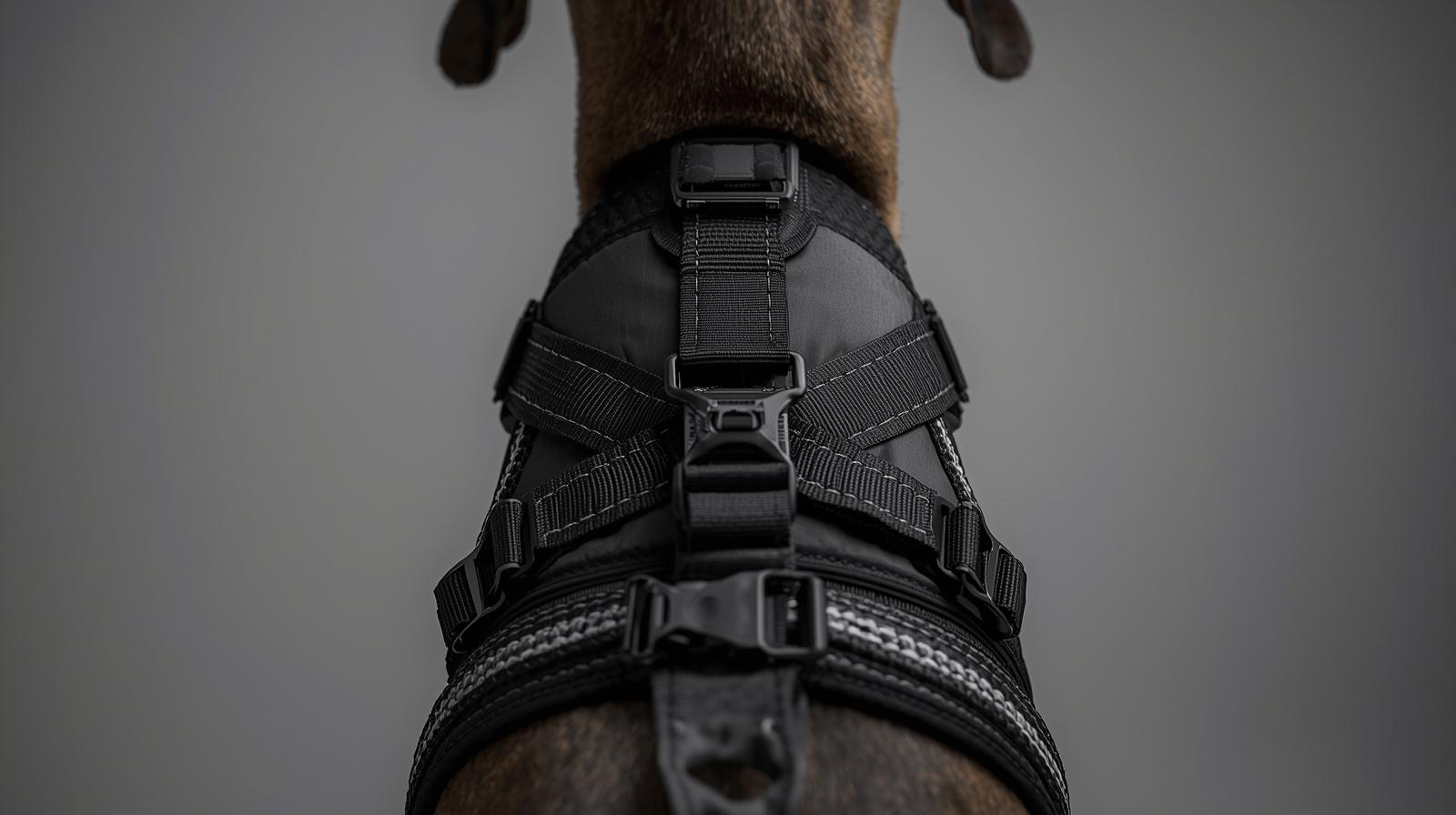
The most critical factor in heavy duty performance is reinforcement design. Load-bearing zones—such as chest intersections and leash attachment points—require multi-layer stitching patterns and reinforced stitching density.
Factory-level control ensures that reinforcement is consistent across batches, preventing weak points that lead to failure.
Market Comparison: Generic “Heavy Duty” vs Engineered Load-Bearing System
| Strength Metric | Generic Heavy Duty Harness | Engineered Heavy Duty System |
|---|---|---|
| Webbing tensile strength | 800–1,200 N | 1,500–2,500 N |
| Hardware load rating | 100–150 kg peak | 200–400 kg sustained |
| Stitching density at stress points | 3–5 stitches/cm | 6–8 stitches/cm reinforced |
| Failure rate after 5,000 pull cycles | 8–15% | <3% |
| Load distribution efficiency | Uneven | Balanced across structure |
| Breakage-related return rate | 6–12% | Reduced to 2–4% |
Differentiation by Dog Size and Usage Intensity
Large Breeds and High-Pull Dogs
Large dogs such as working breeds generate significantly higher pulling force. Heavy duty harnesses for these dogs require reinforced chest plates, wider webbing, and higher hardware ratings to maintain structural integrity.
Outdoor and Tactical Usage Scenarios
Outdoor environments introduce additional stress factors such as abrasion, moisture, and temperature variation. Heavy duty harnesses designed for these scenarios include reinforced stitching, abrasion-resistant materials, and corrosion-resistant hardware.
Structural Design Strategies That Improve Heavy Duty Performance
Load Distribution Instead of Material Thickening
Simply increasing material thickness adds weight without improving performance. Effective heavy duty design distributes load across multiple structural paths, reducing stress concentration.
Fatigue Resistance Through Repeated Testing
Heavy duty harnesses must withstand repeated loading cycles. Professional manufacturers test products under cyclic loading conditions to ensure long-term durability rather than short-term strength.
FAQ: Practical Questions from Buyers
Q: Does thicker material always mean stronger harnesses?
A: No. Strength depends on structure, reinforcement, and load distribution, not thickness alone.
Q: What is the most common failure point in heavy duty harnesses?
A: Stitching and hardware connections are the most common weak points.
Q: Are heavy duty harnesses suitable for all dogs?
A: They are best suited for large, strong, or highly active dogs and may be unnecessary for small companion breeds.
Conclusion: Heavy Duty Performance Is Engineered, Not Claimed
In wholesale dog harness sourcing, heavy duty performance must be defined by measurable strength, structural integrity, and durability under repeated load. Without these factors, “heavy duty” becomes a label rather than a reliable feature.
As a specialized heavy duty dog harness manufacturer, Sixpet develops load-bearing systems with controlled material strength, reinforced structure, and tested durability, helping brands deliver products that perform reliably under demanding conditions.
If you’d like to explore our heavy duty dog harness designs, materials, and application scenarios, you can visit our official website:
👉 https://www.sixpet.com/
If you are planning a wholesale or OEM program and want to discuss load requirements, structural design, or production timelines, our team is ready to support you directly:
👉 https://www.sixpet.com/contact-us