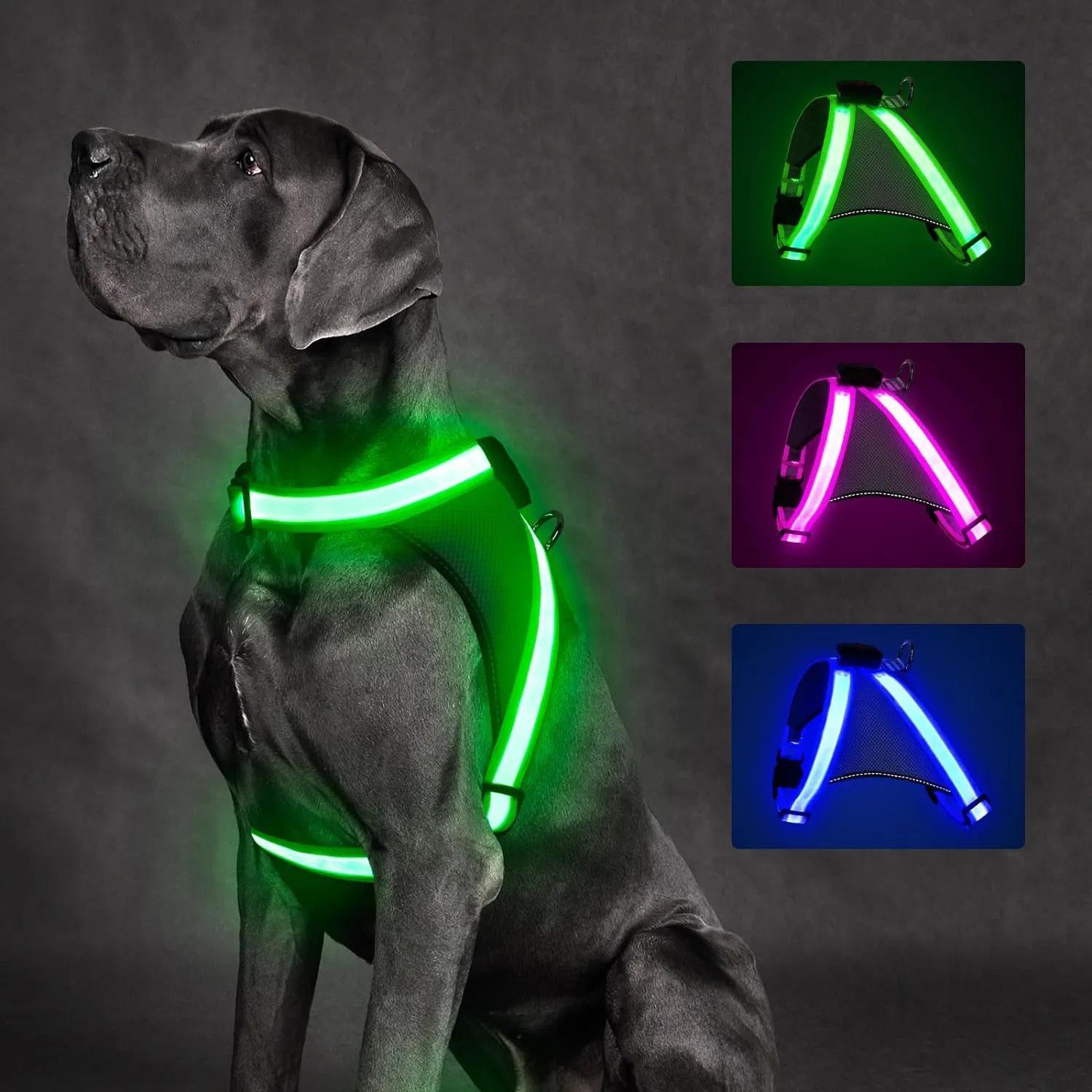
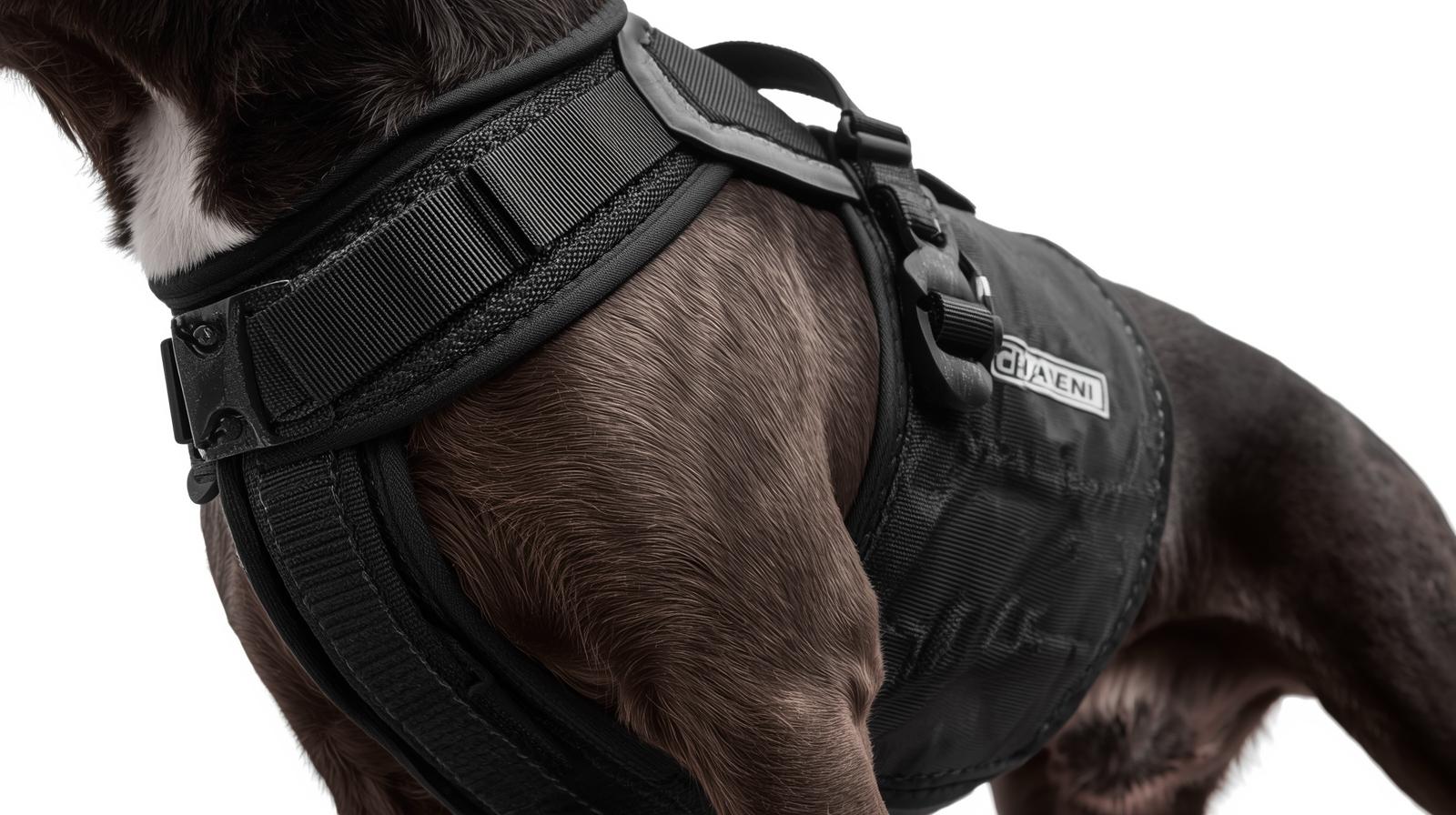
Large dog harnesses must withstand significantly higher pulling force and body weight compared with standard harnesses designed for small or medium dogs. For wholesale buyers, structural failure, poor fit, and hardware weakness are among the most common issues when products are used on large breeds. A professional large dog harness manufacturer addresses these challenges through size-specific engineering, reinforced materials, and controlled load distribution.
Problem Insight: Why Standard Harnesses Fail on Large Dogs
Increased Pulling Force from Larger Breeds
Large dogs naturally generate stronger pulling force during walking or outdoor activities. Harnesses designed with small-dog specifications often cannot handle this increased load, leading to strap deformation, stitching failure, or hardware damage.
This becomes a major source of complaints when harnesses marketed for all sizes are used on large breeds.
Fit Issues Due to Oversimplified Sizing
Many harness systems simply scale up smaller harness designs without redesigning structural proportions. However, large dogs require wider chest support areas, longer adjustment ranges, and stronger reinforcement points.
Without these adjustments, harnesses may appear large enough but still fail to provide stable fit and control.
Technical Breakdown: Structural Elements of Large Dog Harness Engineering
Wider Webbing for Load Distribution
Large dog harness manufacturers use wider webbing to distribute pulling force across a larger surface area. This reduces pressure concentration and improves durability under sustained load.
Wider webbing also helps maintain stability during movement, preventing harness twisting during strong pulls.
Reinforced Chest Panels for Structural Stability
Large breeds require stronger structural support across the chest area where pulling force is concentrated. Reinforced chest panels help spread tension across multiple structural paths rather than focusing stress on narrow straps.
This design improves both durability and comfort.
High Load-Rated Hardware Components
Hardware used in large dog harnesses must match the load capacity generated by large breeds. Reinforced buckles and heavy-duty D-rings ensure the harness maintains structural integrity during repeated use.
Material choice and load testing are critical factors in maintaining reliability.
Market Comparison: Standard Harness vs Large-Dog-Engineered Harness
| Performance Metric | Standard Harness | Large Dog Engineered Harness |
|---|---|---|
| Webbing width | 15–20 mm | 25–38 mm |
| Webbing tensile strength | 800–1,200 N | 1,800–3,000 N |
| Hardware load rating | 100–150 kg | 250–450 kg |
| Chest support coverage | Limited | Extended reinforcement panel |
| Failure rate under large-breed use | 10–18% | Reduced to 3–6% |
| Structural lifespan under strong pulling | Moderate | Significantly improved |
These differences become particularly noticeable in breeds such as German Shepherds, Labradors, and other high-strength dogs.
Differentiation by Dog Breed and Activity Level
Harness Requirements for Large Companion Breeds
Large companion dogs require harnesses that provide stable control without excessive weight. Balanced load distribution and comfortable padding help ensure usability during everyday walking.
Harness Requirements for Active or Working Breeds
Active breeds or working dogs often require additional reinforcement, stronger webbing, and improved durability. Harness systems designed for these dogs must withstand sustained pulling and more demanding outdoor environments.
Structural Design Strategies That Improve Large Dog Harness Reliability
Reinforcing High-Stress Load Points
Large dog harness manufacturers strengthen leash attachment areas and strap intersections where pulling force concentrates. Multi-layer stitching and reinforced fabric layers improve durability.
Maintaining Mobility While Increasing Strength
Simply increasing material thickness can reduce flexibility. Professional harness design balances strength with mobility so dogs can move naturally during walking, running, or training.
FAQ: Practical Questions from Buyers
Q: Can standard harnesses be used for large dogs?
A: Some may fit physically, but they often lack the structural strength needed for strong pulling.
Q: What is the most important feature for large dog harness durability?
A: Reinforced load points, strong webbing, and high-rated hardware are critical.
Q: Do large dog harnesses need different sizing logic?
A: Yes. Proper harness design adjusts proportions rather than simply enlarging smaller harness models.
Conclusion: Reliable Large Dog Harnesses Depend on Proper Engineering
Large dog harnesses must withstand greater pulling force and heavier loads than standard harnesses. Without size-specific engineering and reinforced structural design, products intended for large breeds often fail under real conditions.
As a specialized large dog harness manufacturer, Sixpet develops harness systems with reinforced materials, balanced load distribution, and size-engineered structures, helping brands deliver reliable harness solutions for large and powerful dogs.
If you’d like to explore our large dog harness designs and product configurations, you can visit our official website to review available styles and application scenarios:
👉 https://www.sixpet.com/
If you are planning a wholesale or OEM program and want to discuss large dog harness specifications, customization options, or production timelines, our team is ready to support you directly:
👉 https://www.sixpet.com/contact-us