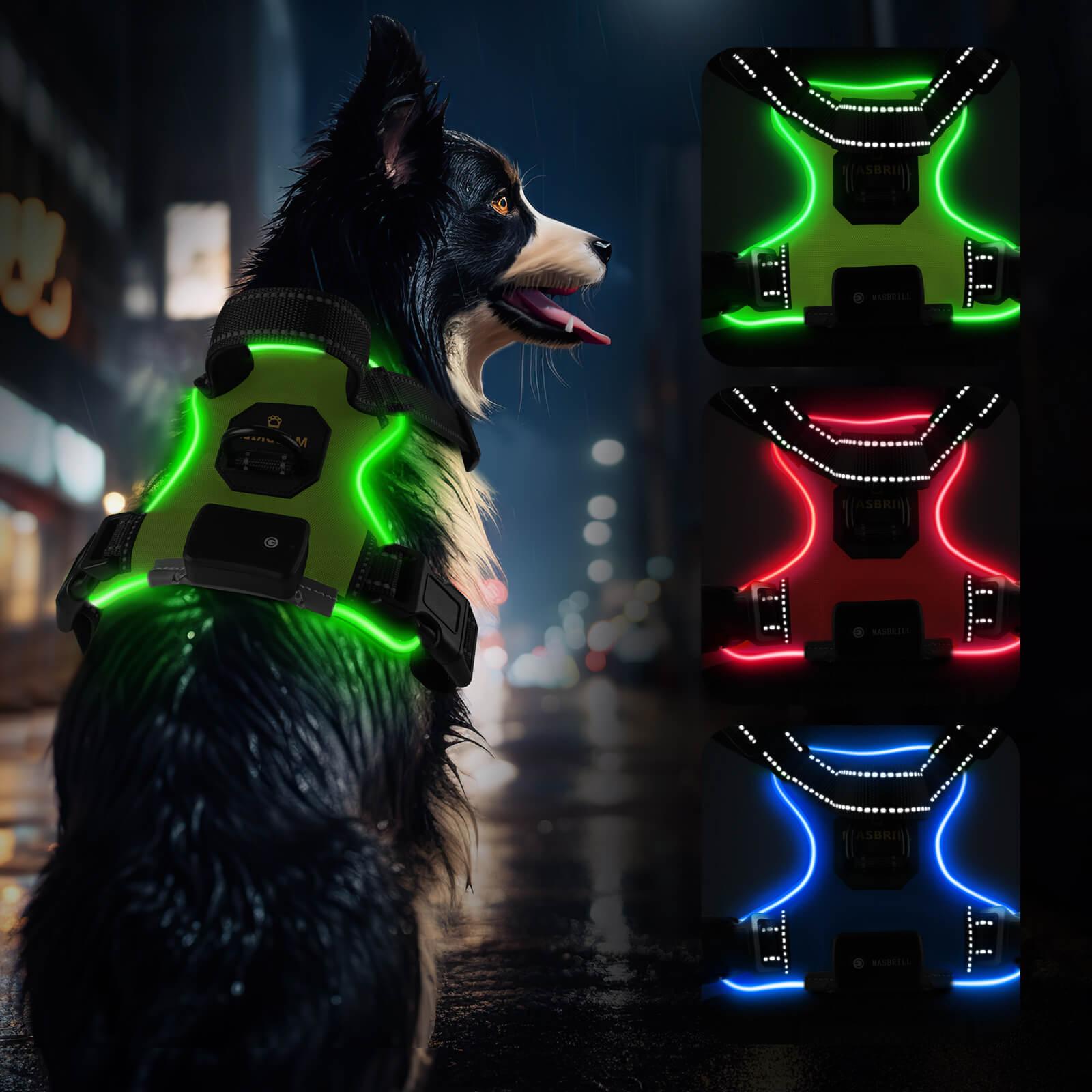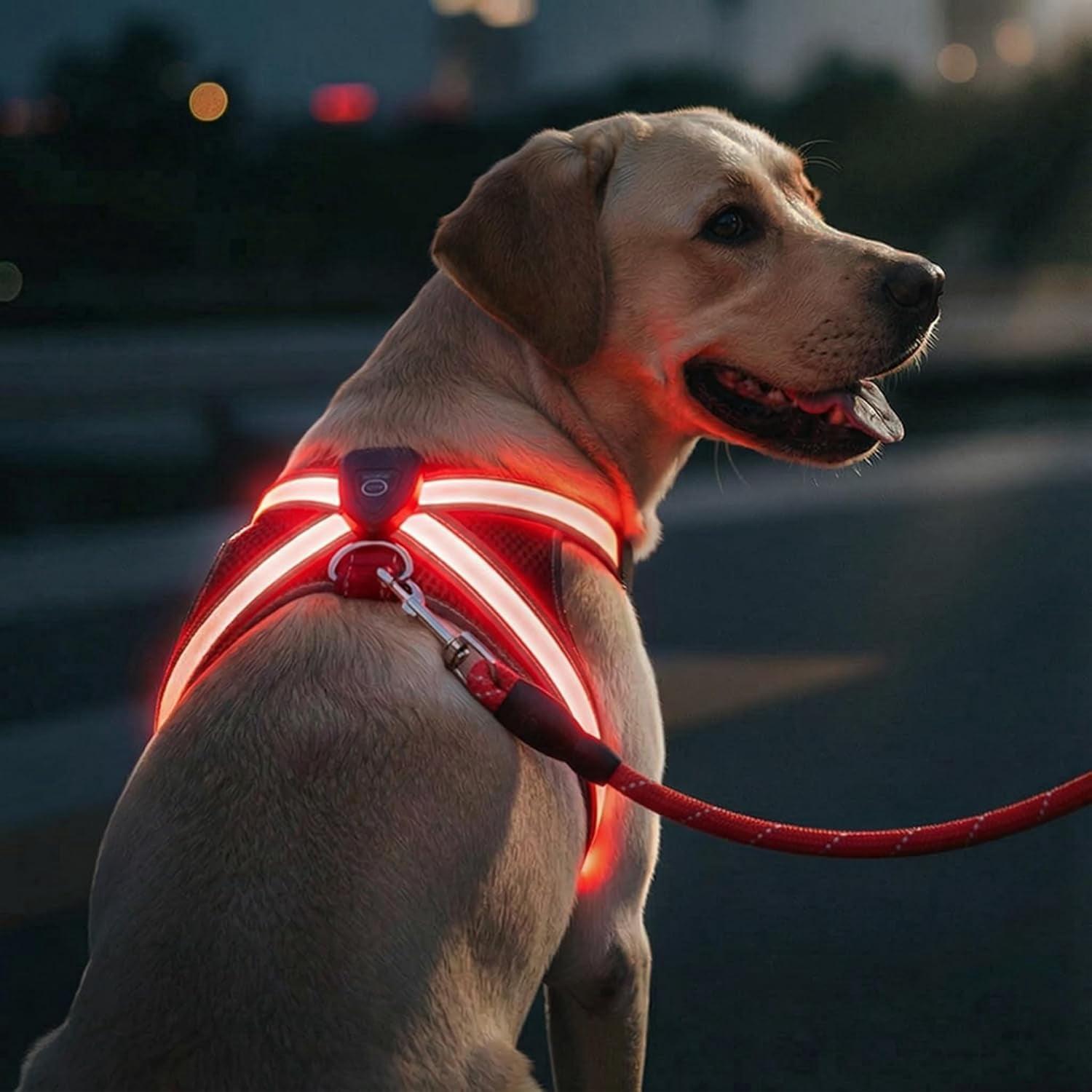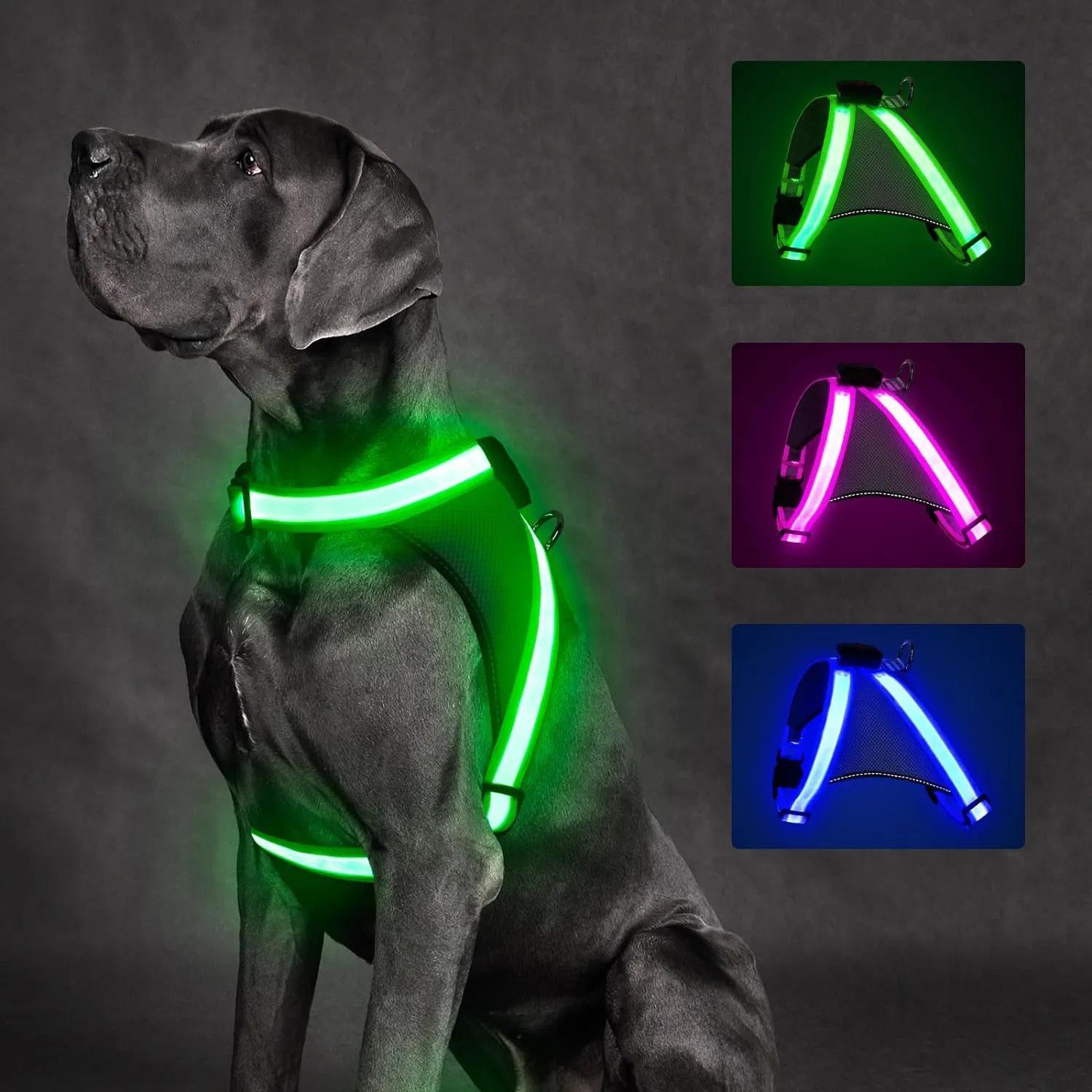
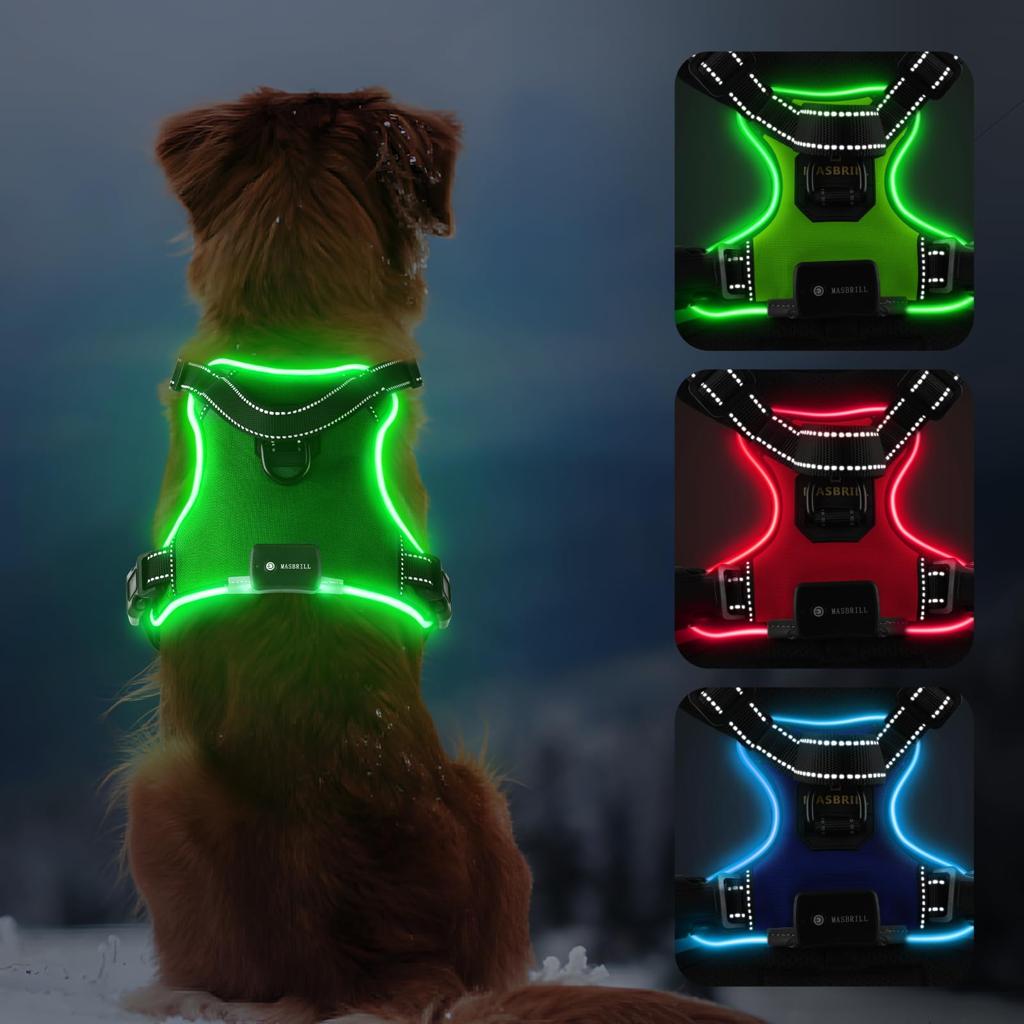
LED dog harnesses are designed to improve visibility in low-light and night-time environments. However, lighting performance depends on more than brightness alone. A professional LED dog harness manufacturer integrates lighting systems into the harness structure, ensuring durability, waterproof performance, and consistent visibility across wholesale production.
Problem Insight: Why Many LED Harnesses Fail in Real Use
Lighting Systems Often Lack Structural Integration
Many LED harnesses use externally attached light strips or modules that are not fully integrated into the harness structure. These components are prone to detachment, wiring damage, or inconsistent illumination.
At wholesale scale, such issues quickly lead to high failure rates and return costs.
Battery and Waterproof Issues Drive Complaints
LED harnesses rely on power systems that must withstand outdoor conditions. Poor battery housing design or insufficient sealing often results in water damage, reduced battery life, or complete lighting failure.
These problems typically appear after repeated use rather than at delivery.
Technical Breakdown: What Defines a Reliable LED Harness System
Integrated LED Module Design
Professional LED dog harness manufacturers embed LED modules directly into the harness structure. This protects wiring and ensures stable light distribution across the harness surface.
Integrated systems reduce mechanical stress on electrical components during movement.
Waterproof and Sealing Performance
LED harnesses used outdoors must meet waterproof requirements. Proper sealing of LED modules and battery compartments prevents water ingress during rain or washing.
Factory-level design includes sealing materials and structural protection to maintain performance.
Battery System Stability and Efficiency
A reliable LED harness requires a stable power system with controlled battery output. Efficient battery design ensures consistent brightness and longer operating time without overheating.
Rechargeable battery systems are commonly used in higher-quality products.
Market Comparison: Generic LED Harness vs Engineered LED System
| Lighting Metric | Generic LED Harness | Engineered LED Harness System |
|---|---|---|
| Brightness (lumen output) | 20–40 lm | 50–100 lm |
| Visibility distance | 30–80 meters | 100–200 meters |
| Waterproof rating | Splash-resistant | IPX5–IPX7 |
| Battery life per charge | 2–4 hours | 6–10 hours |
| Failure rate after repeated use | 10–18% | Reduced to 3–6% |
| Light distribution | Uneven | Uniform across harness |
These differences are particularly critical in nighttime use and outdoor environments.
Differentiation by Usage Scenario and Dog Size
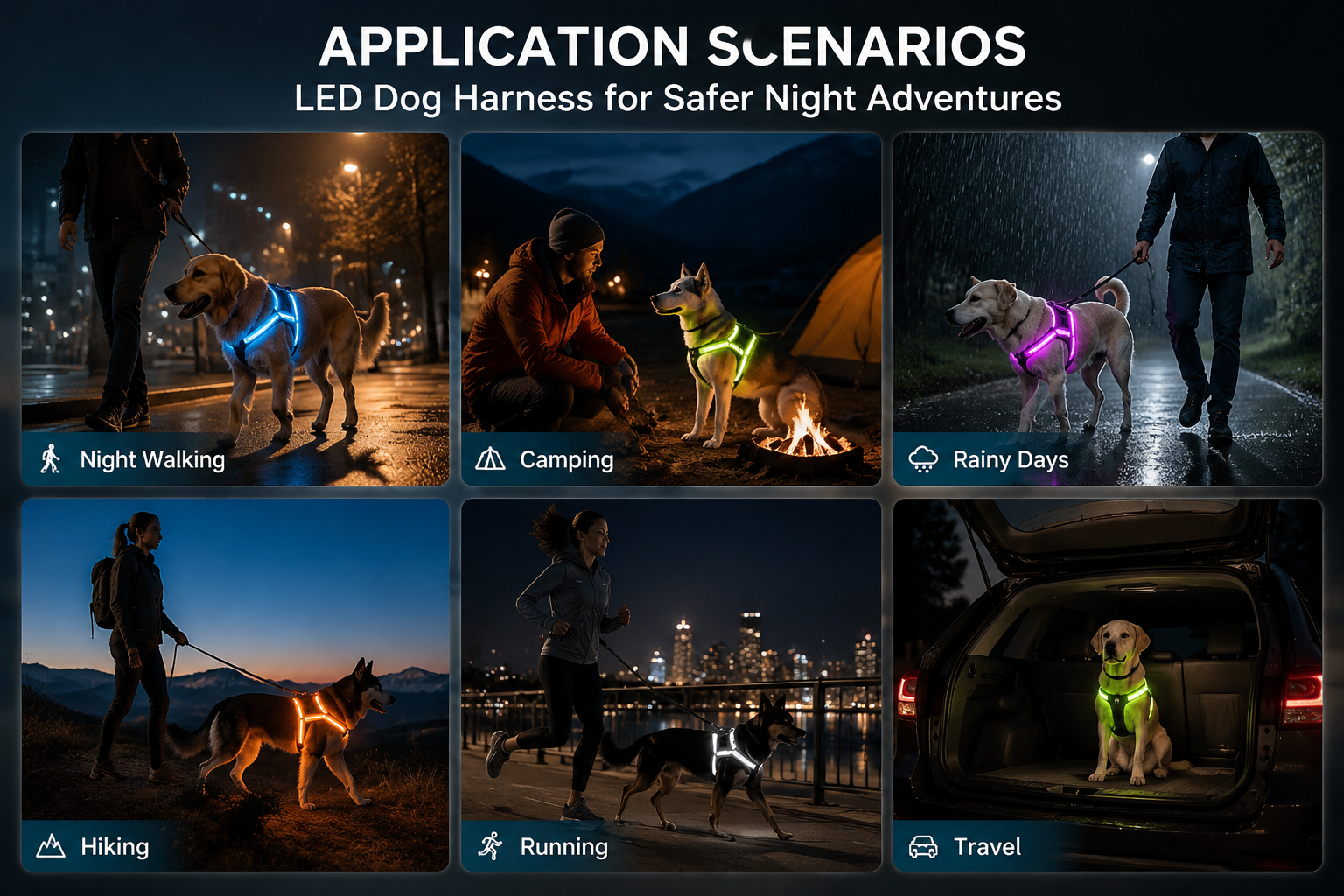
Night Walking and Urban Visibility
For urban environments, LED harnesses focus on visibility under street lighting and traffic conditions. Balanced brightness and wide light distribution improve detection from multiple angles.
Outdoor and Low-Light Environments
In outdoor or low-light scenarios, higher brightness and longer battery life are required. LED harness systems designed for these environments use stronger illumination and more durable power systems.
Structural Design Strategies That Improve LED Harness Performance
Protecting Electrical Components from Movement Stress
Dogs move dynamically, which places stress on embedded electronics. Professional manufacturers design flexible wiring paths and protective layers to prevent damage during use.
Balancing Weight and Functionality
LED systems add weight to the harness. Proper design ensures that additional components do not affect comfort or movement, especially for smaller dogs.
FAQ: Practical Questions from Buyers
Q: Are LED dog harnesses safe for long-term use?
A: Yes, when designed with proper insulation, low-voltage systems, and stable battery performance.
Q: Can LED harnesses be used in rainy conditions?
A: High-quality LED harnesses with proper waterproof ratings can be used safely in wet environments.
Q: How long should LED harness batteries last?
A: Most engineered systems provide several hours of continuous use per charge, depending on brightness settings.
Conclusion: Reliable LED Harness Performance Requires Engineering Integration
LED dog harnesses must combine visibility, durability, and electrical stability to perform effectively in real-world conditions. Without proper integration, lighting systems become a weak point rather than a safety feature.
As a specialized LED dog harness manufacturer, Sixpet develops harness systems with integrated lighting, waterproof protection, and stable power systems, helping brands deliver reliable night-safety solutions.
If you’d like to explore our LED dog harness designs and lighting system configurations, you can visit our official website:
👉 https://www.sixpet.com/
If you are planning a wholesale or OEM program and want to discuss LED system design, battery solutions, or production timelines, our team is ready to support you directly:
👉 https://www.sixpet.com/contact-us