Light-Up Dog Harness Factory: Engineering Visibility Systems for Real Outdoor Use
Light-up dog harnesses combine textile engineering with integrated lighting technology to improve visibility during low-light and night-time activities. In wholesale programs, however, lighting reliability and structural integration often determine whether products succeed or fail in the market. A professional light-up dog harness factory develops systems that maintain stable illumination, waterproof protection, and long-term durability across large production volumes.
Problem Insight: Why Many Light-Up Harnesses Fail After Short-Term Use
Surface-Level Lighting Integration Creates Weak Points
Many light-up harness products attach lighting strips externally without integrating them into the harness structure. These systems often suffer from wire breakage, uneven illumination, or module detachment during repeated movement.
At wholesale scale, these problems lead directly to elevated return rates and negative customer reviews.
Battery and Waterproof Failures Reduce Product Lifespan
Lighting systems used outdoors are constantly exposed to moisture, dirt, and repeated charging cycles. Weak sealing or unstable battery housing commonly results in water ingress, charging instability, or premature lighting failure.
These issues usually emerge after repeated outdoor use rather than immediately after purchase.
Technical Breakdown: What Defines a Reliable Light-Up Harness System
Integrated Illumination Architecture
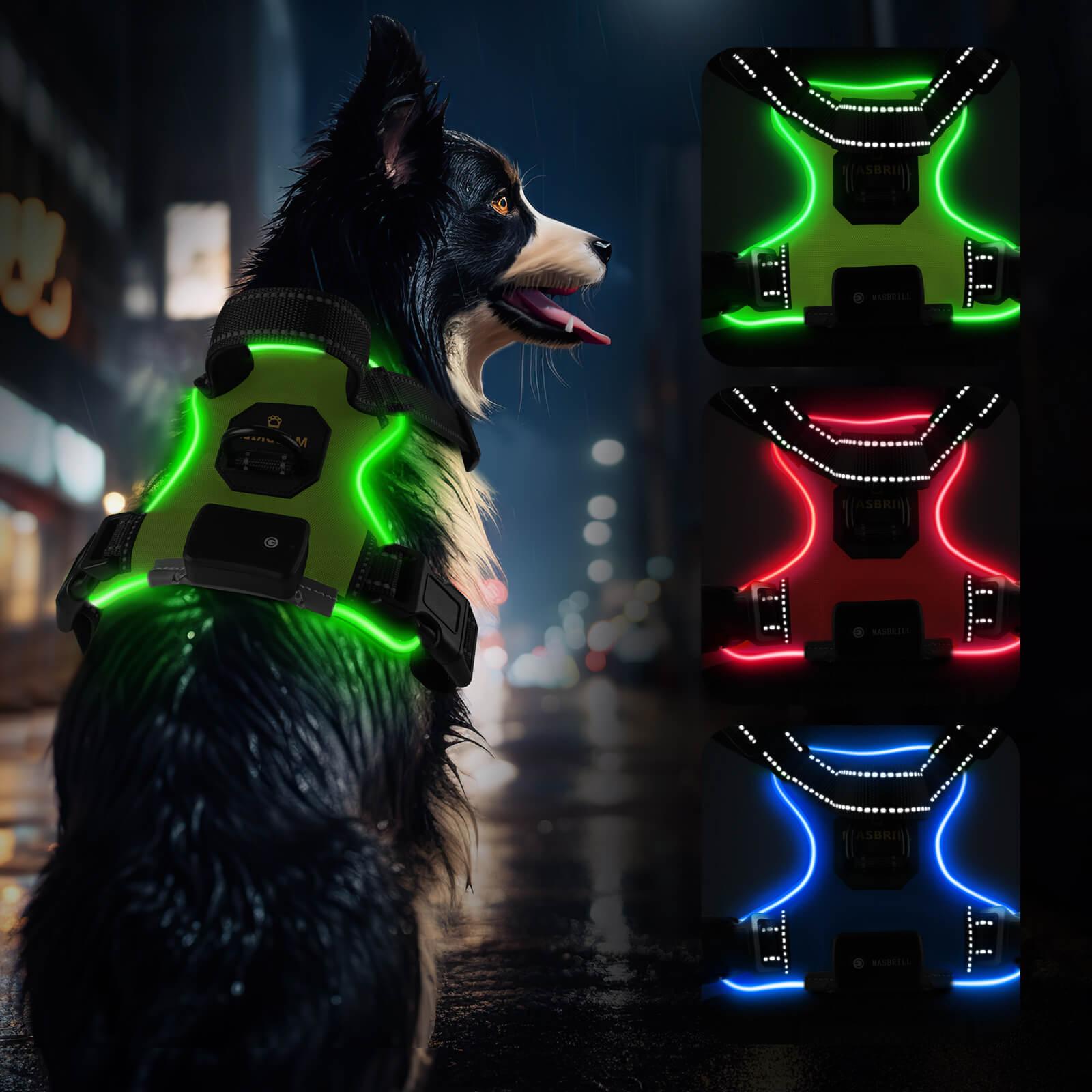
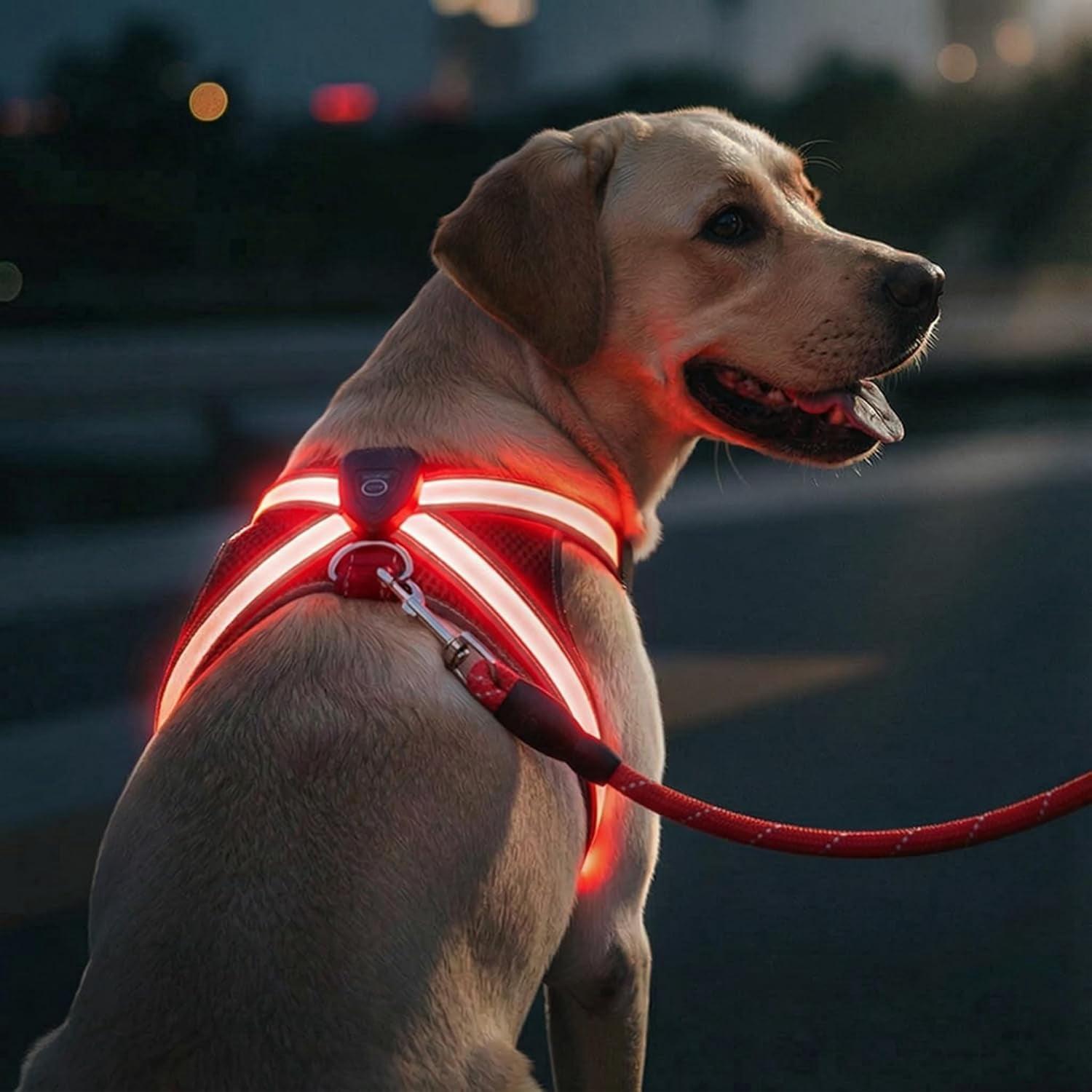
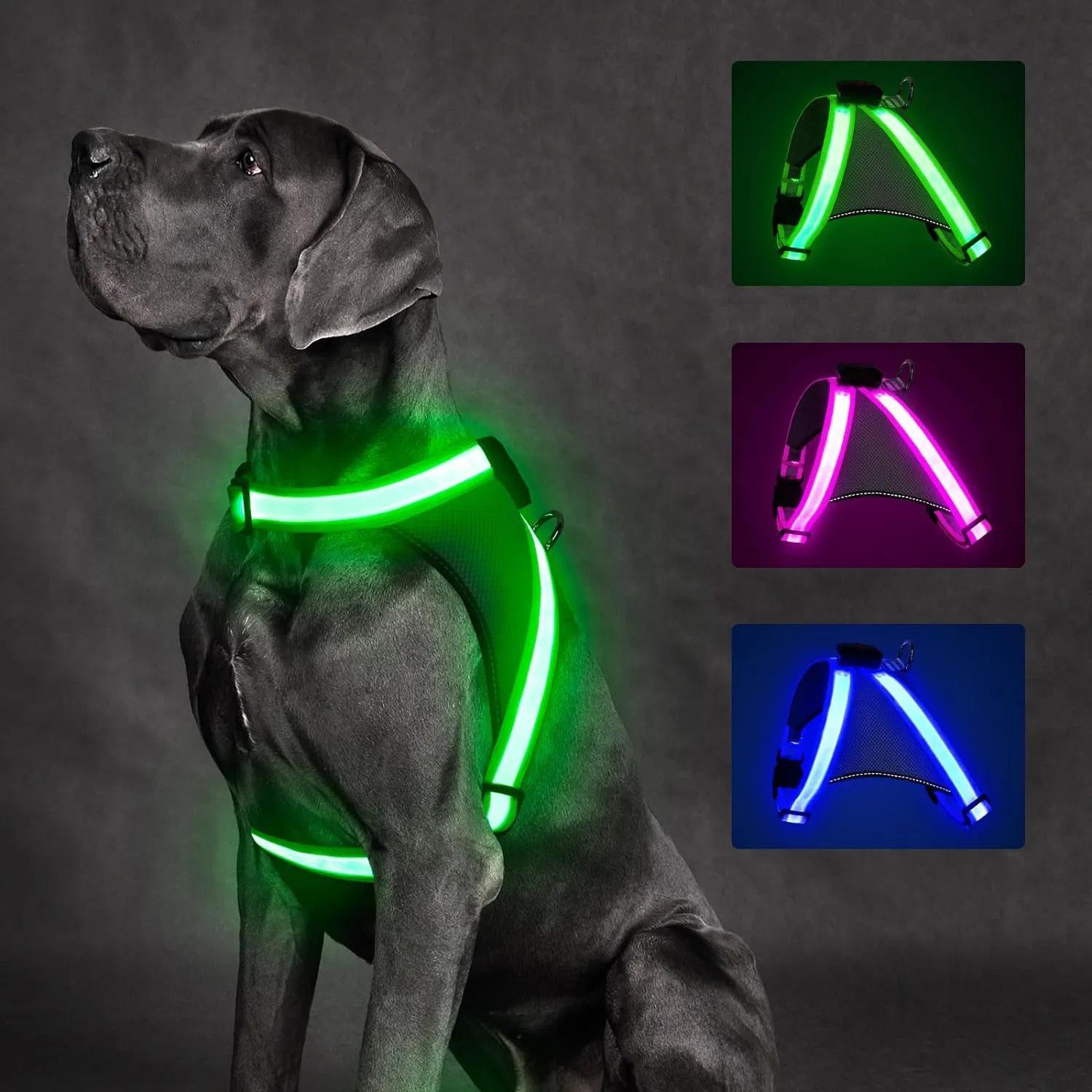
Professional light-up dog harness factories embed LED modules and wiring channels directly into the harness structure. This protects electrical components from movement stress while maintaining stable light distribution.
Integrated systems also improve comfort by preventing exposed hard points inside the harness.
Waterproof Protection and Sealing Design
Reliable outdoor lighting systems require sealed battery compartments and protected wiring structures. Professional production programs typically use multi-layer sealing methods to maintain stable performance in wet environments.
This significantly reduces moisture-related failure rates in wholesale markets.
Stable Power Management and Charging Systems
A high-quality light-up dog harness requires consistent voltage output and efficient charging systems. Stable power control improves brightness consistency and prevents overheating during extended use.
Rechargeable battery systems with controlled output are commonly used in higher-end wholesale programs.
Market Comparison: Generic Light-Up Harness vs Factory-Integrated Lighting System
| Lighting Metric | Generic Light-Up Harness | Factory-Integrated Lighting System |
|---|---|---|
| Visibility distance | 40–80 meters | 120–220 meters |
| Brightness consistency between units | ±30–40% variation | ±5–10% controlled |
| Waterproof performance | Splash-resistant only | IPX5–IPX7 protection |
| Battery runtime per charge | 2–4 hours | 6–12 hours |
| Failure rate after repeated outdoor use | 12–20% | Reduced to 3–6% |
| Wiring stability under movement | Moderate | Reinforced flexible routing |
These differences are particularly noticeable during nighttime dog walking, outdoor activities, and long-term use.
Differentiation by Dog Size and Outdoor Usage
Lightweight Systems for Small Dogs
Small dog harnesses require compact lighting modules and lightweight battery systems to avoid affecting movement or comfort. Proper structural balance is critical for maintaining usability.
High-Visibility Systems for Medium and Large Dogs
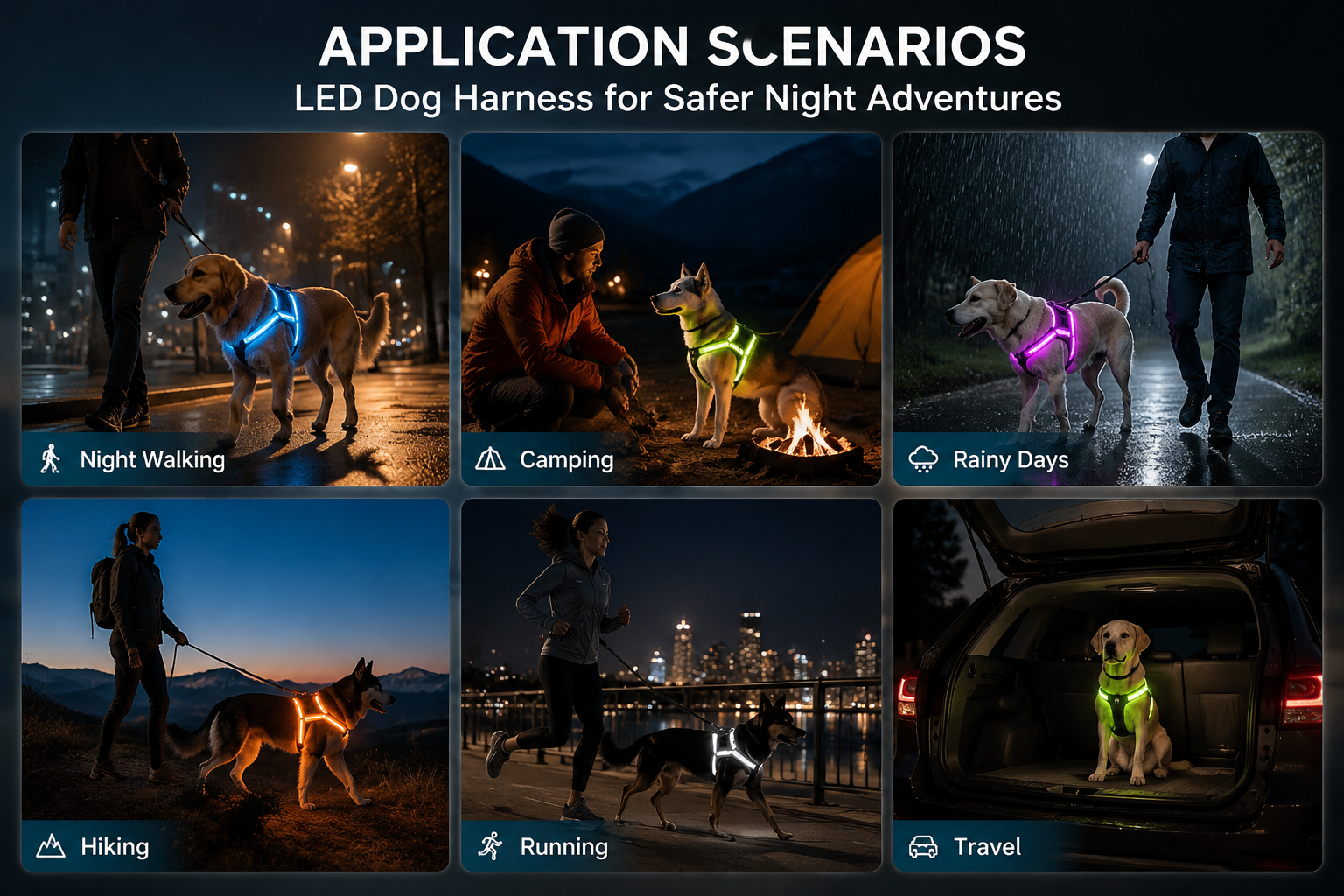
Larger dogs and outdoor environments require stronger illumination and wider light coverage to maintain visibility across longer distances and varying terrain conditions.
Structural Design Strategies That Improve Lighting Reliability
Flexible Wiring Protection
Dogs move dynamically during walking and outdoor activity. Professional manufacturers design flexible internal wiring paths with protective reinforcement to prevent breakage caused by repeated bending.
Balancing Illumination and Harness Comfort
Lighting systems add components and weight. Factory-level engineering ensures that illumination performance does not compromise fit, flexibility, or load balance.
FAQ: Practical Questions from Buyers
Q: Why do many light-up harnesses stop working after several weeks?
A: Poor wiring integration and weak waterproof protection are the most common causes of failure.
Q: Is brightness consistency important for wholesale orders?
A: Yes. Inconsistent brightness creates visible quality variation and affects customer trust.
Q: Can light-up dog harnesses be safely used outdoors in rain?
A: Yes, when properly designed with waterproof sealing and protected battery systems.
Conclusion: Lighting Reliability Depends on Factory-Level Integration
Light-up dog harnesses require far more than basic lighting strips to perform reliably in real use conditions. Without integrated design, waterproof protection, and stable power systems, lighting becomes a major source of failure and returns.
As a specialized light-up dog harness factory, Sixpet develops integrated visibility systems with reinforced wiring, stable battery control, and durable waterproof construction, helping brands deliver reliable night-safety products in wholesale markets.
If you’d like to explore our light-up dog harness systems and outdoor visibility solutions, you can visit our official website:
👉 https://www.sixpet.com/
If you are planning a wholesale or OEM program and want to discuss lighting integration, waterproof systems, or production timelines, our team is ready to support you directly:
👉 https://www.sixpet.com/contact-us