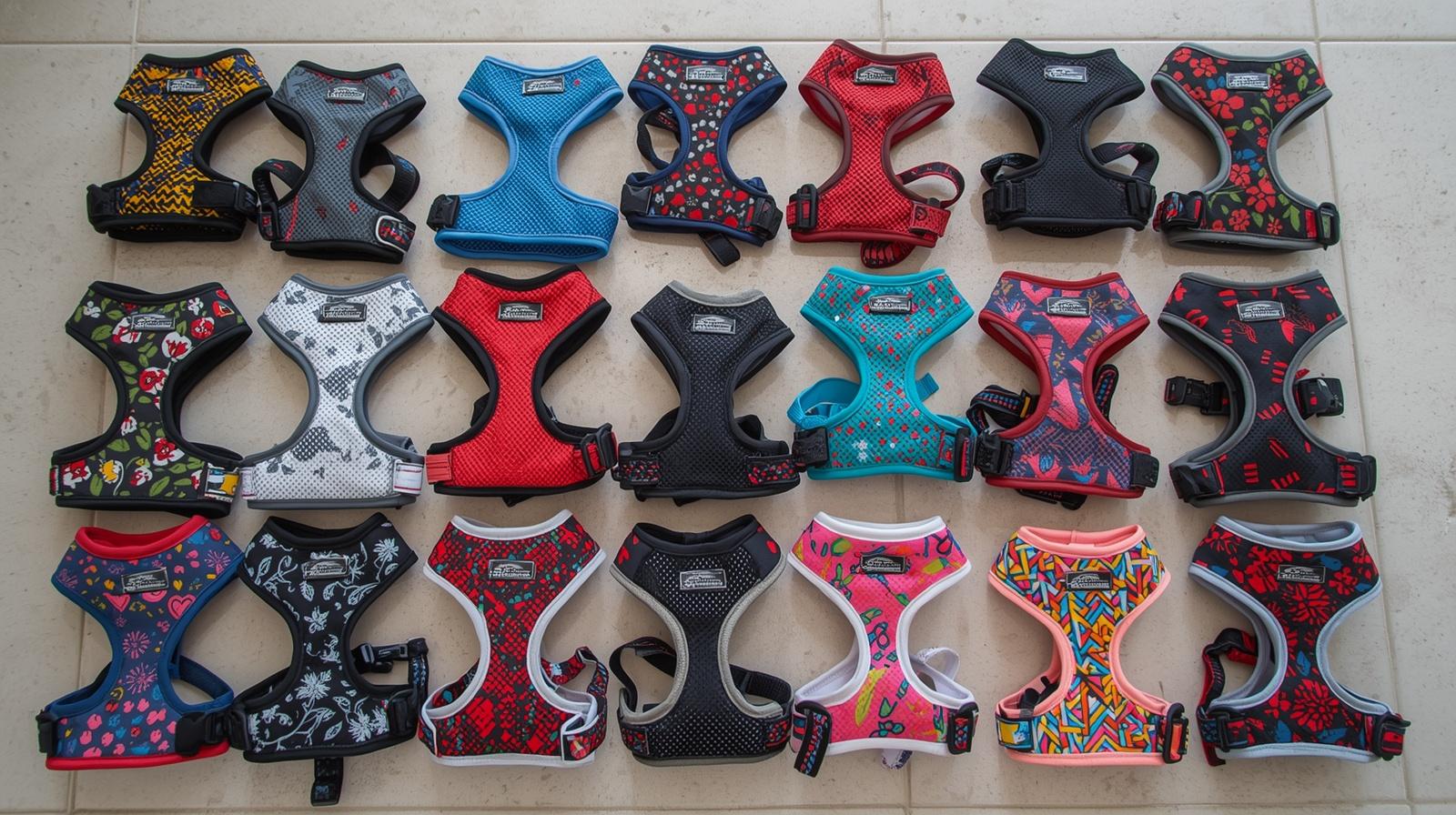
Small dog harnesses require significantly different engineering compared with harnesses designed for medium or large dogs. Small breeds have delicate body structures, narrower chests, and lower tolerance for heavy or rigid materials. In wholesale programs, poorly designed small harnesses often lead to discomfort complaints, poor fit, and higher return rates. A professional small dog harness wholesale supplier addresses these issues through precision sizing and lightweight structural design.
Problem Insight: Why Standard Harness Designs Fail for Small Dogs
Scaling Down Large Harness Designs Does Not Work
Many suppliers create small harness sizes simply by shrinking larger harness patterns. However, small breeds require different proportions, including narrower straps, shorter adjustment ranges, and lighter structural components.
Without these adjustments, harnesses may appear to fit but still cause discomfort or movement restriction.
Weight and Bulk Are Major Comfort Issues
Small dogs are far more sensitive to harness weight and thickness than larger breeds. Harnesses that feel lightweight for medium dogs can feel heavy and restrictive for small companion breeds.
In wholesale markets targeting small dogs, excessive weight is one of the most common causes of negative feedback.
Technical Breakdown: Key Design Elements for Small Dog Harness Engineering
Narrower Webbing for Proportional Fit
Small dog harness manufacturers use narrower webbing widths to match the body proportions of small breeds. This prevents excessive bulk while maintaining adequate strength for everyday walking.
Balanced webbing width also improves flexibility and reduces friction against the dog’s skin.
Lightweight Material Selection
Fabric and hardware materials must be carefully selected to reduce total harness weight. Lightweight mesh fabrics, soft padding, and compact hardware components help maintain comfort without compromising durability.
This balance is critical for ensuring that small dogs can move naturally while wearing the harness.
Controlled Adjustment Range for Accurate Fit
Small dogs often require precise adjustment ranges because even minor size differences can affect fit significantly. Professional small dog harness wholesale programs design harnesses with shorter but more precise adjustment ranges to maintain stability during movement.
Market Comparison: Generic Small Harness vs Size-Engineered Harness
| Performance Metric | Generic Small Harness | Size-Engineered Small Harness |
|---|---|---|
| Webbing width | 15–20 mm | 10–15 mm |
| Average harness weight | 120–160 g | 60–100 g |
| Adjustment precision | Limited | High precision |
| Fit stability during movement | Moderate | Stable |
| Comfort complaint rate | 10–17% | Reduced to 4–7% |
| Return rate linked to poor fit | Elevated | Significantly reduced |
These improvements become especially noticeable in breeds such as Chihuahuas, Pomeranians, and Toy Poodles.
Differentiation by Breed Type and Usage Scenario
Companion Breeds and Indoor Use
Many small dogs live primarily indoors and require harnesses that prioritize softness, flexibility, and minimal weight. Designs for these dogs focus on comfort and ease of use rather than extreme durability.
Active Small Breeds
Some small breeds are highly active and require slightly stronger materials and reinforcement without increasing bulk. Harness designs for these dogs balance durability with lightweight construction.
Structural Design Strategies That Improve Small Dog Harness Performance
Maintaining Comfort While Ensuring Durability
Small harness designs must ensure durability without introducing stiffness. Manufacturers achieve this by reinforcing critical stress points while keeping the overall harness structure lightweight.
Preventing Harness Rotation During Movement
Small dogs often move quickly and change direction frequently. Balanced strap geometry and precise adjustment ranges help prevent harness rotation during activity.
FAQ: Practical Questions from Buyers
Q: Can medium-sized harness designs simply be reduced for small dogs?
A: No. Small breeds require different proportions and lighter materials for proper fit and comfort.
Q: What is the most common complaint with small dog harnesses?
A: Excess weight or bulky straps often cause discomfort for small dogs.
Q: Do small dog harnesses require different hardware?
A: Yes. Compact and lightweight hardware is essential to maintain comfort and usability.
Conclusion: Small Dog Harness Design Requires Precision Engineering
Small dog harnesses must be designed with precise sizing, lightweight materials, and balanced structural support to ensure comfort and usability. Without these considerations, products intended for small breeds often lead to fit problems and increased returns.
As a specialized small dog harness wholesale supplier, Sixpet develops harness systems optimized for small breed proportions, lightweight comfort, and consistent production quality, helping brands deliver reliable products for the growing small-dog market.
If you’d like to explore our small dog harness designs and product options, you can visit our official website to review available styles and specifications:
👉 https://www.sixpet.com/
If you are planning a wholesale or OEM program and would like to discuss sizing structures, customization options, or production timelines, our team is ready to support you directly:
👉 https://www.sixpet.com/contact-us