What Makes a Reliable Dog Collar Supplier for B2B Buyers?
A reliable dog collar supplier should help buyers control much more than the purchase price.
For pet brands, wholesalers, importers, distributors, retail chains, and e-commerce sellers, sourcing collars involves a combination of product specification, material selection, customization, sampling, quality control, packaging, inventory planning, and repeat-order consistency.
The key question is not simply:
Which supplier offers the cheapest dog collar?
A better purchasing question is:
Which supplier can repeatedly deliver the required collar specification, branding, quality, packaging, quantity, and commercial terms with manageable sourcing risk?
That distinction matters because two collars that look similar in a quotation may use different webbing, buckles, D-rings, stitching, printing methods, packaging, and inspection standards.
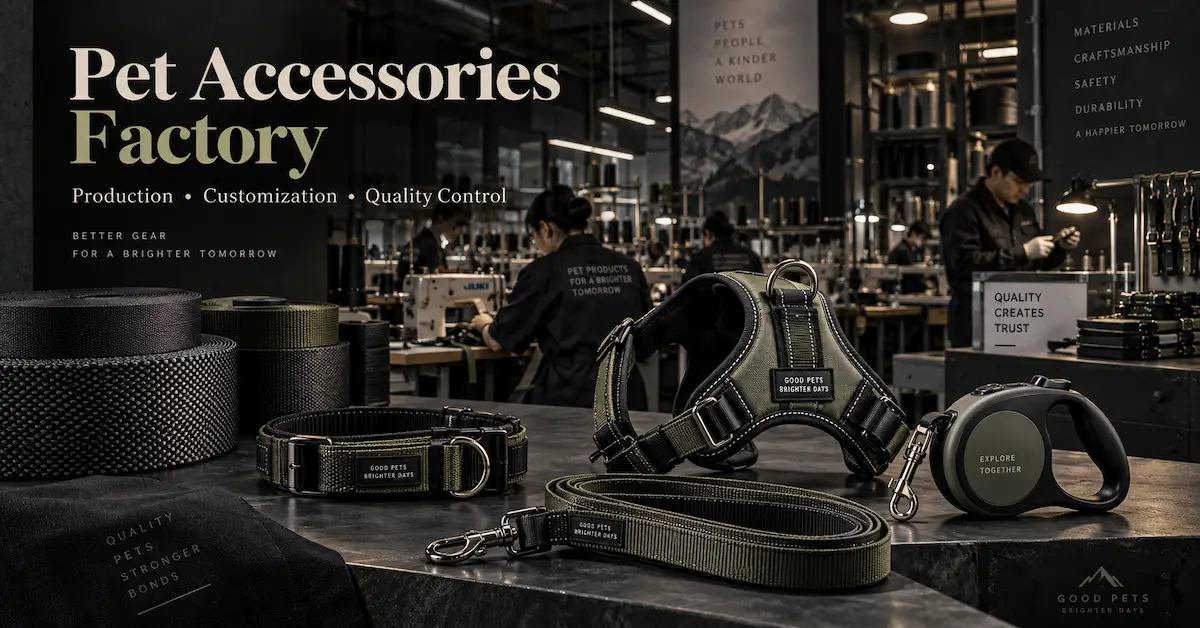
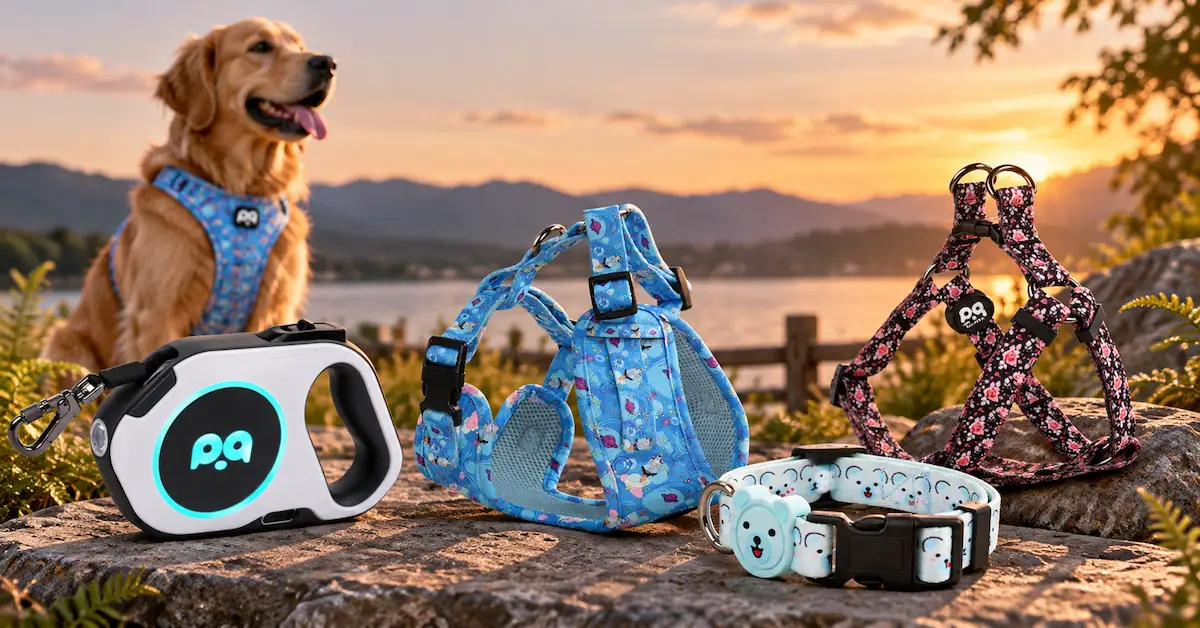
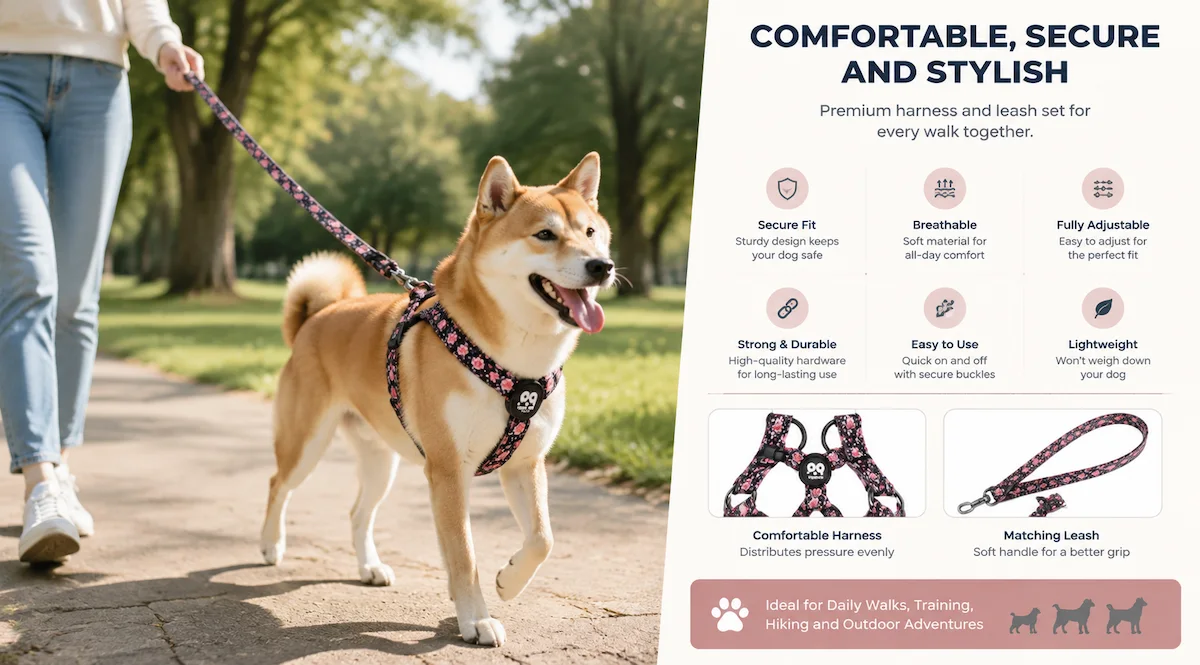
QQPETS currently offers dog collars as part of a broader pet accessory range that also includes harnesses, leashes, retractable leashes, and LED walking products. Buyers can review its current pet accessories product range before discussing a sourcing project.

Who Typically Needs a Dog Collar Supplier?
Different B2B buyers search for a dog collar supplier for different reasons.
Understanding the purchasing model first helps determine whether a supplier is suitable.
Pet Brands
Pet brands normally require more than a generic collar.
Typical requirements include:
- Custom colors
- Custom patterns
- Branded labels
- Logo application
- Selected hardware
- Custom packaging
- Multiple sizes
- Matching leash or harness collections
- Repeat-order consistency
For these buyers, product differentiation and specification control are usually more important than finding the lowest unit price.
Pet Accessories Wholesalers
Wholesalers normally focus on:
- Competitive bulk pricing
- Multiple styles
- Reliable supply
- Efficient carton packing
- Popular color and size combinations
- Repeat availability
- Stable quality across larger quantities
A wholesaler may choose standard or lightly customized products instead of developing a completely new collar structure.
Importers and Distributors
Importers and distributors need suppliers that can support larger commercial programs.
Their concerns often include:
- Product consistency
- Documentation
- Packaging specifications
- SKU management
- Shipping preparation
- Quality inspection
- Production scheduling
- Repeat supply
Amazon and E-Commerce Sellers
Online sellers frequently need a combination of branding and operational accuracy.
Common requirements include:
- Private label
- Retail packaging
- Barcode labels
- Consistent sizing
- Attractive pattern design
- Product bundles
- Smaller initial SKU selection
- Stable repeat orders
Product inconsistency can be especially expensive in e-commerce because sizing or quality problems may increase returns and negative reviews.
Retail Chains
Retail chains may require:
- Defined product specifications
- Standard size labeling
- Barcode systems
- Packaging consistency
- Multiple SKUs
- Repeatable seasonal programs
- Clear inspection requirements
When Is a Custom Dog Collar Supplier Not the Best Option?
OEM or private-label sourcing is not necessary for every buyer.
A custom supplier may not be the most efficient choice if you:
- Need only a few pieces immediately
- Do not require custom branding
- Do not need specific colors or materials
- Cannot allow time for sampling
- Have not yet defined your target market
- Are only testing whether you want to sell pet products at all
In these cases, existing stock products may be more practical.
A custom dog collar supplier becomes more valuable when the buyer has defined commercial requirements and needs repeatable products under its own brand.
Supplier or Manufacturer: What Is the Difference?
The terms dog collar supplier and dog collar manufacturer often overlap, but the search intent is different.
A buyer searching for a dog collar manufacturer is usually interested in factory capability, production processes, equipment, materials, and manufacturing control.
A buyer searching for a dog collar supplier is more likely to be evaluating the entire commercial sourcing relationship:
- Can the supplier provide suitable products?
- Can it customize them?
- What is the MOQ?
- How are samples handled?
- What affects the price?
- Can packaging be customized?
- How is quality controlled?
- Can future orders remain consistent?
- Can related products be sourced together?
If you want a deeper explanation of production processes, materials, hardware, sewing, and factory QC, see our Dog Collar Manufacturer Guide. The supplier guide you are reading focuses more heavily on procurement and long-term sourcing decisions.
What Product Range Should a Dog Collar Supplier Offer?
Product range matters because different markets require different collar designs.
A useful supplier should be able to explain where each option fits instead of simply sending a large catalog.
| Collar Type | Main Characteristics | Suitable Buyer |
|---|---|---|
| Standard Webbing Collar | Adjustable, simple structure | Wholesalers, general retail |
| Printed Dog Collar | Custom colors and patterns | Fashion pet brands |
| Private Label Collar | Logo, label and packaging customization | DTC and e-commerce brands |
| Reflective Dog Collar | Added visibility elements | Outdoor and night-walking brands |
| Padded Dog Collar | Added comfort layer | Premium pet brands |
| Heavy-Duty Collar | Wider structure and selected hardware | Large-dog product lines |
| Collar & Leash Set | Coordinated design | Retail and online bundles |
| Collar, Harness & Leash Set | Complete matching collection | Private-label brands |
QQPETS' current product center includes a dog collar alongside harnesses and leash-related products, allowing buyers to discuss coordinated walking-product collections rather than sourcing each product from an unrelated supplier.
Which Dog Collar Specifications Should You Define Before Requesting a Quote?
A vague request such as “Please quote 1,000 custom dog collars” is not enough for an accurate supplier comparison.
Before requesting prices, prepare a basic purchasing specification.
| Specification | Example Information to Define |
| Product Type | Standard, printed, reflective, padded |
| Material | Nylon or polyester webbing |
| Width | Defined by product design |
| Size Range | Adjustable circumference for each size |
| Color | Stock color or Pantone reference |
| Buckle | Plastic or selected alternative |
| Hardware | D-ring, adjuster, finish |
| Logo | Printing, woven label, patch or tag |
| Pattern | Solid, custom print, seasonal artwork |
| Packaging | Polybag, card, hang tag, retail packaging |
| Quantity | Total quantity and quantity per SKU |
| Market | Retail, wholesale, Amazon, DTC |
| QC | Inspection and specification requirements |
The more precisely these variables are defined, the easier it becomes to compare suppliers on a like-for-like basis.
What Materials Should Buyers Discuss With a Dog Collar Supplier?
Dog collar material selection affects appearance, flexibility, printing, comfort, durability, and cost.
Polyester Webbing
Polyester is commonly considered for products where printed patterns and color presentation are important.
For custom printed collars, buyers should confirm:
- Webbing width
- Webbing thickness
- Surface texture
- Base color
- Print method
- Pattern alignment
- Color consistency
- Abrasion performance
Nylon Webbing
Nylon may be considered where flexibility and hand feel are important.
Instead of asking whether nylon is simply “better,” buyers should compare actual samples for:
- Surface feel
- Flexibility
- Thickness
- Adjustment performance
- Edge comfort
- Stitching behavior
- Hardware compatibility
Reflective Materials
Reflective elements may be introduced through:
- Reflective thread
- Reflective strip
- Reflective piping
- Reflective webbing details
For a night-walking collection, buyers should evaluate placement and visible area rather than relying only on the word “reflective” in a specification.
Padding
Padding can support premium positioning and comfort, but it may also affect:
- Product thickness
- Drying behavior
- Sewing complexity
- Weight
- Packaging volume
- Unit cost
The right material should therefore match the market and retail positioning.
Which Hardware Details Affect Dog Collar Quality?
Hardware is a small portion of the finished product visually, but it can significantly affect the user experience.
Buckles
Buyers should evaluate:
- Opening and closing action
- Engagement
- Release force
- Surface quality
- Mold consistency
- Size
- Compatibility with webbing width
D-Rings
Check:
- Dimensions
- Material
- Surface finish
- Connection position
- Edge condition
- Compatibility with the collar structure
Adjusters
An adjuster should allow the webbing to move during fitting but remain stable after adjustment.
The approved sample should establish what the buyer considers acceptable.
QQPETS' current dog collar product specifically highlights a quick-release buckle and heat-transfer printed design, making both hardware and print execution relevant parts of sample approval.
What Can a Custom Dog Collar Supplier Customize?
Private-label sourcing can involve several levels of customization.
Product Appearance
Typical options may include:
- Custom color
- Pantone matching
- Custom pattern
- Seasonal artwork
- Logo placement
- Coordinated collections
Product Structure
Depending on the project, buyers may discuss:
- Width
- Adjustable range
- Webbing type
- Hardware
- Buckle
- Padding
- Reflective details
Brand Identity
Branding may include:
- Printed logo
- Woven label
- Sewn label
- Rubber patch
- Hang tag
- Barcode
- Retail card
- Custom packaging
Matching Collections
A brand can extend one visual identity across:
Dog Collar + Dog Leash + Dog Harness
This can reduce the visual fragmentation that occurs when buyers source every item independently.
QQPETS currently markets OEM/ODM support across collars, harnesses, leashes, retractable leashes, and related pet accessories.
How Should Buyers Evaluate MOQ?
MOQ should never be evaluated in isolation.
A dog collar supplier may have different minimum quantities depending on:
- Standard or custom material
- Custom webbing color
- Printed pattern
- Hardware
- Number of sizes
- Number of colors
- Packaging
- Logo method
- Total order volume
The real commercial question is therefore:
What is the MOQ for this exact specification and SKU structure?
For example, 300 collars in one color and three sizes may be commercially different from 300 collars split across six colors and five sizes.
That second project creates many more SKUs and can increase material, printing, assembly, packaging, and inventory complexity.
For new brands, reducing the number of initial colors and sizes can sometimes be more useful than negotiating only for a lower total MOQ.
What Determines Wholesale Dog Collar Pricing?
There is no meaningful universal wholesale price without a specification.
Major pricing variables include:
- Webbing material
- Width and thickness
- Buckle specification
- D-ring and adjuster
- Printing
- Custom color
- Reflective materials
- Padding
- Logo method
- Number of sizes
- Number of colors
- Packaging
- Quantity
- Inspection requirements
When comparing quotations, ask suppliers to quote the same specification.
Otherwise, a lower price may simply reflect a different product.
Compare Total Sourcing Cost, Not Only Unit Price
A buyer should also consider:
- Sample revisions
- Packaging
- Inspection
- Shipping preparation
- Defect risk
- Rework risk
- Inventory fragmentation
- Repeat-order consistency
A slightly lower unit price provides little value if product inconsistency creates returns or forces a new sourcing cycle.
Why Is Sampling Critical Before a Bulk Order?
Sampling converts an idea into a physical reference.
During sample approval, buyers should check:
- Collar length
- Adjustment range
- Webbing width
- Material feel
- Buckle operation
- Hardware
- Sewing
- Logo
- Pattern
- Color
- Packaging
Photographs and digital mockups can confirm appearance, but they cannot fully communicate webbing stiffness, buckle feel, adjustment movement, edge comfort, or actual construction.
For private-label orders, keep the approved sample and written specification as the reference for bulk production.
How Should a Dog Collar Supplier Control Quality?
Quality should be managed as a process, not only through a final visual check.
A practical control flow may include:
Incoming Materials
Verify:
- Webbing
- Buckles
- Hardware
- Labels
- Colors
- Packaging materials
Printing and Branding
Check:
- Artwork
- Logo size
- Position
- Color
- Pattern alignment
- Surface appearance
Cutting and Sewing
Check:
- Dimensions
- Stitch location
- Reinforcement
- Alignment
- Loose threads
Assembly
Check:
- Buckle function
- Adjuster movement
- D-ring position
- Finished construction
Final Inspection
Confirm finished products against the approved specification before packaging and shipment.
This process-based approach is consistent with the broader logic of ISO 9001 quality management systems, which focuses on establishing, controlling, evaluating, and continually improving processes used to meet customer requirements.
How Should Buyers Evaluate Certificates and Material Claims?
Do not choose a supplier simply because its website displays many certification logos.
Instead, verify:
- Certificate name
- Certificate holder
- Certificate number
- Validity
- Scope
- Applicable facility
- Applicable material or product
- Relevant test report
QQPETS' About Us page currently presents ISO 9001, BSCI, SGS, and OEKO-related compliance information. Buyers should request the applicable documentation for the specific project rather than assuming that every document covers every product.
For textile claims, OEKO-TEX STANDARD 100 is specifically a label for textiles tested for harmful substances. Buyers should therefore verify whether a certificate applies to the particular webbing, textile component, or finished item being sourced.
How Should You Evaluate Lead Time and Supply Reliability?
The shortest promised lead time is not automatically the safest option.
Buyers should ask how the supplier manages:
- Material preparation
- Custom printing
- Sample approval
- Bulk scheduling
- Packaging production
- Final inspection
- Shipping preparation
Lead time should be confirmed for the actual project because a standard collar and a fully customized multi-SKU collection do not require the same preparation.
For repeat orders, also ask:
- Are approved specifications retained?
- Can the same material be reordered?
- How is color consistency managed?
- How are approved packaging files controlled?
- What happens if a component changes?
SIXPET's public pages do not provide one universal production lead time for every custom dog collar, so buyers should confirm project-specific timing during quotation rather than relying on a generic figure.
How Can Buyers Reduce Dog Collar Sourcing Risk?
Do Not Compare Price Without Specifications
Make sure every supplier is quoting the same materials, hardware, dimensions, logo, packaging, and quantity.
Approve a Physical Sample
Use the sample to validate construction and branding before bulk production.
Avoid Too Many Initial SKUs
More colors multiplied by more sizes create more inventory units.
Start with a focused commercial range when market demand is still uncertain.
Confirm Critical Details in Writing
Do not rely on chat messages such as:
“Same as last time.”
Maintain clear product specifications.
Approve Packaging Early
Packaging affects:
- Branding
- Barcode
- Product protection
- Carton dimensions
- Retail presentation
It should not be left until the final production stage.
Define Repeat-Order Requirements
For brands planning long-term sales, repeat consistency can matter more than the first order.
Dog Collar Supplier Evaluation Scorecard
Use this table when comparing shortlisted suppliers.
| Evaluation Factor | What to Check | Buying Priority |
| Product Range | Collar styles and matching accessories | High |
| Materials | Defined webbing and component options | High |
| Sample Support | Physical sample and revision process | High |
| Customization | Color, pattern, logo, hardware, packaging | High |
| Quality Control | Process inspection and final checks | Very High |
| MOQ | Suitable for your SKU structure | High |
| Pricing | Clear specification-based quotation | High |
| Lead Time | Project-specific production planning | High |
| Documentation | Relevant certificates and test records | Medium to High |
| Packaging | Barcode and private-label support | High |
| Repeat Orders | Specification consistency | Very High |
| Communication | Clear written confirmation | Very High |
A reliable dog collar supplier should score well across the complete sourcing system rather than only in the price column.
Why Source Dog Collars From QQPETS?
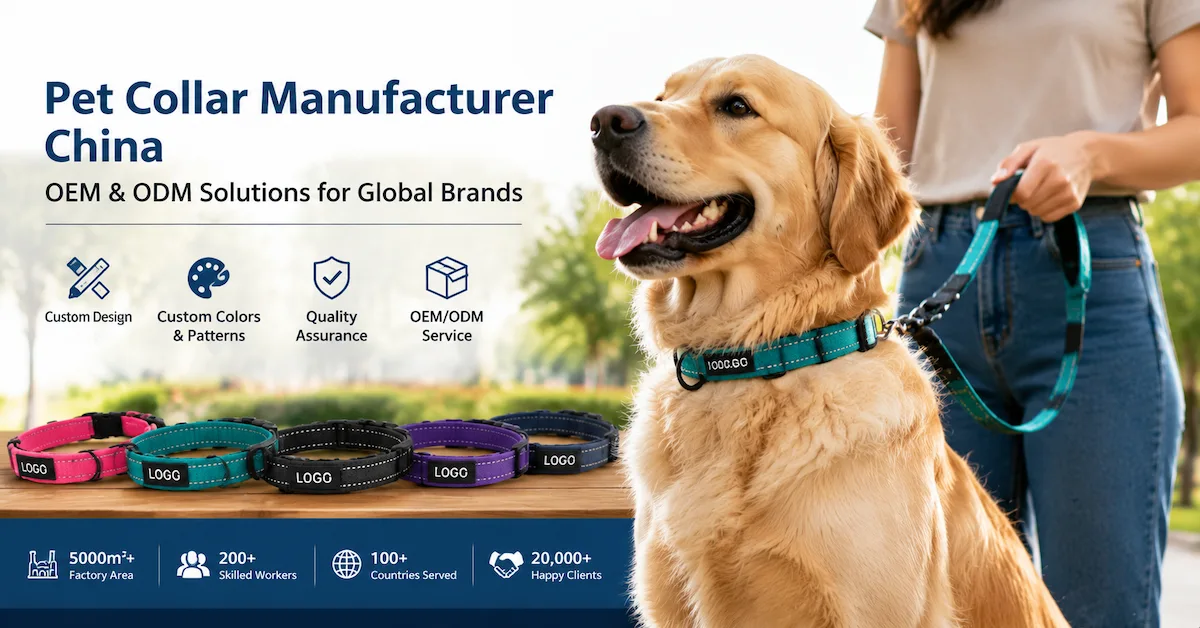
QQPETS positions itself as an OEM/ODM pet accessory manufacturer and supplier serving global B2B customers. Its current product portfolio includes dog collars, harnesses, leashes, retractable leashes, and related walking accessories.
According to the current QQPETS About Us page, the company reports:
- 5,000 m² manufacturing facility
- 200+ professional team
- 20,000+ global customers
- 100+ countries served
The same page describes production functions including heat-transfer printing, silk-screen printing, weaving, cutting, sewing, and packaging.
For dog collar sourcing projects, buyers can discuss:
- Product specifications
- Material selection
- Custom colors
- Custom patterns
- Logo options
- Hardware
- Size ranges
- Samples
- Private-label packaging
- Matching collar, leash, and harness collections
- Bulk production
- Quality inspection
You can review the Dog Collar category, explore the full QQPETS product range, or read the broader Wholesale Pet Supplies Supplier Guide when planning a multi-category sourcing program.
For a quotation, send your target product, material, size range, color, logo, packaging, estimated quantity, and target market through the QQPETS Contact Us page.
FAQ
1. How do I choose a reliable dog collar supplier?
Compare product specifications, materials, hardware, customization, sample support, QC, MOQ, pricing structure, packaging, communication, and repeat-order capability. Do not make the decision based on unit price alone.
2. Can a dog collar supplier make private-label collars?
Yes. Depending on the product and project, private-label options can include custom colors, patterns, logos, labels, hang tags, barcodes, and retail packaging.
3. What materials are commonly used for wholesale dog collars?
Nylon and polyester webbing are common options. Reflective materials, padding, different buckles, D-rings, and decorative components may also be used depending on the product design.
4. What information should I send for a dog collar quotation?
Send the product type, material, width, size range, color, buckle, hardware, logo, artwork, packaging, quantity per SKU, target market, and any inspection requirements.
5. What is the MOQ for custom dog collars?
There is no single MOQ that applies to every design. MOQ can vary with material, color, printing, hardware, packaging, size count, and SKU structure. Request the MOQ for your exact specification.
6. Should I order a sample before bulk production?
Yes. A physical sample helps verify dimensions, material feel, hardware, buckle function, stitching, print quality, logo placement, and packaging before the bulk order begins.
7. Can I order matching dog collars, harnesses, and leashes?
A supplier with multiple pet accessory categories may be able to develop coordinated collar, harness, and leash collections using related colors, patterns, branding, and packaging.
8. How can I compare quotations from different suppliers?
Create one specification and send it to each supplier. Compare quotations only after confirming that material, dimensions, hardware, printing, packaging, quantity, and QC requirements are equivalent.
9. How can I reduce quality problems in repeat orders?
Maintain an approved sample and written specification, define critical dimensions and materials, confirm packaging files, and require the supplier to notify you before making component substitutions.
10. Why work with an OEM dog collar supplier instead of buying generic stock?
OEM sourcing gives brands greater control over product specifications, color, branding, packaging, size systems, and matching collections. Generic stock is often more appropriate when customization is unnecessary and immediate availability is the main priority.
Conclusion: Choose a Dog Collar Supplier for Long-Term Supply, Not Just the First Order
Choosing a dog collar supplier is ultimately about building a sourcing system that can support your brand beyond one purchase order.
The strongest supplier relationship combines clear specifications, suitable materials, reliable hardware, physical sample approval, controlled customization, transparent pricing, quality inspection, packaging support, and repeat-order consistency.
For new brands, this approach reduces the risk of launching too many uncontrolled SKUs. For established brands, it helps maintain consistency as order quantities and product collections expand.
QQPETS supports B2B buyers developing dog collars and broader pet walking collections through OEM/ODM customization and related pet accessory manufacturing. If you are sourcing wholesale or private-label collars, prepare your product concept, material preferences, size range, artwork, packaging requirements, and estimated quantity, then contact QQPETS to evaluate the project.